Coma Volatile Composition And Thermal Physics In Comet C/2022 E3 (ZTF) Measured Near Closest Approach To Earth With NASA-IRTF
The 2023 perihelion passage of comet C/2022 E3 (ZTF) afforded an opportunity to measure the abundances and spatial distributions of coma volatiles in an Oort cloud comet at high spatial resolution near its close approach to Earth (Δmin∼0.28 au on UT February 1).
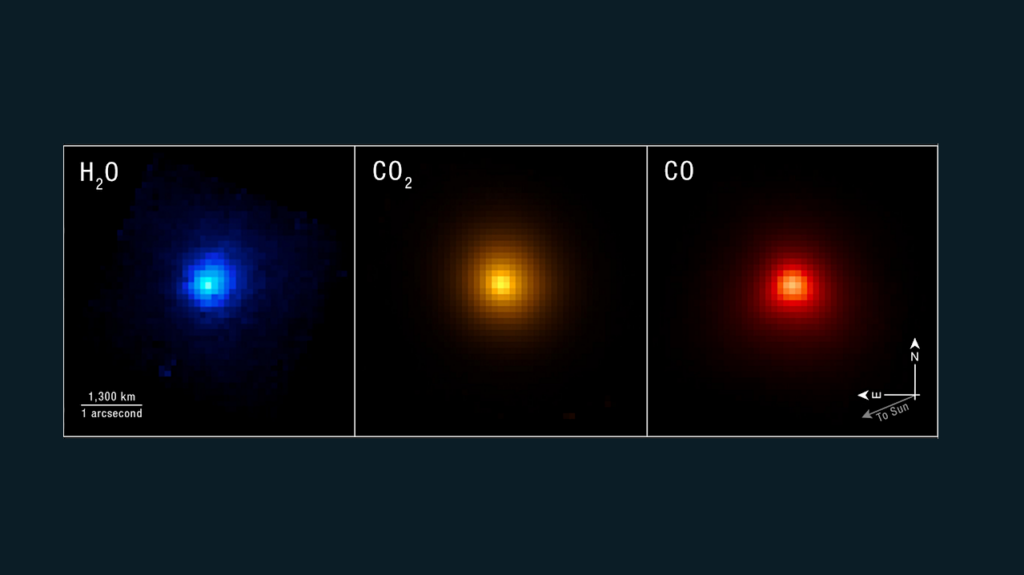
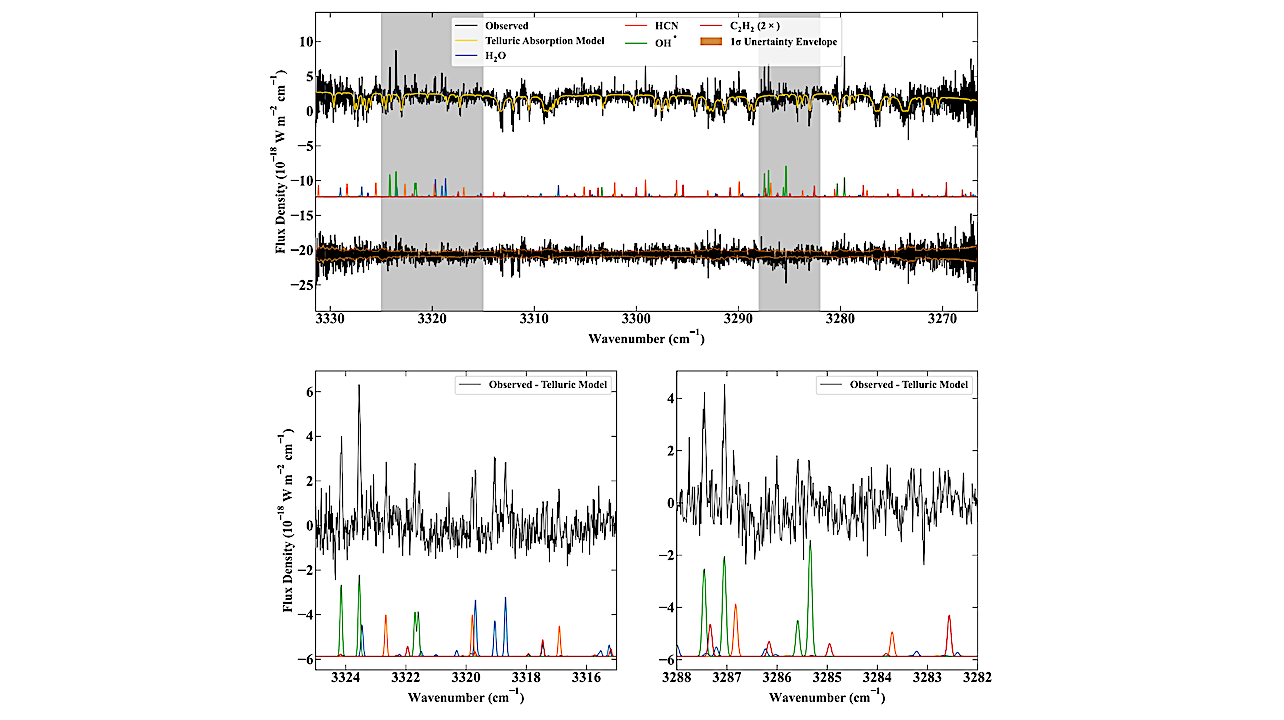
We conducted near-infrared spectroscopic observations of C/2022 E3 (ZTF) using iSHELL at the NASA Infrared Telescope Facility on UT 2023 February 9. Our measurements securely detected fluorescent emission from H2O, CO, OCS, CH3OH, CH4, C2H6, C2H2, and HCN.
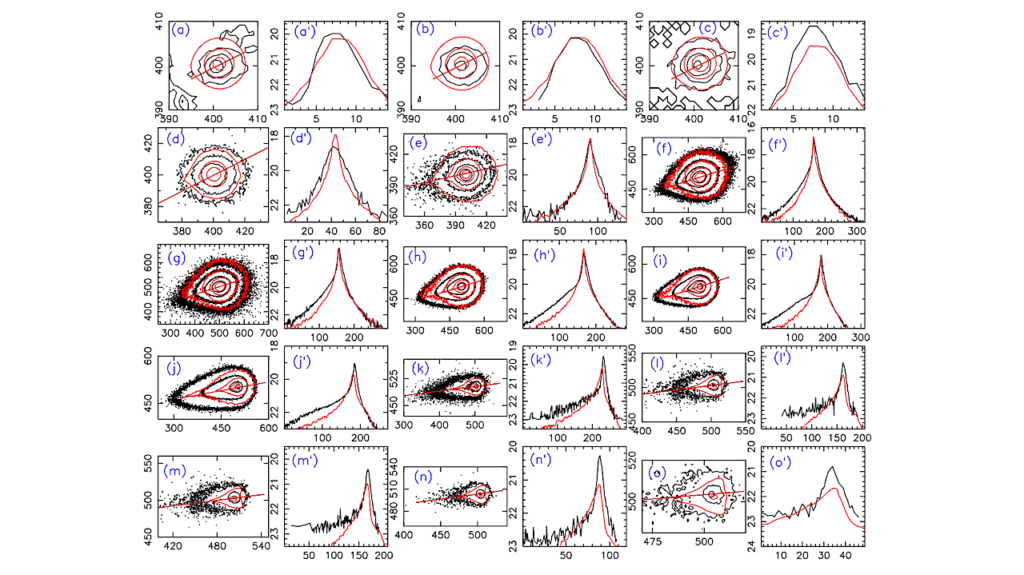
For each instrumental setting we took exposures with the slit oriented parallel and also perpendicular to the projected Sun-comet vector, thereby enabling a test of the spatial distributions of these molecules. We report rotational temperatures, production rates, and abundance ratios (i.e., mixing ratios) for all sampled species.
Our measurements found that molecular abundances in C/2022 E3 were depleted compared to their average values in Oort cloud comets with the exception of OCS, which was consistent. The H2O production rate varied significantly and was likely tied to nucleus rotation effects.
Measurements at the two slit orientations showed distinct column density and rotational temperature profiles for H2O. Peak temperatures occurred off-nucleus and slower cooling was present in the anti-sunward hemisphere, consistent with the presence of icy grain sublimation in the coma.
Nathan X. Roth, Michael A. DiSanti, Boncho P. Bonev, Neil Dello Russo, Erika L. Gibb, Ronald J. Vervack Jr., Mohammad Saki, Adam J. McKay, Hideyo Kawakita, Stefanie N. Milam, Martin A. Cordiner, K. D. Foster
Subjects: Earth and Planetary Astrophysics (astro-ph.EP)
Cite as: arXiv:2602.07188 [astro-ph.EP] (or arXiv:2602.07188v1 [astro-ph.EP] for this version)
https://doi.org/10.48550/arXiv.2602.07188
Focus to learn more
Submission history
From: Nathan Roth
[v1] Fri, 6 Feb 2026 20:43:52 UTC (2,660 KB)
https://arxiv.org/abs/2602.07188
Astrobiology,