Hayabusa2 Asteroid Samples Offer New Insights Into Conditions When The Solar System Formed
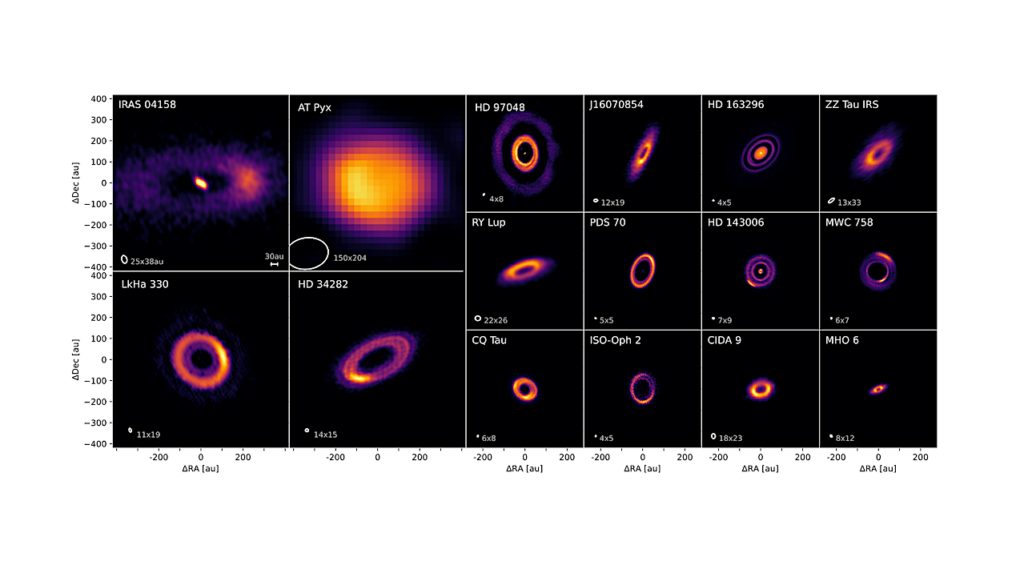
To uncover the history of our solar system, it is necessary to study the dynamic evolution of the ancient solar nebula materials.
These materials interacted and coevolved with the weak but widespread magnetic field of the solar nebula, which was generated by the weakly ionized nebular gas in the protoplanetary disk. During the formation or alteration, the magnetization of these materials can become locked in for billions of years, a phenomenon known as natural remanent magnetization (NRM).
NRM measurements of primordial astromaterials can therefore provide critical information on the spatiotemporal evolution of the early solar system. Understanding the spatiotemporal evolution of magnetic fields within the protoplanetary disk provides key constraints on the disk’s mass distribution. This would aid in reconstruction of how material was transported within the disk and how the solar system was formed.
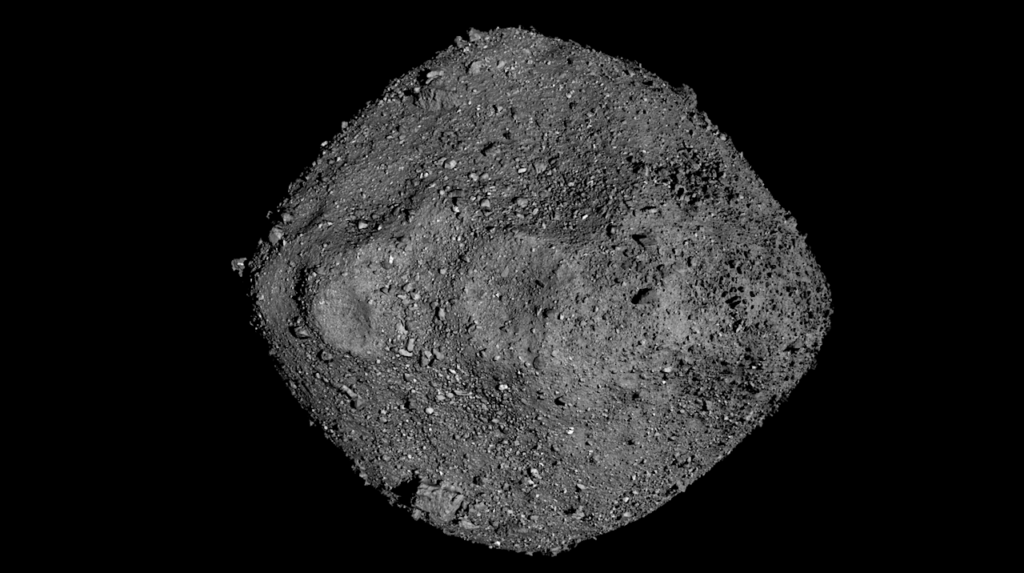
Ryugu is a small, primitive, carbon-rich, near-Earth asteroid that is thought to be a rubble-pile remnant of a parent body that experienced catastrophic disruption events early in the solar system history.
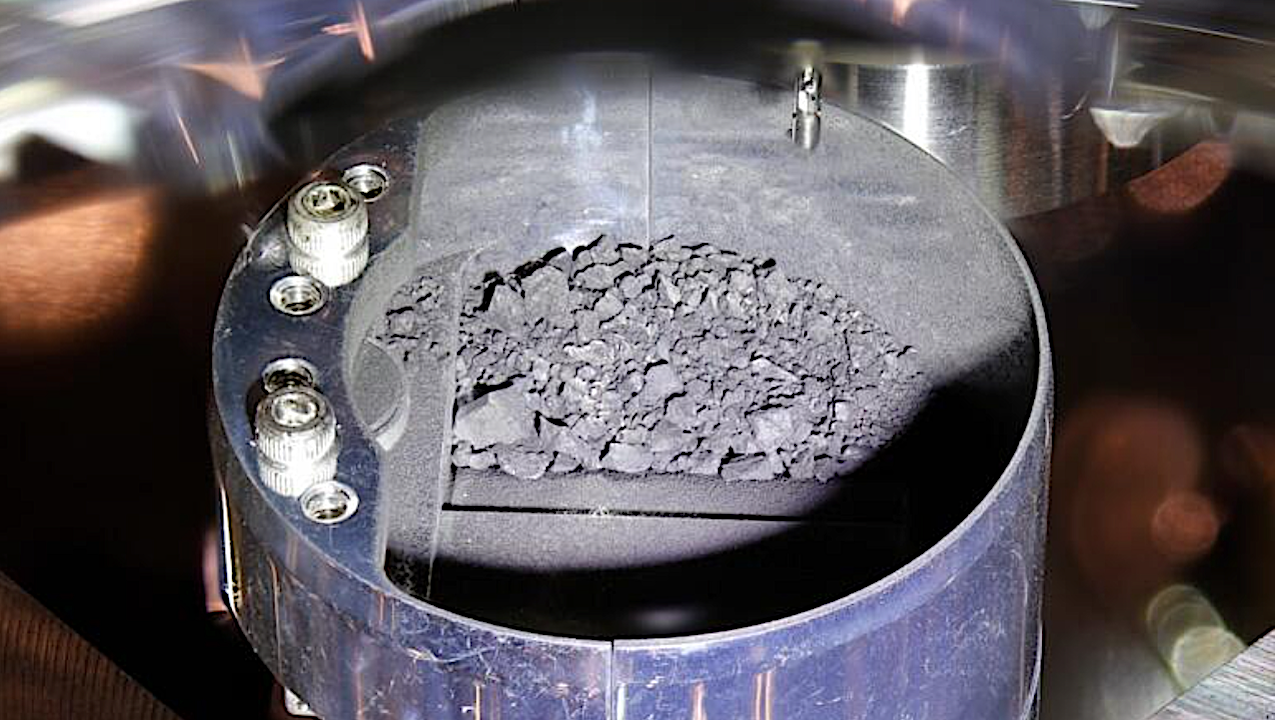
As such, it preserves the primordial astromaterials that may retain NRM acquired shortly after the formation of the solar system. Samples from Ryugu, returned to Earth by Japan’s Hayabusa2 spacecraft in 2020, offer a unique opportunity to investigate the magnetic and dynamical evolution of early solar system materials.
These materials have minimal magnetic field contamination from Earth due to careful handling and curation, which can be traced and accounted for. While stepwise alternating field demagnetization (AFD) measurements of NRM on seven Ryugu particles have been conducted in previous studies, there is no consensus regarding the interpretation of the results due to the limited number of samples.
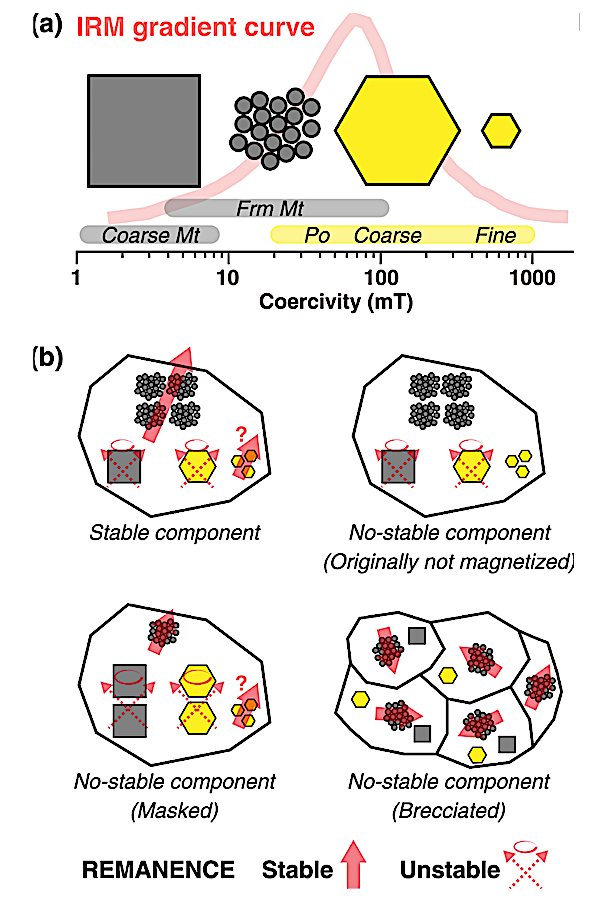
Interpretation of magnetic measurements. (a) Typical coercivity ranges of magnetic minerals for coarse grained magnetite, framboidal magnetite, and pyrrhotite. Isothermal remanent magnetization gradient curves from Sato et al. (2022). (b) Interpretation of natural remanence records (see text).
To address this gap, a research team led by Associate Professor Masahiko Sato from the Department of Physics at Tokyo University of Science, Japan, conducted stepwise AFD measurements on 28 Ryugu particles. “Our highly sensitive magnetic measurements on microsamples collected from the asteroid Ryugu provided sufficient magnetic data to finally clarify the differing interpretations obtained by previous research groups. Thereby, offering important clues for understanding the evolution of the early solar system,” explains Dr. Sato. Their findings were published in Volume 132, Issue 2 of the Journal of Geophysical Research: Planets on February 10, 2026.
The team carried out systematic paleomagnetic measurements with stepwise AFD on 28 submillimeter-sized Ryugu particles. The measurements were conducted utilizing the superconducting quantum interference device (SQUID) magnetometer at the University of Tokyo, Japan.
The results showed that 23 of 28 Ryugu samples exhibited stable NRM components. Among these, eight particles demonstrated two stable components. In addition, one particle exhibited spatially inhomogeneous NRM directions. Notably, the spatially inhomogeneous NRM directions suggest that magnetization was acquired before final solidification of the particles, indicating that magnetization events occurring late, such as during spacecraft handling after sampling or on Earth, cannot explain the observed NRM characteristics.
Furthermore, the results strongly suggest that these NRM characteristics are a chemical remanent magnetization, likely acquired during the growth of tiny magnetic minerals known as framboidal magnetite that occurred due to water-driven alteration on Ryugu’s parent body. “This means that these particles preserve a record of the magnetic field of the very early solar system, potentially within ~3–7 million years after its formation,” notes Dr. Sato.
Together, these findings shed new light on the magnetic characteristics of Ryugu particles, and consequently, on the evolutionary history of our solar system. This will help researchers constrain the physical conditions under which planets formed and material evolved, including those that ultimately led to the formation of Earth.
Characteristics of Natural Remanence Records in Fine-Grained Particles Returned From Asteroid Ryugu, JGR planets (open access)
Astrobiology, Astrogeology,