Collection of Biospecimens From The Inspiration4 Mission Establishes The Standards For The Space Omics And Medical Atlas (SOMA)
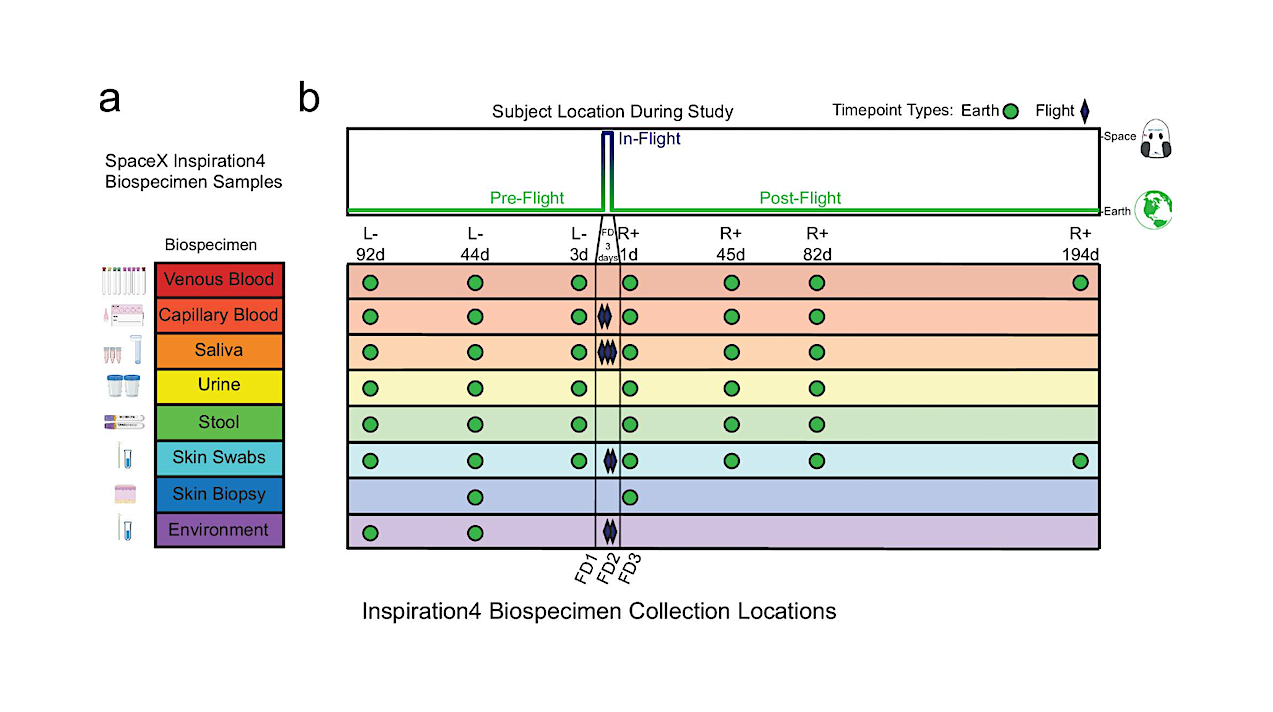
The SpaceX Inspiration4 mission provided a unique opportunity to study the impact of spaceflight on the human body.
Biospecimen samples were collected from the crew at different stages of the mission, including before (L-92, L-44, L-3 days), during (FD1, FD2, FD3), and after (R+1, R+45, R+82, R+194 days) spaceflight, creating a longitudinal sample set.
The collection process included samples such as venous blood, capillary dried blood spot cards, saliva, urine, stool, body swabs, capsule swabs, SpaceX Dragon capsule HEPA filter, and skin biopsies, which were processed to obtain aliquots of serum, plasma, extracellular vesicles, and peripheral blood mononuclear cells.
All samples were then processed in clinical and research laboratories for optimal isolation and testing of DNA, RNA, proteins, metabolites, and other biomolecules. This paper describes the complete set of collected biospecimens, their processing steps, and long-term biobanking methods, which enable future molecular assays and testing.
As such, this study details a robust framework for obtaining and preserving high-quality human, microbial, and environmental samples for aerospace medicine in the Space Omics and Medical Atlas (SOMA) initiative, which can also aid future experiments in human spaceflight and space biology.
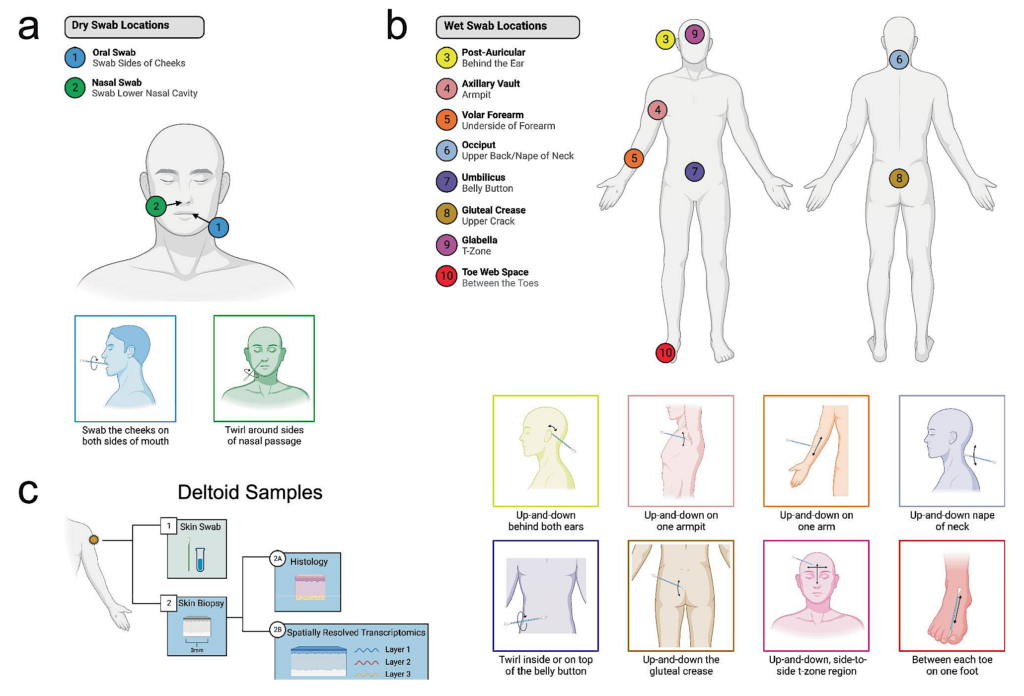
a Dry swabs were collected from two body locations. b Wet swabs were collected from eight body locations. c Swabs were collected from the deltoid region. Immediately after, 3- or 4-mm skin biopsies were collected from the same area and divided for histology and spatially resolved transcriptomics. –Nature Communications
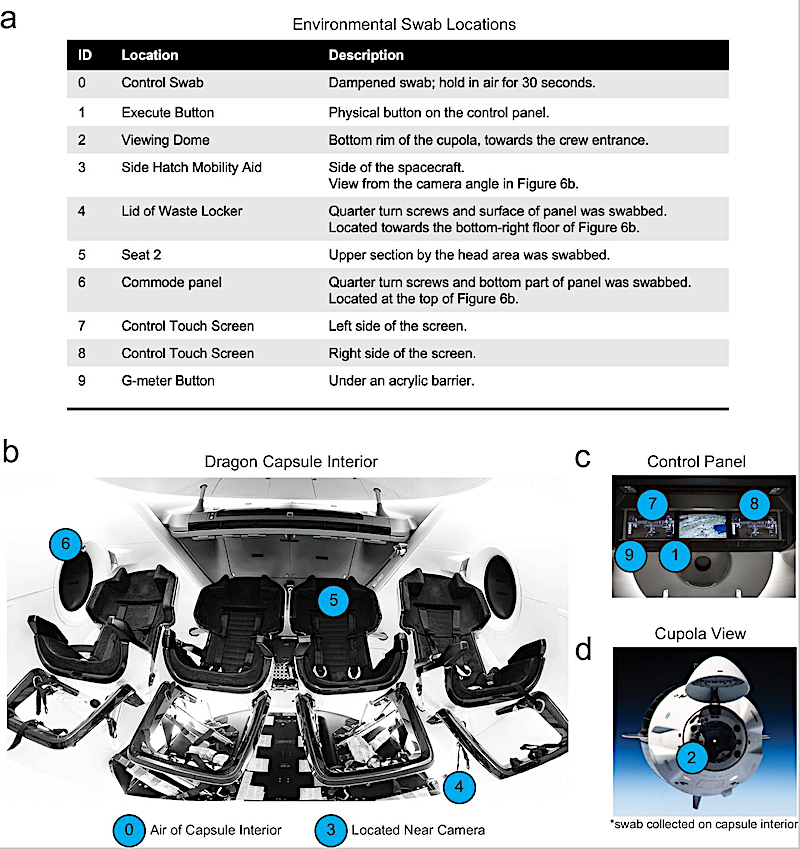
Swab locations, descriptions, and label IDs. b Interior view of the SpaceX Dragon capsule. c View of the control panel located above the middle seats in the Dragon capsule. d View of the cupola (viewing dome) region from the outside. The rim of the dome was swabbed from the inside (ID 10). — Nature Communications
- Collection of Biospecimens from the Inspiration4 Mission Establishes the Standards for the Space Omics and Medical Atlas (SOMA), biorxiv.org
- Collection of biospecimens from the inspiration4 mission establishes the standards for the space omics and medical atlas (SOMA), PubMed
- Collection of biospecimens from the inspiration4 mission establishes the standards for the space omics and medical atlas (SOMA), Nature Communications (open access)
Astrobiology, Space Medicine, genomics,