


M dwarfs are prime targets in the search for exoplanets because of their prevalence and because low-mass planets can be better detected with radial velocity (RV) methods. In particular, the […]
Habitable Zone

Posted inExoplanets, -moons, -comets, Habitable Zones, Status Report
Dynamical Interactions and Habitability in the TOI-700 Multi-Planet System
The discovery of a second earth sized planet (TOI-700e) interior to the habitable candidate TOI-700d has prompted further research into this system, as the additional planet makes the TOI-700 system […]

Posted inAnalog Studies, Astrogeology, Astronomy & Telescopes, Atmospheres, Climate, Weather, Biosignatures & Paleobiology, Exoplanets, -moons, -comets, Habitable Zones, Press Release
Exoplanet Candidate HD 137010 b: An Ice-Cold Earth Analog?
The Discovery A candidate planet that might be remarkably similar to Earth, HD 137010 b, has one potentially big difference: It could be colder than perpetually frozen Mars. See A […]

Posted inAstronomy & Telescopes, Exoplanets, -moons, -comets, Habitable Zones, Imaging & Spectroscopy, Status Report
Stellar And Orbital Characterization Of Three Low Mass M Dwarf Binary Stars With Dynamical Spectroscopy From The Habitable Zone Planet Finder
Contrast curves and reconstructed images from the NESSI speckle imager for a: LSPM 0515+5911, b: NLTT 45468, and c: NLTT 43564. Neither LSPM 0515+5911 nor NLTT 43564 show companions within […]

Posted inAtmospheres, Climate, Weather, Biosignatures & Paleobiology, Exoplanets, -moons, -comets, Habitable Zones, Imaging & Spectroscopy, Status Report
Climates Of Terrestrial Exoplanets And Biosignatures
Understanding the climates of terrestrial exoplanets and the detectability of biosignatures is an inherently interdisciplinary challenge, requiring the integration of insights from Solar System exploration, exoplanet observations and climate science. […]

Posted inAstronomy & Telescopes, Exoplanets, -moons, -comets, Habitable Zones, Imaging & Spectroscopy, Status Report
The RoPES Project With HARPS and HARPS-N II. A Third Planet In The Multi-planet System HD 176986
Context. Earth-like planets orbiting in the habitable zone of K- to G-type stars create an RV effect in amplitude of less than 1 m s−1 and have orbital periods of […]

Posted inAstronomy & Telescopes, Exoplanets, -moons, -comets, Habitable Zones, Imaging & Spectroscopy, Status Report, Stellar Cartography
Modeling the Impact of Unresolved Stellar Companions on Detection Sensitivity in Kepler’s Small Planet Occurrence Rates
Unresolved stellar companions can cause both under-estimations in the radii of transiting planets and over-estimations of their detectability, affecting our ability to reliably measure planet occurrence rates.

Posted inAstronomy & Telescopes, Exoplanets, -moons, -comets, Imaging & Spectroscopy, Status Report
Exoplanet Transit Search At The Detection Limit: Detection And False Alarm Vetting Pipeline
One of the primary mission goals of the Kepler space telescope was to detect Earth-like terrestrial planets in the habitable zone around Sun-like stars. These planets are at the detection […]

Posted inAstrobiology (general), Biosignatures & Paleobiology, Habitable Zones, Press Release
Rethinking Where Life Could Exist Beyond Earth
Astronomers have long searched for life within a rather narrow ring around a star, the “habitable zone,” where a planet should be neither too hot nor too cold for liquid […]
Posted inAstronomy & Telescopes, Exoplanets, -moons, -comets, Imaging & Spectroscopy, Missions & Hardware, Status Report
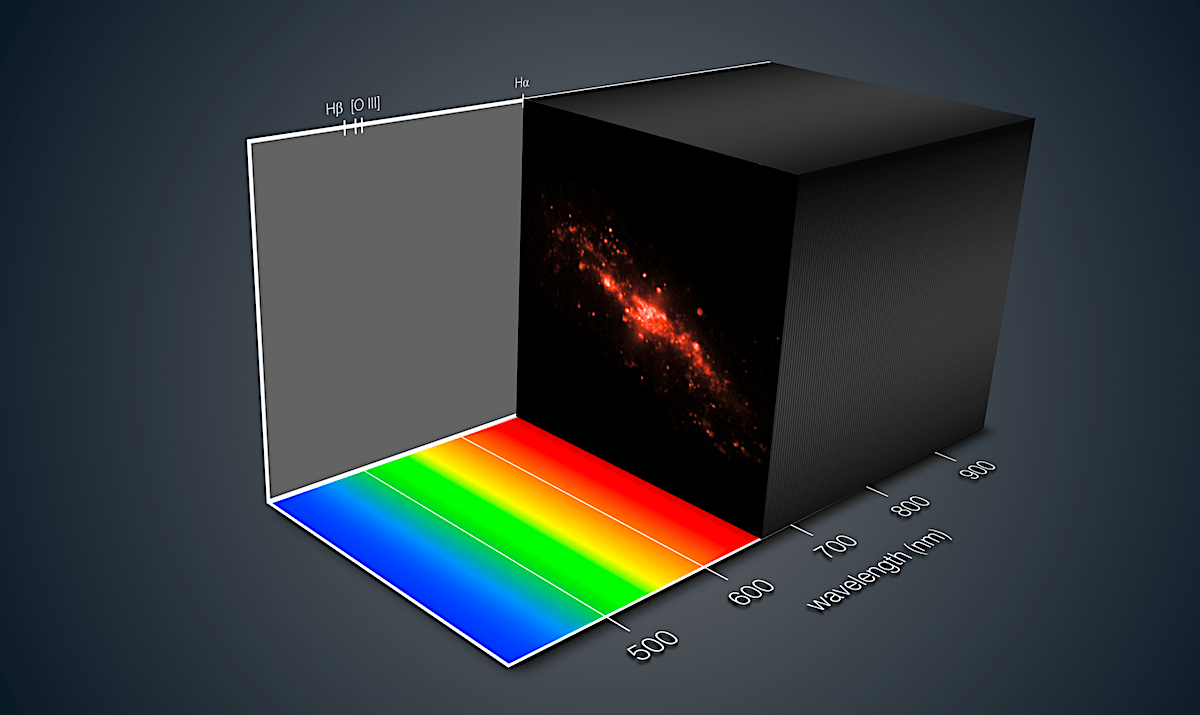
PyISH: Python Integral Field Spectroscopy Simulation for Habitable Worlds Observatory (HWO)
The Habitable Worlds Observatory (HWO) will be a large ultraviolet/optical/near-infrared space telescope operating at the Sun-Earth Lagrange point L2.