Horizontal Transport As A Source Of Disequilibrium Chemistry On The Nightside Of A Hot Exoplanet
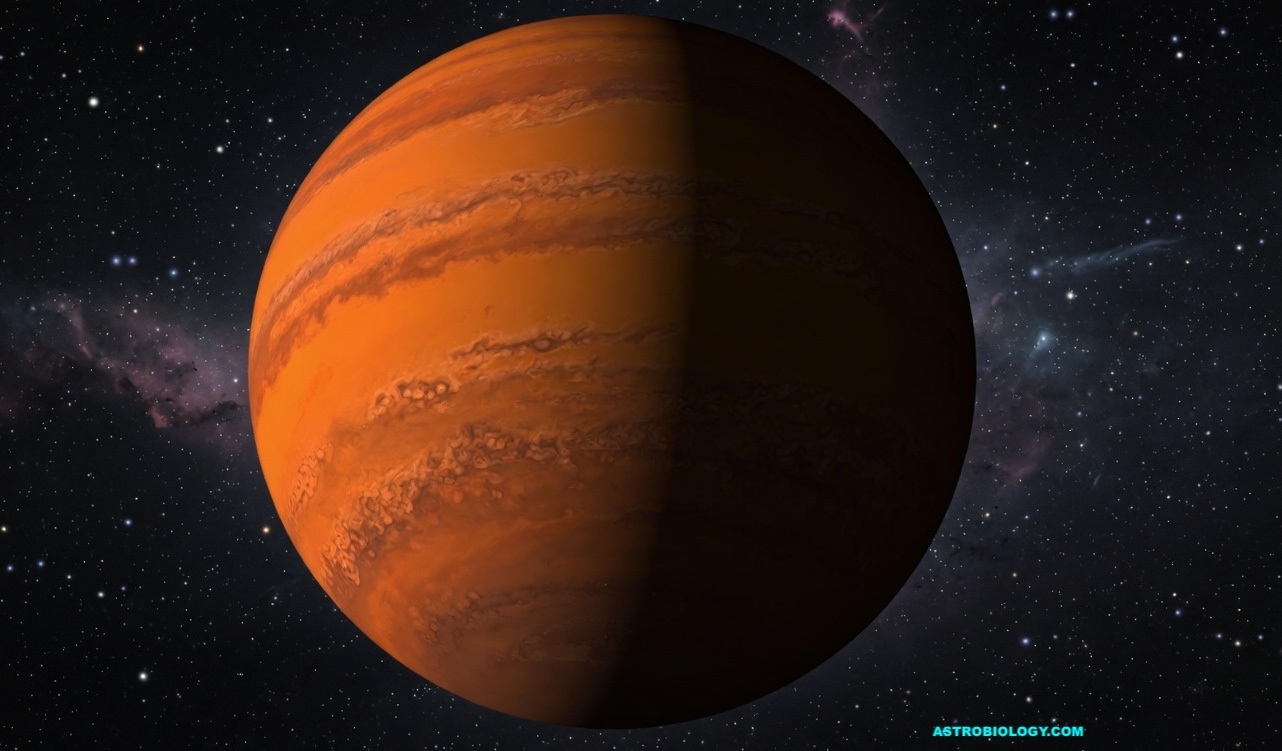
Hot Jupiters have temperature gradients of several hundreds of degrees between their permanent daysides and nightsides.
Such a strong gradient creates winds with speeds of the order of kilometres per second, which advect chemical species over the whole planet. When this transport is faster than the time needed for chemical species to react, it holds back the chemical equilibration of the atmospheric carbon reservoir, which would otherwise transition from CO on the dayside to CH4 on the nightside.
Direct evidence of this process has remained elusive so far, as it is often degenerate with other atmospheric processes, such as vertical mixing or non-stellar elemental abundances. Here we present observational evidence for such a fast day-to-night horizontal transport of chemical species by observing the full 18-h orbit of the exoplanet NGTS-10A b with the JWST/NIRSpec instrument.
We show that the carbon chemistry is dominated by CO in both the dayside and the nightside of the planet, with a strong depletion of CH4 on the nightside compared with expectations from chemical equilibrium.
By measuring the atmospheric abundances of all the main carbon and oxygen molecules, we further demonstrate that the lack of CH4 on the planetary nightside cannot be attributed to non-solar elemental abundances or to vertical mixing mechanisms and must, therefore, be due to fast horizontal transport.
Our study shows the fundamental role that atmospheric transport plays in shaping the distribution of chemical species on exoplanet atmospheres.
Horizontal transport as a source of disequilibrium chemistry on the nightside of a hot exoplanet, Nature
Astrobiology, exoplanet,