Acidophilic Fungi As Possible Candidates For Living Forms In Venus’ Clouds
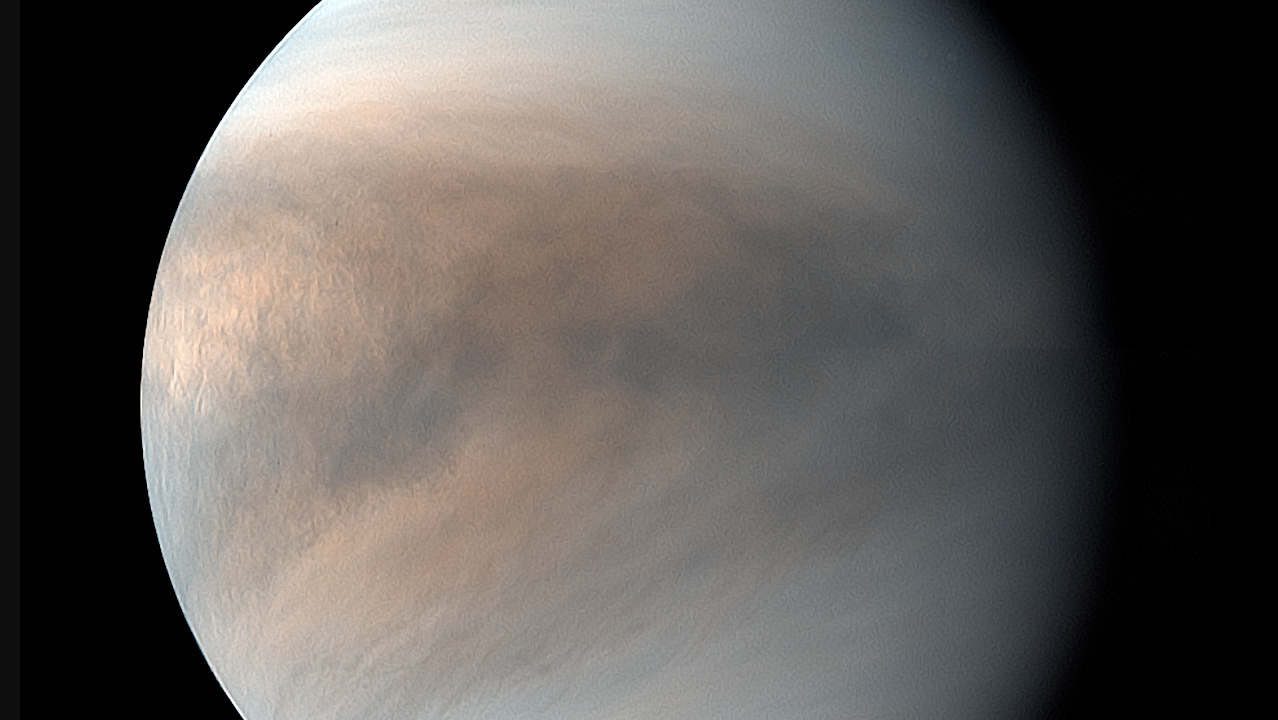
Present-day Venus, similar to Earth in terms of relative radius, acceleration of gravity and mean density, is characterised by a very strong greenhouse effect and full cloud cover.
Numerical simulations and 3D-climate models suggest that Venus may have had a hospitable climate and surface water in the past. Therefore, potential Venusian life could have migrated to the clouds, which provide conditions that might support life. Many fungi have been identified as polyextremophiles, successfully coping with multiple stressors, like irradiation, extremes of temperatures and pH, low water availability.
Acidophilic fungi could thus be candidates for potential Venus cloud inhabitants. We have analyzed the UV-Vis spectra of the spores of three acidophilic fungal species, Acidiella bohemica, Acidomyces acidophilus, and Acidomyces acidothermus.
The UV-Vis spectrum of A. acidothermus showed three peaks of increased absorbance at 243 nm, 275 nm, and 323 nm, whereas in the case of A. bohemica and A. acidomyces one peak of maximal absorption was observed, at 265 nm and 258 nm, respectively. This partially overlaps with the wavelength range of the Venus “mysterious” UV absorber.
Until future Venus missions provide more data, fungi with extremophilic properties should not be overlooked when considering possibility of life in the Venus clouds.
- Acidophilic fungi as possible candidates for living forms in the Venus clouds, Nature via PubMed (open access)
- Acidophilic fungi as possible candidates for living forms in the Venus clouds, Nature (open access)
Astrobiology,