Narrowband Radio Technosignature Search Toward 3I/ATLAS With FAST
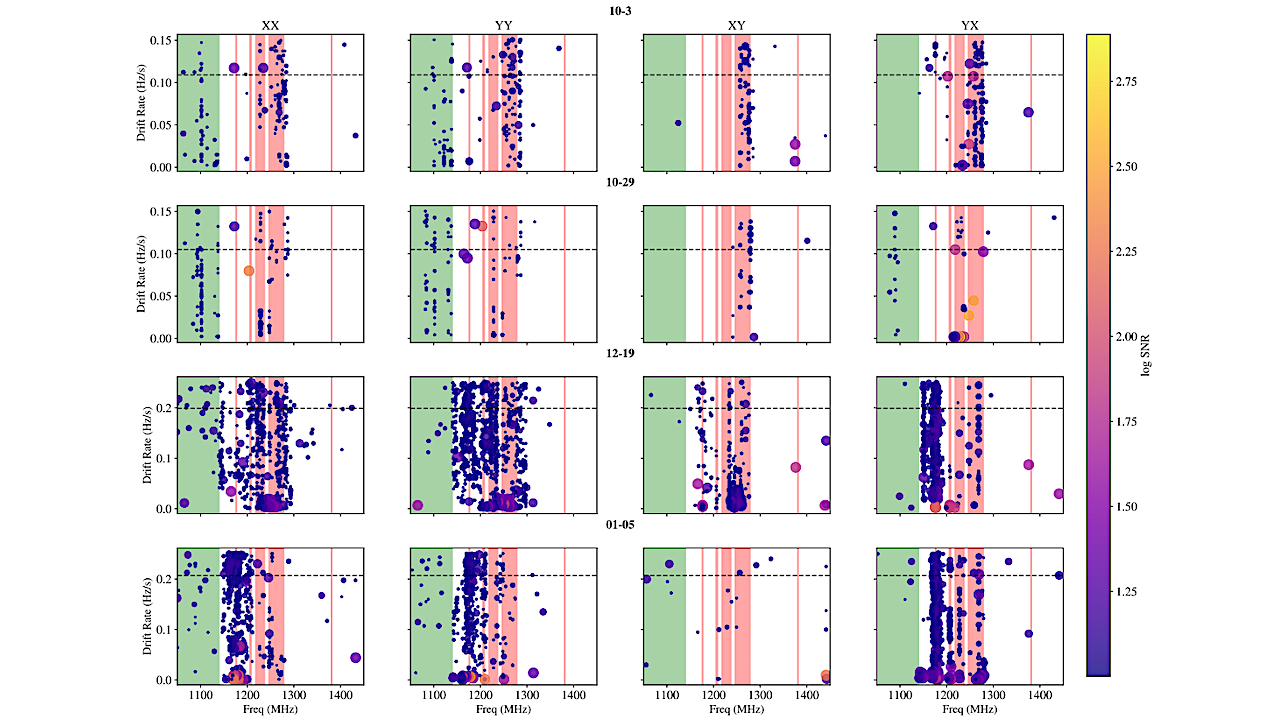
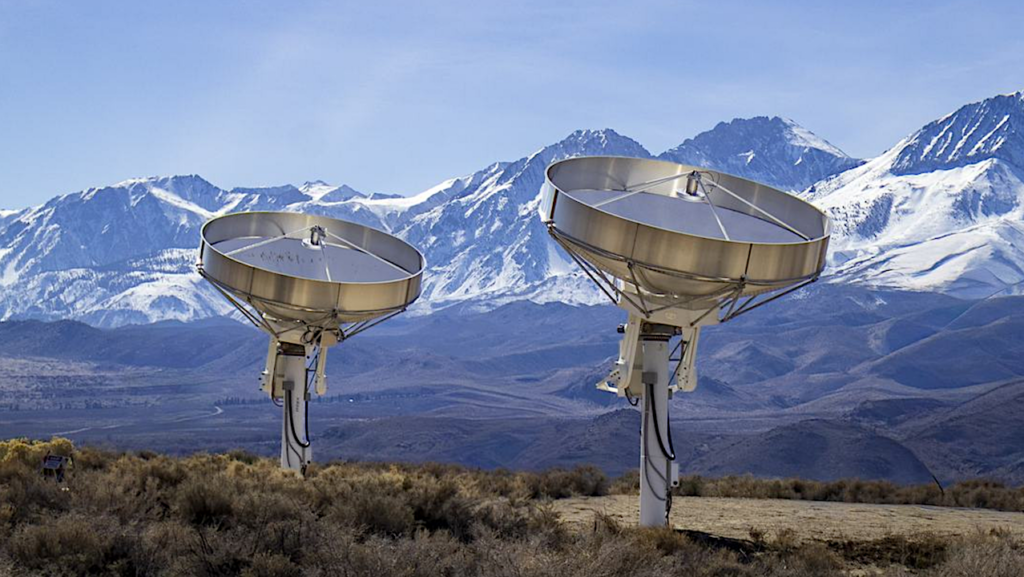
3I/ATLAS is the third confirmed interstellar object passing through the Solar System. In this work, we conduct narrowband radio technosignature search toward 3I/ATLAS using the Five-hundred-meter Aperture Spherical Telescope (FAST) L-band multibeam receiver from October 2025 to January 2026 on 4 separate dates (i.e. Mars closest, perihelion, Earth closest and flew away from Earth, respectively).
We carry out frequency-drifting signal searching with signal-to-noise ratio (SNR) over 10 within 1.05-1.45 GHz via bliss pipeline. These signal hits are grouping into event by beam, frequency and drift rate matching, the events are then filtered by cluster analysis and drift rate cut-off.
We also characterized the events by their significance in SNR, structure tensor as well as principal component analysis (PCA). No credible narrowband radio technosignature are detected from 3I/ATLAS after visual inspections. The null results place constraints on the presence of transmitters above 2.862×10⁻³ W. We further introduce a Bayesian inference framework to constraints on the existence probability and characteristic power of hypothetical transmitters using physically motivated priors to bracket plausible transmitter scenarios.
Jian-Kang Li, Zhen-Zhao Tao, Tong-Jie Zhang
Comments: 26 pages, 15 figures, 6 tables. Submitted to AAS Journals
Subjects: Instrumentation and Methods for Astrophysics (astro-ph.IM)
Cite as: arXiv:2603.19023 [astro-ph.IM](or arXiv:2603.19023v1 [astro-ph.IM] for this version)
https://doi.org/10.48550/arXiv.2603.19023
Focus to learn more
Submission history
From: Jiankang Li
[v1] Thu, 19 Mar 2026 15:24:06 UTC (29,187 KB)
https://arxiv.org/abs/2603.19023
Astrobiology, SETI,