Nanopore Sequencing: A Way To Explore Life’s Origins
In future years, it seems likely that someone will claim they have discovered a process that allows a mixture of simple molecules to assemble into structures and systems with the fundamental properties of life.
A useful exercise for researchers is to imagine what those properties might be and then design experiments to test ideas about how those properties could emerge on early Earth and other habitable planets.
A variety of polymers play key roles in living systems, and we now have powerful analytical tools to analyze their structure and functions. One of these tools is the ability to determine base sequences of nucleic acids by gel electrophoresis, which led to the publication of the human genome in 2001 by the International Human Genome Sequencing Consortium.
Another is nanopore sequencing, which has the unique ability to sequence not just fragments from a purified source of DNA but also individual molecules in mixed populations of nucleic acid polymers.
Here, I will describe how we are using nanopore sequencing to explore processes by which nucleic acids could have emerged on early Earth 4 billion years ago, before life began.
- Nanopore Sequencing: A Way to Explore Life’s Origins, Astrobiology via PubMed
- Nanopore Sequencing: A Way to Explore Life’s Origins, Astrobiology (open access)
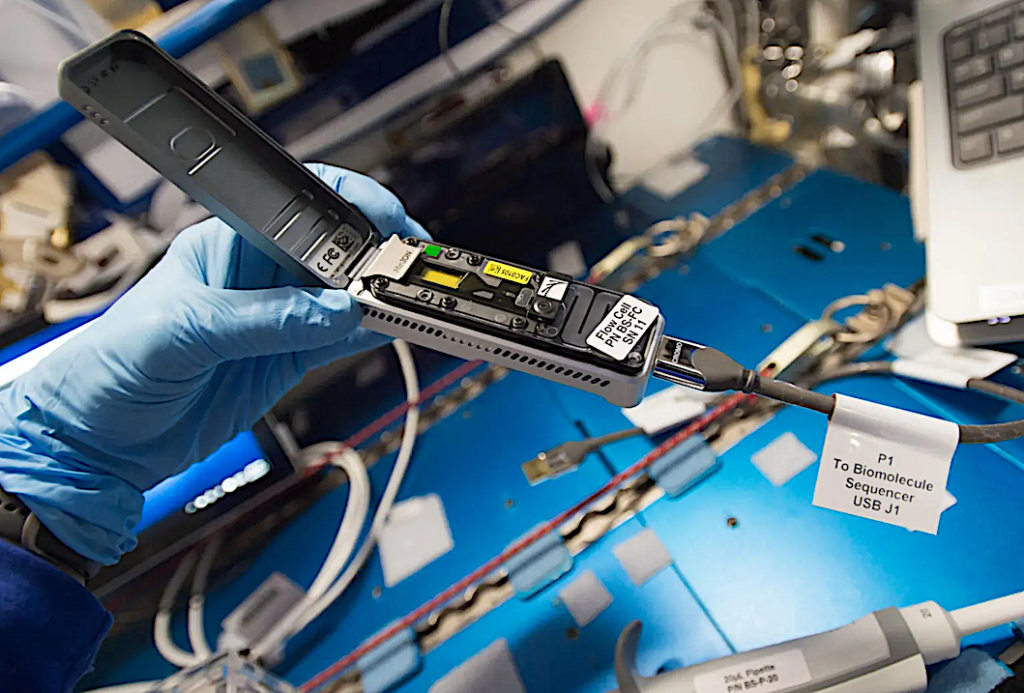
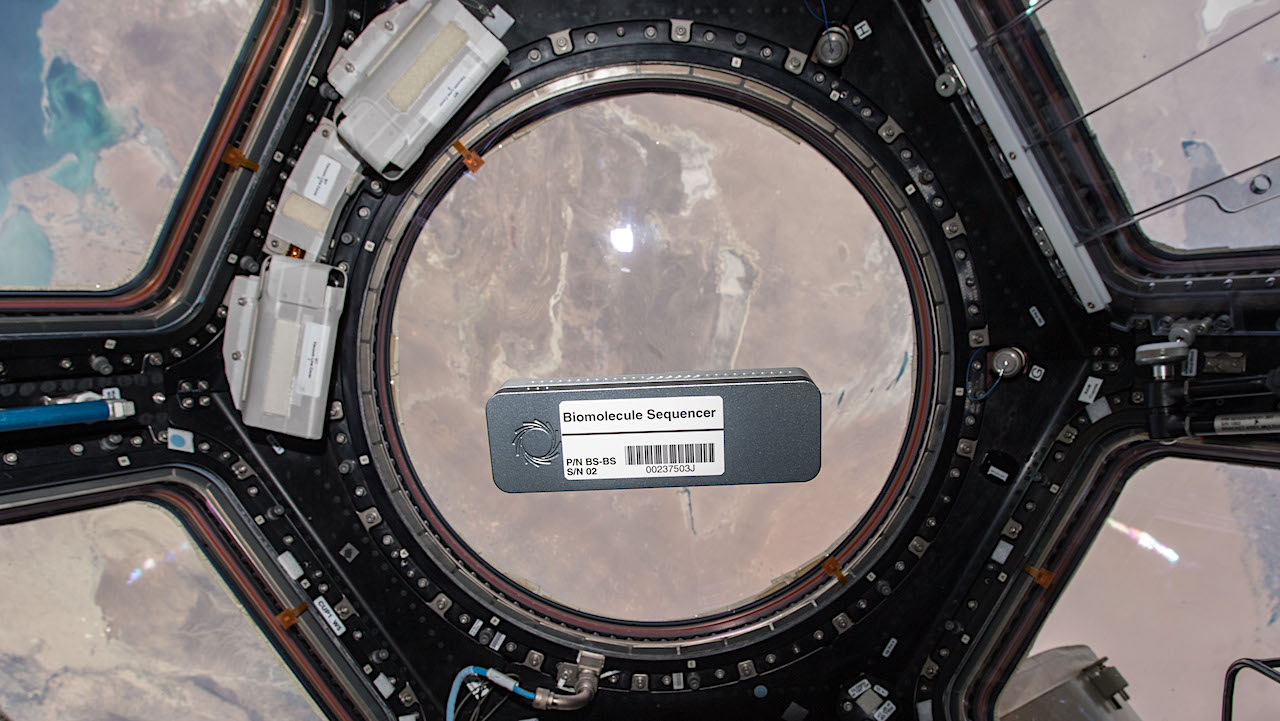
Former NASA astronaut Peggy Whitson works on the Genes In Space-3 experiment demonstrating ways in which portable, real-time DNA sequencing can be used to monitor crew health aboard the space station. — NASA Source
- Tricorder Tech: Unlocking the Full Potential of Nanopore Sequencing: Tips, Tricks, and Advanced Data Analysis Techniques, Astrobiology.com
- Timeline Of DNA Sequencing Technology On The International Space Station, Astrobiology.com
- Offworld Genomics Research On the ISS: Studying DNA in Space, Astrobiology.com
- Nanopore sequencing posts, Astrobiology.com
Astrobiology, genomics,