From Space Dust To Protocells: Micrometeorites In Early Cellular Evolution

Solid surfaces have long been considered catalysts in prebiotic chemistry, yet their physical energy has rarely been explored as a driver of protocell assembly.
This opinion article highlights recent experimental advances demonstrating that oxide minerals, Hadean Earth analogs, and martian meteorite specimens autonomously promote the assembly and transformation of lipid protocells without chemical catalysis.
Surface-adhered compartments form mechanically resilient protocell colonies, nanotube-connected protocell networks enabling direct molecular transport, and flat protocells with spontaneous fusion and compositional diversification-capabilities absent in cell-sized free-floating vesicles.
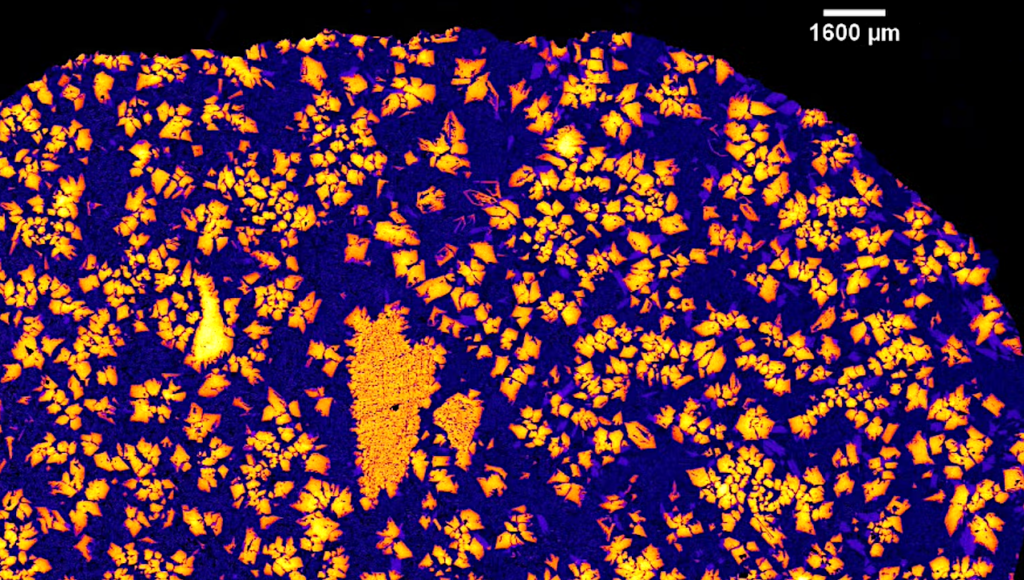
Extending these findings to extraterrestrial materials, new results indicate that micrometeorites, with their freshly generated, rough, and porous surfaces produced during atmospheric entry, efficiently nucleate protocell assembly.
Given the continuous global influx of micrometeorites and growing astrobiological evidence of organics in cosmic dust, I propose that micrometeorites represent previously underappreciated initiators of protocell development, linking early Earth environments with contemporary planetary science and the search for life elsewhere.
- From Space Dust to Protocells: Micrometeorites in Early Cellular Evolution, Astrobiology via PubMed
- From Space Dust to Protocells: Micrometeorites in Early Cellular Evolution, Astrobiology (open access)
Astrobiology,