Aurora Vent Field Is A Hotspot For Microbial Hydrogen Oxidation In The Arctic Ocean
Molecular hydrogen (H2) is a widespread, energetically efficient reductant supporting microbial metabolism across most known ecosystems. Although seafloor hydrothermal vents are major energy providers for H2-oxidizing microorganisms, the diversity of H2 oxidation potential in H2-rich systems remains poorly constrained.
Here, we use a metagenomic approach to, for the first time, assess the genome-resolved microbial energy conservation potential within hydrothermal deposits and sediments from the ice-covered, extraordinarily H2-rich Aurora Vent Field in the Arctic Ocean. Community-wide analysis revealed broad taxonomic representation of microorganisms with the potential to consume H₂ for energy conservation.
Notably, we report the first genome belonging to the cosmopolitan Zetaproteobacteria genus Mariprofundus encoding the capacity for H2 oxidation. Additionally, novel, highly abundant Aquificota at Aurora encode uptake hydrogenases not previously characterized as central to H2 oxidation at deep sea vents.
The encoded gene content of abundant taxa points to a preference for flexible rather than obligate lithotrophic energy metabolism. A substantial fraction of inferred H2-oxidizing potential is associated with presumed heterotrophs, potentially enhancing carbon transfer efficiency within the Aurora microbial food web. Overall, this study sheds new light on the importance of H2 availability for shaping microbial communities in hydrothermal systems.
Importance Hydrogen oxidation is a potent energy source for microorganisms that contributes to shaping and sustaining food webs in marine and terrestrial habitats, with particular importance in deep-sea chemosynthetic communities.
This study provides detailed insights into how exceptionally high hydrogen availability at the Aurora Vent Field may influence microbial community structure, revealing that hydrogen oxidation potential is widespread among diverse, metabolically versatile taxa rather than obligate hydrogen oxidizers.
Our findings refine current understanding of microbial energy flow and carbon cycling in hydrogen-rich hydrothermal systems. These results inform future efforts to model microbial food webs, predict ecosystem responses to changing geochemical conditions, and explore metabolic interactions in deep-sea chemosynthetic habitats more broadly.
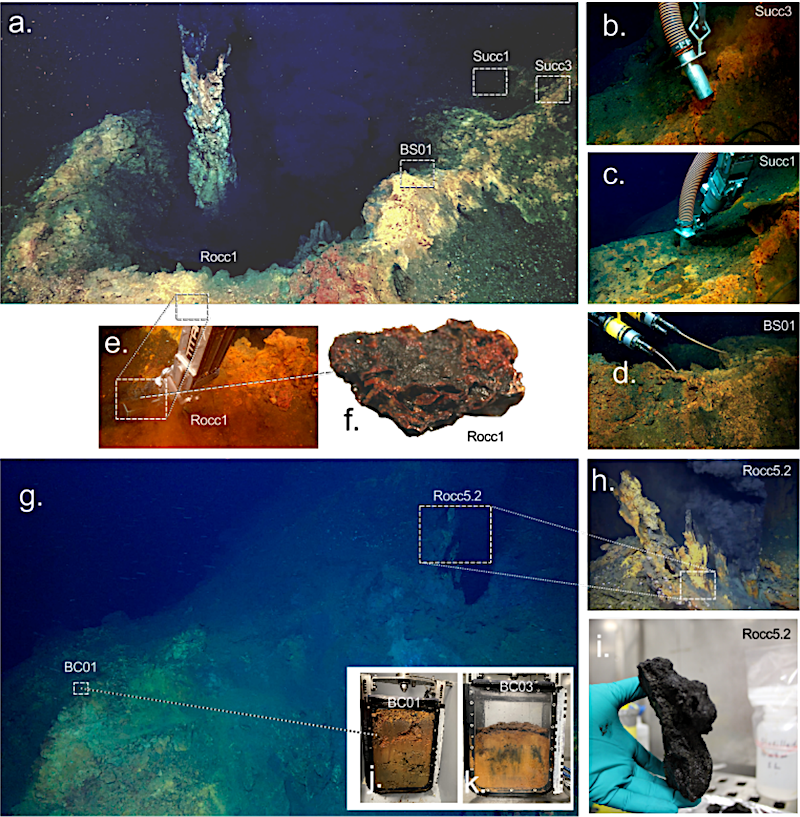
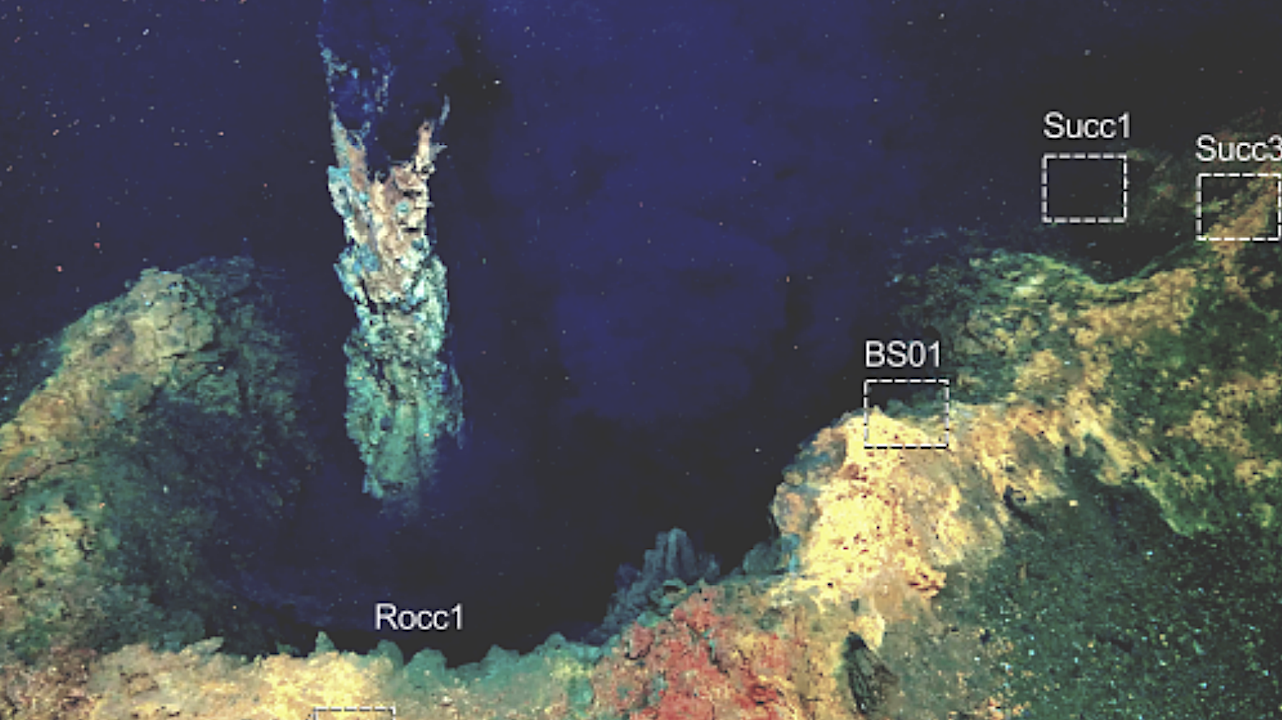
Overview of sampling locations at the Aurora Vent Field (AVF) where DNA was detected. (a) Visual of all sampling sites on the sulfide mound surrounding Hans Tore vent. (b–c) Still images of suction sampling (Succ1 and Succ3). (d) Hydraulic cylinder sampling (BS01). (e–f) Hydrothermal deposit collection (Rocc1) and the corresponding sample photographed onboard the vessel. (g) Sampling areas near Enceladus vent. (h–i) Collection and onboard image of an inactive chimney hydrothermal deposit near the Enceladus black smoker (Rocc5.2). (j–k) Shallow sediment cores collected a few meters from the Enceladus vent (BC01 and BC03). — biorxiv.org
Aurora vent field is a hotspot for microbial hydrogen oxidation in the Arctic Ocean, biorxiv.org
Astrobiology, Oceanography,