Ultraviolet Observations Of Atmospheric Escape In Exoplanets With The Habitable Worlds Observatory
Among the many recommendations of the Decadal Survey on Astronomy and Astrophysics 2020, we found that a priority area of research is to pave the pathways towards finding and characterizing habitable worlds.
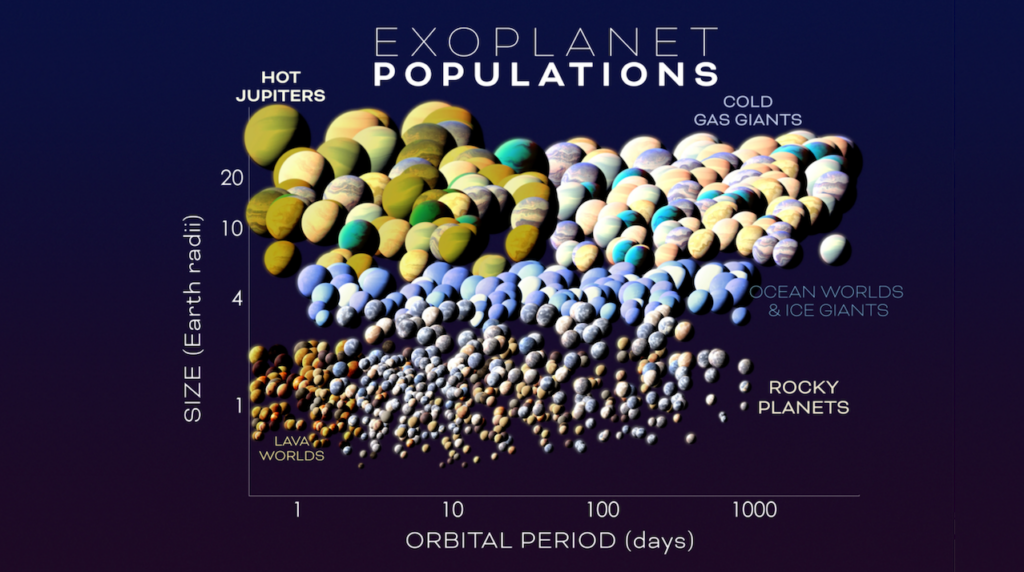
In this context, we aim to understand how planetary systems evolve through atmospheric escape and develop techniques to identify potentially Earth-like worlds. Using the ultraviolet (UV) capabilities of the Habitable Worlds Observatory, we can use transit spectroscopy observations to determine what processes drive the evolution of exoplanets, how well small exoplanets can retain atmospheres, and search for Earth-like atmospheres.
We advocate the development of a UV spectrograph that is capable of moderate- to high-resolution spectroscopy of point sources, access to key spectral features between 1000 and 3000 Å, and UV detectors that are resilient to high count rates.
Ultraviolet observations of atmospheric escape in exoplanets with the Habitable Worlds Observatory, SPIE
Astrobiology