Designing Peptide Fossils That Model the Evolution of the Bacterial Ferredoxin Fold
Electron transfer coupled to redox chemistry is at the heart of metabolism. The proteins responsible for moving electrons (protein electron carriers) must have emerged at the origin of life.
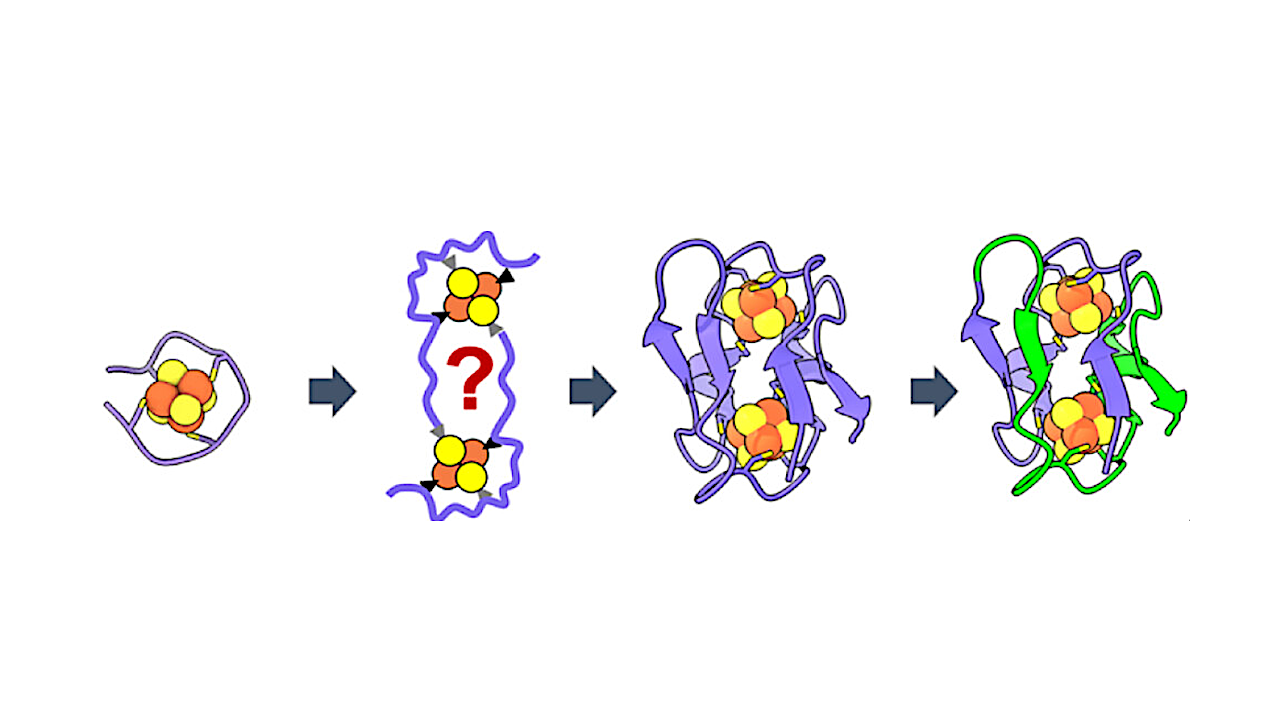
The small iron–sulfur-binding bacterial ferredoxins were likely among these first proteins. Embedded within the ferredoxin sequence and structure is a symmetry that points to an ancient gene duplication event. Little is understood about the nature of ferredoxins prior to this duplication event or what environmental factors may have driven the selection for more complex forms.
The deep-time molecular history of ferredoxins goes back billions of years and cannot be reconstructed by phylogenetic analyses based on amino acid sequences. Here, we use structure-guided protein design to model a fossil half-ferredoxin stage in the evolution of this fold, the semidoxins, and their symmetric full-length counterparts, the symdoxins.
Semidoxin designs homodimerize, exhibiting structural, thermodynamic, and electrochemical behaviors in most cases identical to cognate symdoxins. However, the semi- and symdoxin fossil stages behave differently when incorporated into an in vivo electron transfer complementation assay. Both can support bacterial growth dependent on protein expression.
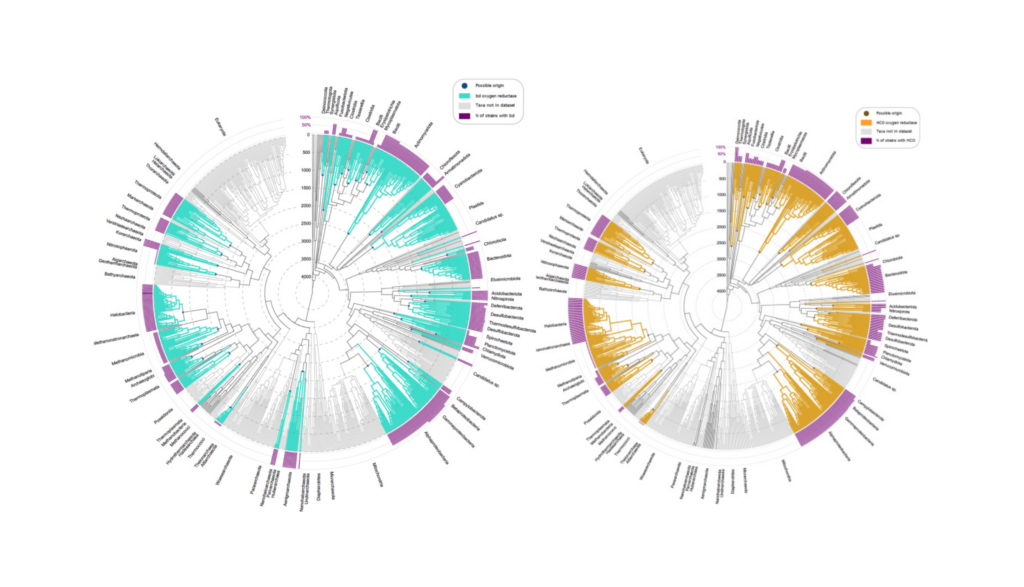
Growth rates of bacteria expressing the semidoxins are much more sensitive to oxygen than those of bacteria expressing symdoxins. Motivated by the in vivo functionality of designed semidoxins, we identified putative naturally occurring semidoxins in extant anaerobic microorganisms.
This is consistent with the observed in vivo oxygen sensitivity of the semidoxin designs. One natural semidoxin is shown to be folded and redox active. However, it exists as a mixture of monomers and dimers, suggesting a potential connection between semidoxins and even simpler single iron–sulfur cluster-binding peptides.
- Designing Peptide Fossils That Model the Evolution of the Bacterial Ferredoxin Fold, ACS via Pubmed
- Designing Peptide Fossils That Model the Evolution of the Bacterial Ferredoxin Fold, ACS (open access)
Astrobiology, Genomics,