Hydrothermal Origin Of Metabolic Phosphorylation
Phosphate is central to modern bioenergetics and to all theories for the origin of life. How phosphate entered metabolism is unknown, though microbial physiology and geochemical environments can provide important clues.
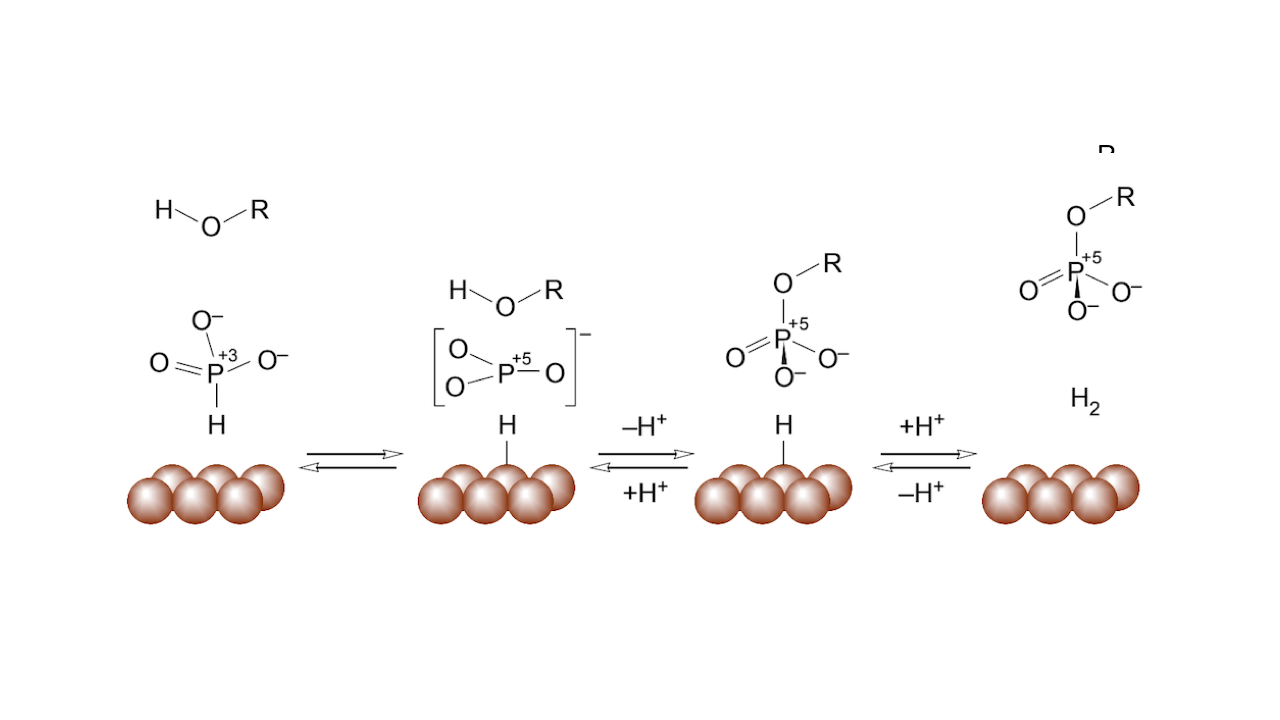
Some bacteria obtain electrons and energy from phosphite (HPO32–), a reduced form of phosphate (HPO42–), that naturally occurs in serpentinizing (H2-producing) hydrothermal systems. Here we show that the insoluble, solid-state catalyst native palladium, which is naturally deposited in serpentinizing hydrothermal systems, catalyzes the oxidation of phosphite to phosphate and H2 in water at 25–100 °C in a highly exergonic reaction.
Palladium awaruite (PdxNi3Fe), a common form of Pd0 in serpentinizing vents, also catalyzes phosphite-dependent phosphorylation. Phosphite oxidation over Pd0 generates a reactive but so far unidentified chemical intermediate, possibly metaphosphate, [PO3]−, that readily phosphorylates hydroxyl moieties in glycerol, ribose, glucose, serine and cytidine at 25–100 °C in 2–72 h.
The same conditions also generate (i) phosphoanhydride bonds in pyrophosphate, polyphosphates and ADP, (ii) the phosphoramidate bond in phosphocreatine, (iii) and the acyl phosphate bond in acetyl phosphate, which is obtained overnight at 25 °C with 8% yield. The reactions proceed without sulfur, excluding thioester or metal sulfide intermediates. Phosphite-dependent phosphorylations under serpentinizing hydrothermal vent conditions are facile. They identify a natural, geochemical source of prebiotic phosphorylation and a novel source of metabolic energy at origins.
The central role of phosphate in bioenergetics, metabolism, and nucleic acids could reflect metal-catalyzed, redox chemistry of phosphorus in the environment where metabolism (and life) arose.
Hydrothermal origin of metabolic phosphorylation, biorxiv.org
Astrobiology, extremophile,