Coordinated Proteome-scale Remodeling Underlies Polyextremophilic Survival In Antarctic Cryo-hypersaline Brines
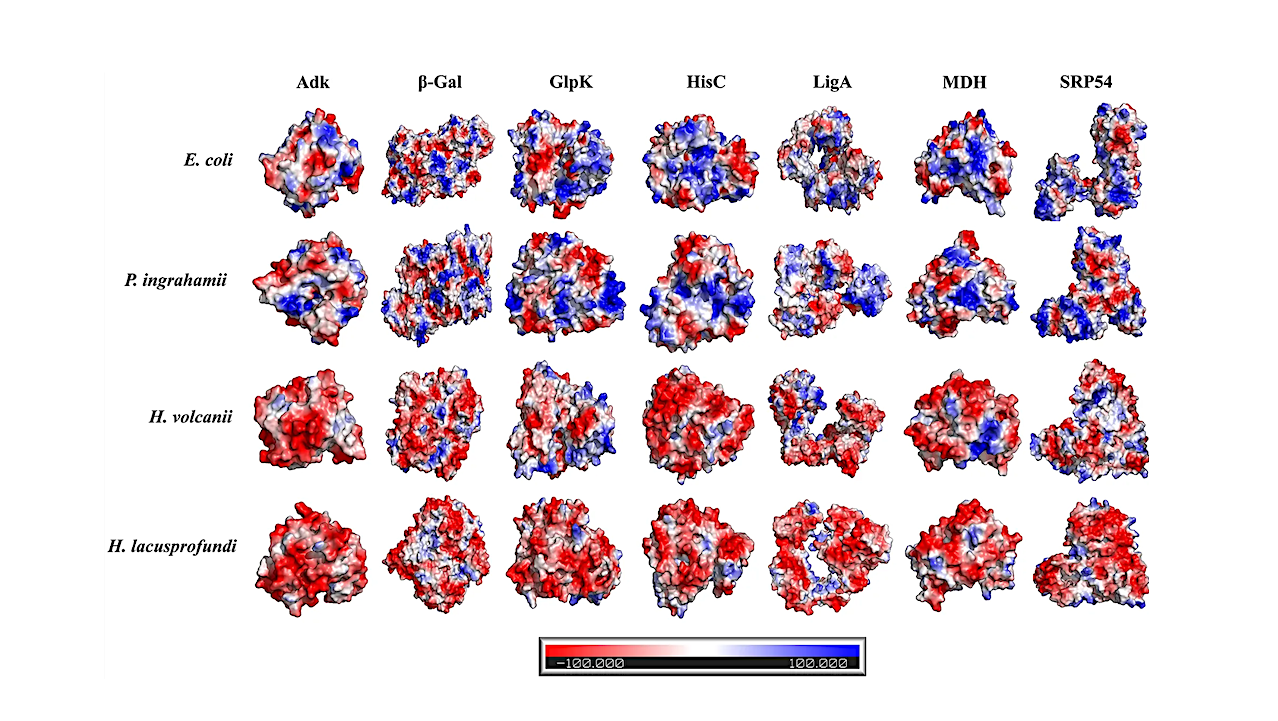
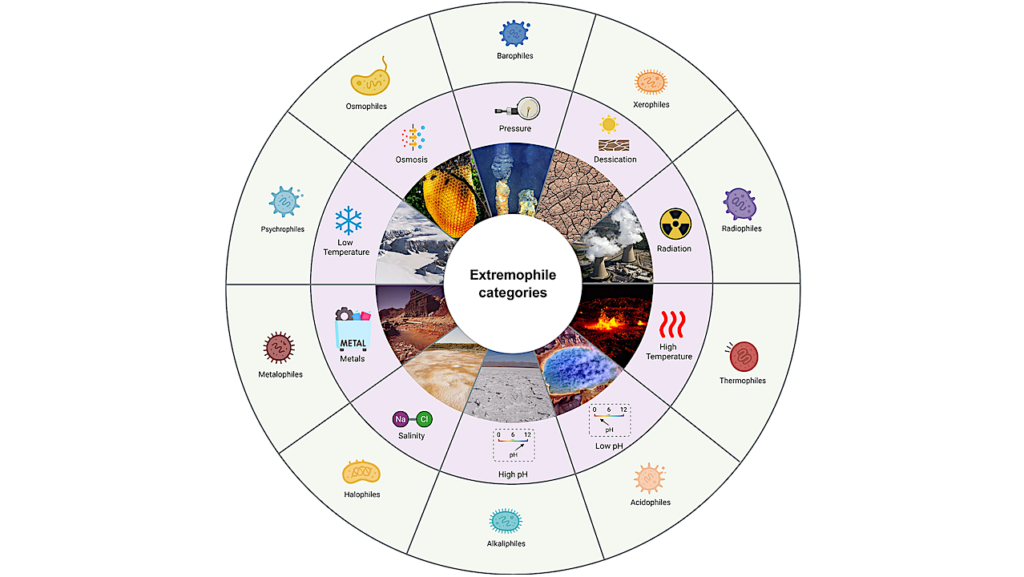
Introduction – Cryo-hypersaline brines combine sub-zero temperatures with near-saturated salinity, creating one of Earth’s most extreme habitats. Antarctic Deep Lake provides a natural model for studying how proteins remain stable and functional under this dual stress and serves as a terrestrial analog for Martian cryo-brines.
Methods – We performed a comparative proteome-scale analysis of Halorubrum lacusprofundi, the dominant haloarchaeon of Antarctic Deep Lake, to define the molecular basis of protein function under simultaneous cold and hypersaline stress. High-confidence structural prediction was integrated with genome-wide physicochemical profiling of more than 3,000 proteins and comparative analysis against mesophilic, psychrophilic, and halophilic reference organisms was performed.
Results – The cryo-hypersaline proteome displayed pronounced acidic enrichment, lower isoelectric points, reduced hydrophobicity, and extensive surface charge redistribution, consistent with enhanced solubility under high ionic strength. However, flexibility profiling showed that this acidic, highly charged framework is not accompanied by uniform rigidification; instead, conformational dynamics were selectively preserved in functionally important regions. Substitution analysis further supported a layered adaptation strategy in which halophilic acidification is retained while cold-relevant mobility is superimposed on this background.
Discussion – These results indicate that the defining feature of cryo-hypersaline adaptation is not any single exclusive structural trait, but the coordinated integration of halophilic solubility determinants with selective dynamic tuning for low-temperature function. Together, this work establishes a multi-layered adaptive framework for protein persistence in Antarctic cryo-brines and provides insight into molecular adaptation in polyextreme environments, including habitats relevant to Martian cryo-brines.
- Coordinated proteome-scale remodeling underlies polyextremophilic survival in Antarctic cryo-hypersaline brines, Frontiers in Microbiology via PubMed
- Coordinated proteome-scale remodeling underlies polyextremophilic survival in Antarctic cryo-hypersaline brines, Frontiers in Microbiology (open access)
Astrobiology, extremophile,