Microbiomes Interconnect On A Planetary-scale, New Study Finds
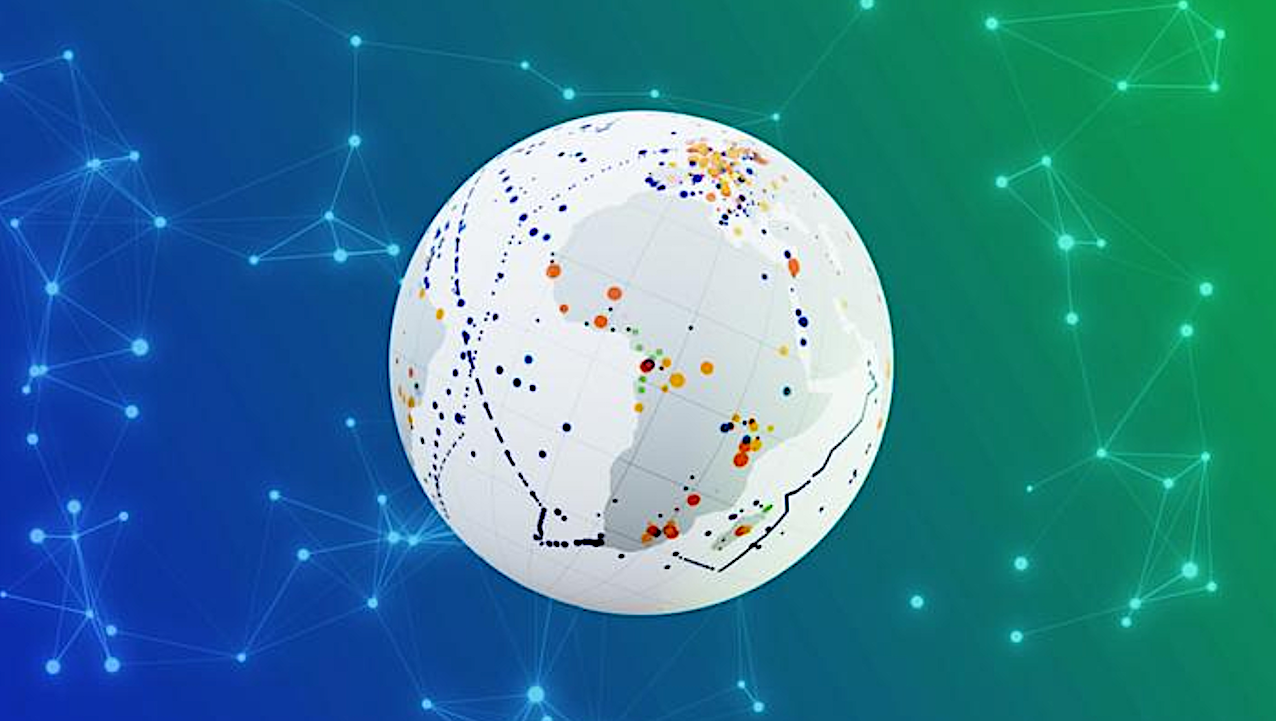
In a new study published in Cell, scientists in the Bork Group at EMBL Heidelberg reveal that microbes living in similar habitats are more alike than those simply inhabiting the same geographical region. By analysing tens of thousands of metagenomes, the team found that while most microbes adapt to a specific ecosystem, a rarer subset known as ‘generalists’ can thrive across very different habitats.
Known for being ecologically tolerant, generalists are capable of moving from habitat to habitat, interacting with and transferring their genes to other microbes, creating what the team describe as an interconnected, planet-wide network of microbiomes.
Developing a more holistic view of the microbiome
Up until now, most large-scale microbiome studies have been on a specific ecosystem basis, due to the technical and logistical constraints that a global analysis poses. The recent development of databases like SPIRE (Searchable, Planetary-scale mIcrobiome REsource) by scientists at EMBL and their international partners has made planet-wide studies more feasible.
As a publicly available database, SPIRE integrates, processes, and annotates microbial data from diverse habitats all over the world. Using 85,604 metagenomic samples from the SPIRE database, EMBL researchers were able to pinpoint 40 distinct microbial habitat types.
“Rather than presuming which environmental drivers shape the microbiome structure, we let the microbes tell us themselves,” said Daniel Podlesny, Research Scientist at EMBL and co-first author on the paper. “We quantified the similarity of each microbiome to all others in the dataset and identified 40 clusters of compositionally similar microbiomes, each comprising hundreds to thousands of samples from multiple independent studies. Using curated contextual metadata from our Metalog database, we then determined what the microbiomes within a cluster have in common, such as host age or ocean temperature.”
Generalist microbes as genetic ‘bridges’
Depending on how they adapt to their environment, scientists broadly classify microbes as either specialists or generalists. As the name implies, specialists can only cope with specific environmental conditions, whereas generalists are capable of thriving in a wide range of habitats.
As generalists move across ecosystems, they laterally transfer their genes to other microbes that they come in contact with, in a process known as horizontal gene transfer. Through this exchange of genetic information, generalists create ‘bridges’ between geographically distant habitats – and therefore microbiomes – that would otherwise not exist.
“Even disparate habitats, with fundamentally different physiochemical conditions, are connected by generalist species,” said Jonas Schiller, Predoctoral Fellow in the Bork Group and co-first author on the study.
Certain human-driven activities, including sewage disposal and anthropogenic climate change, accelerate the dispersal of generalists by creating new and faster routes for microbes to move between. Further compounding this issue is a surge in the overuse and misuse of antibiotics, which leads to generalists evolving antimicrobial resistance genes.
According to the World Health Organisation, antimicrobial resistance is one of the top ten global public health threats, claiming more lives every year than malaria and HIV/AIDS combined. Antimicrobial resistance occurs when bacteria and other microorganisms evolve resistance to drugs, leading to historically treatable infections, like pneumonia, becoming harder, or sometimes impossible, to cure.
Viewing planetary health beyond a human-centred perspective
“Our findings show that such microbes play an important role in linking human, animal, and environmental health – also known as One Health – emphasising the need to view planetary health beyond a purely human-centred perspective,” said Chan Yeong Kim, Postdoctoral Fellow in the Bork Group and co-first author on the study.
Though the concept itself is fairly new, the idea behind One Health dates back to the nineteenth century when Rudolf Virchow, a German physician and physiologist, coined the term ‘zoonosis,’ to describe how infectious diseases can jump from animals to humans.
Today, One Health is embraced by the Quadripartite organisations, a group consisting of the World Health Organisation (WHO), Food and Agriculture Organisation (FAO), World Organisation for Animal Health (WOAH), and United Nations Environment Programme (UNEP).
By revealing that generalists can transfer their genes to other microbes as they move between environments as different as wastewater and the human gut, the team demonstrates just how much human health depends on the health of animals and the planet.
Planetary microbiome structure and generalist-driven gene flow across disparate habitats
Astrobiology, Microbiology,