


Biofilms are intricately associated with life on Earth, enabling functions essential to human and plant systems, but their susceptibility to spaceflight stressors and functional disruption in space remains incompletely understood. […]
2026

Posted inArtemis & Lunar Exploration, Astronomy & Telescopes, Imaging & Spectroscopy, Missions & Hardware, Moon, Status Report
Artemis II’s Possible Impact on JWST Science Operations
January 23, 2026 NASA has recently begun preparations for the Artemis II mission, which will send four astronauts on a journey around the Moon. The Artemis missions share the Deep […]

Posted inAstrochemistry, Astrogeology, Astronomy & Telescopes, Biosignatures & Paleobiology, Comets and Asteroids, Imaging & Spectroscopy, Interstellar, Status Report
SPHEREx Re-Observation of Interstellar Object 3I/ATLAS in December 2025: Detection of Increased Post-Perihelion Activity, Refractory Coma Dust, and New Coma Gas Species
In December-2025, the NASA SPHEREx spacecraft re-observed ISO 3I/ATLAS post-perihelion, finding a much more active object compared to August-2025 SPHEREx pre-perihelion observations, with marked evidence for development into an cometary […]

Posted inBiosignatures & Paleobiology, Genomics, Proteomics, Bioinformatics, Microbiology & Virology, Nanotechnology & SynBio, Origin & Evolution of Life, Status Report
A Gene-Free Minimal System for Synthetic Quorum Sensing in Protocell Communities
Synthetic communication networks are key to engineering life-like behaviors in artificial cells. Inspired by natural quorum sensing, we developed a coacervate-based system that exhibits quorum-sensing-like communication, driven by an autocatalytic […]

Posted inComets and Asteroids, Exoplanets, -moons, -comets, Nomenclature, Systematics, Natural History, Status Report, Stellar Cartography
A Nomenclature For Individual Exocomets
With recent observational advancements, exocomet studies have entered a new era: we have moved from an epoch where exocomets’ signatures were analysed to identify their true nature to a new […]

Posted inGenomics, Proteomics, Bioinformatics, Microbiology & Virology, Origin & Evolution of Life, People Of Astrobiology, Press Release
Resurrected Ancient Enzyme Offers New Window Into Early Earth And The Search For Life Beyond It
By resurrecting a 3.2-billion-year-old enzyme and studying it inside living microbes, researchers at the University of Wisconsin–Madison have created a new way to improve our understanding of the origins of […]

Posted inAstrobiology (general), Biosignatures & Paleobiology, Habitable Zones, Press Release
Rethinking Where Life Could Exist Beyond Earth
Astronomers have long searched for life within a rather narrow ring around a star, the “habitable zone,” where a planet should be neither too hot nor too cold for liquid […]
Posted inAstronomy & Telescopes, Exoplanets, -moons, -comets, Imaging & Spectroscopy, Missions & Hardware, Status Report
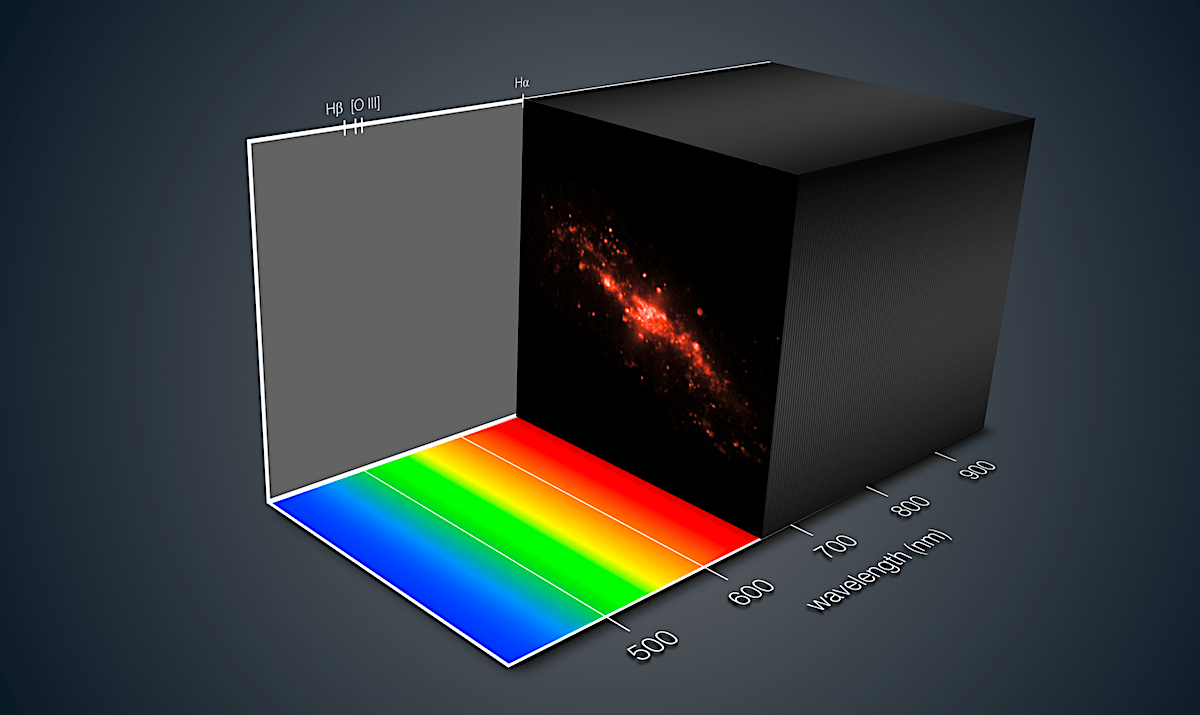
PyISH: Python Integral Field Spectroscopy Simulation for Habitable Worlds Observatory (HWO)
The Habitable Worlds Observatory (HWO) will be a large ultraviolet/optical/near-infrared space telescope operating at the Sun-Earth Lagrange point L2.

Posted inAstrochemistry, Astronomy & Telescopes, Biochemistry & Organic Chemistry, Biophysics, Biosignatures & Paleobiology, Icy Worlds, Imaging & Spectroscopy, Interstellar, Status Report
CO Diffusion on Interstellar Amorphous Solid Water: A Computational Study
Surface chemistry on interstellar dust grains is recognized as a central component in astrochemical models, representing a plausible formation route for many of the observed complex molecular species.

Posted inBiochemistry & Organic Chemistry, Biosignatures & Paleobiology, Genomics, Proteomics, Bioinformatics, Origin & Evolution of Life, Status Report
Origins Of Life: Chemistry And Evolution
Direct chemical synthesis and chemical evolution are conceptually different models for the prebiotic origin of RNA and other biopolymers. These models generate distinct predictions and motivate different experimental approaches.