The First Look of Gaia: Daily Data Quality And Instrument Health Assessment With Automated Early Warnings
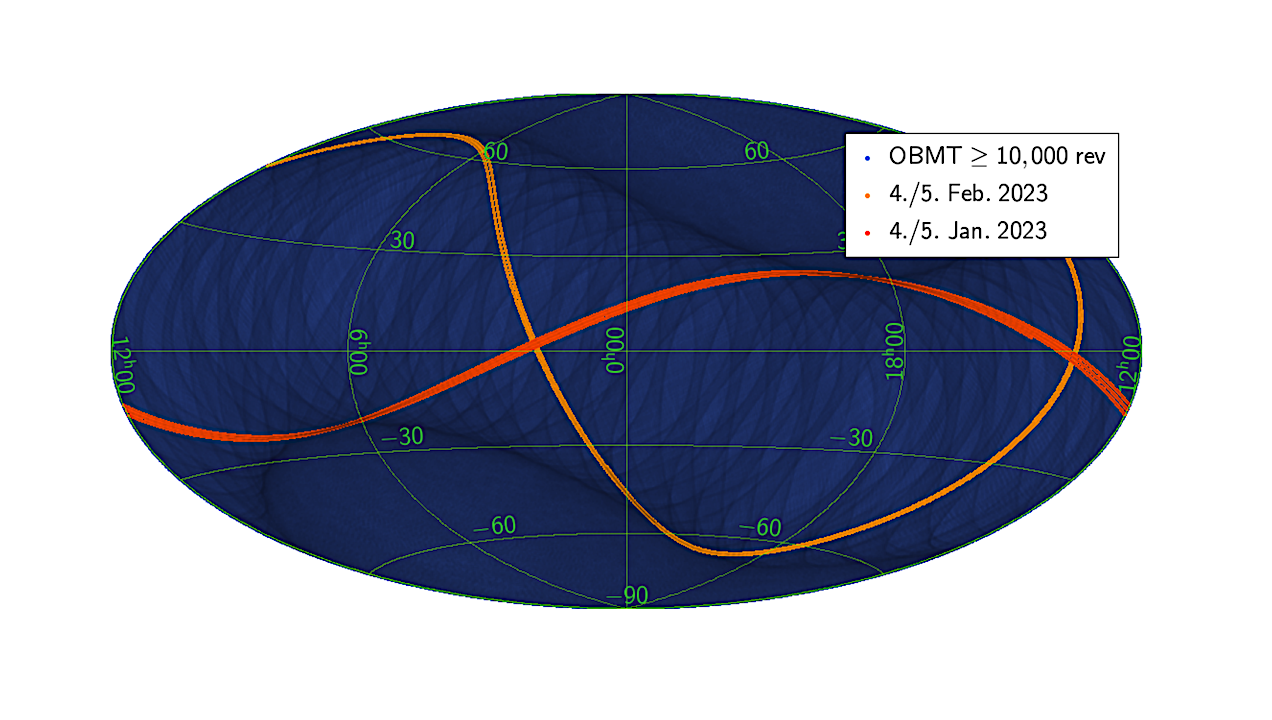
Editor’s note: according to NASA: “With its all-sky survey of the position, brightness and motion of over one billion stars in our Milky Way galaxy, Gaia will provide a large dataset to search for exoplanets. These will be uncovered by monitoring tiny changes in a star’s position and motion caused by the gravitational pull of one or more planets around it, and by looking for dips in the stellar light caused by a planet transiting in front of its parent star.”
The ESA Gaia mission is a 10+ year astrometric whole-sky scan, demanding consistent data quality over the whole timespan of operations
Aims. The Gaia First Look (FL) is a system whose aim is monitoring the data quality to identify problems, which includes early warning capabilities for potential upcoming issues.
Methods. In order to achieve its goals, the Gaia FL implemented its own limited astrometric solution, and used the daily calibrations from other segments of the Data Processing and Analysis Consortium (DPAC), as well as the diagnostic data from the satellite itself, in order to obtain a complete picture of the situation of the Gaia satellite on a daily basis.
This led to a short-term health and data quality check, but also to a broader overview of the longer-term trends and evolutions within the payload. Potential issues that were encountered were reported to other groups within DPAC for further analysis purposes. When required, ways to mitigate the problems were discussed, and implemented.
Results. We show a number of findings by the Gaia FL concerning longer-term evolution, individual but common effects, as well as detrimental impacts, all of which occurred over the operational phase of the Gaia mission
M. Altmann, Z. Balog, W. Löffler, U. Bastian, M. Biermann, A. Sagrista Selles, M. Davidson, N. Rowell, E. Serpell, A. Abreu Aramburu, T. Brüsemeister, C. Crowley, M. Hauser, S. Jordan, J. Martín-Fleitas, A. Mora, E. Fernandez del Peloso, U. Stampa
Comments: 29 pages, 34 figures, accepted for publication in Astronomy & Astrophysics
Subjects: Instrumentation and Methods for Astrophysics (astro-ph.IM)
Cite as: arXiv:2605.03721 [astro-ph.IM](or arXiv:2605.03721v1 [astro-ph.IM] for this version)
https://doi.org/10.48550/arXiv.2605.03721
Focus to learn more
Related DOI:
https://doi.org/10.1051/0004-6361/202659204
Focus to learn more
Submission history
From: Martin Altmann
[v1] Tue, 5 May 2026 13:07:08 UTC (3,890 KB)
https://arxiv.org/abs/2605.03721
Astrobiology, Astronomy, exoplanets, stellar cartography,