An Initial Assessment Of The Hanle Echelle Spectrograph For Exoplanet Atmosphere Studies
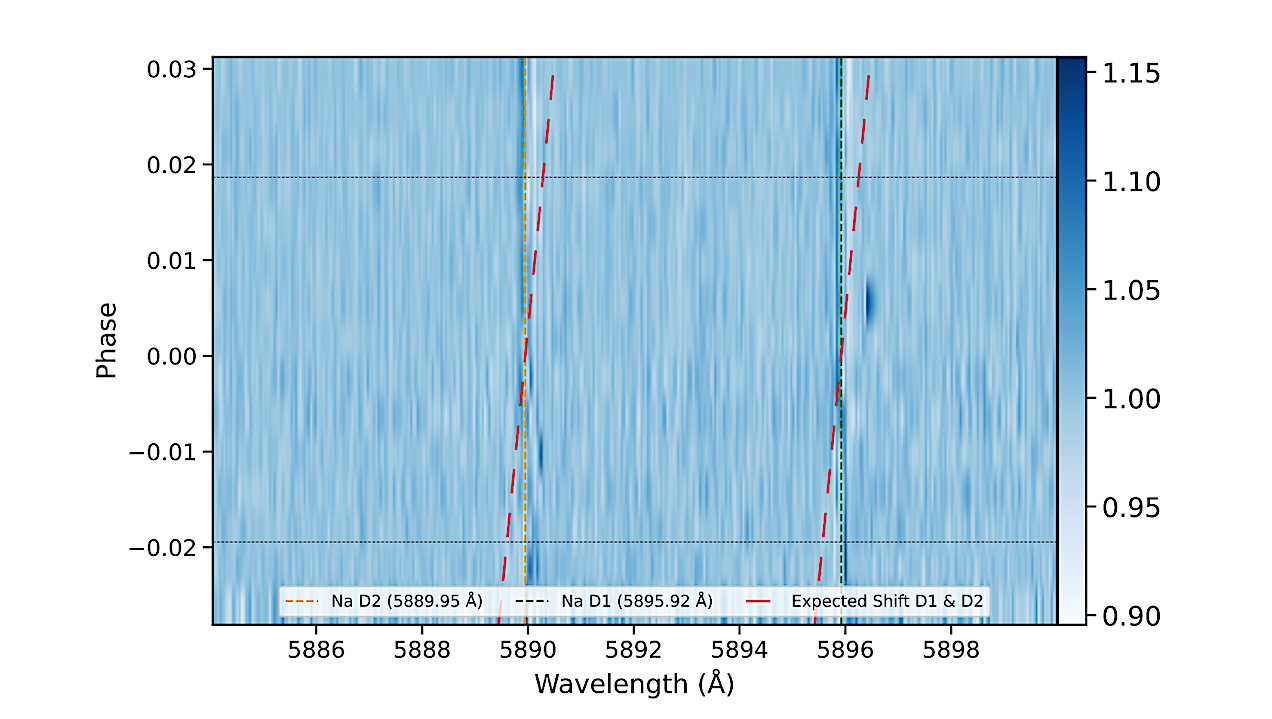
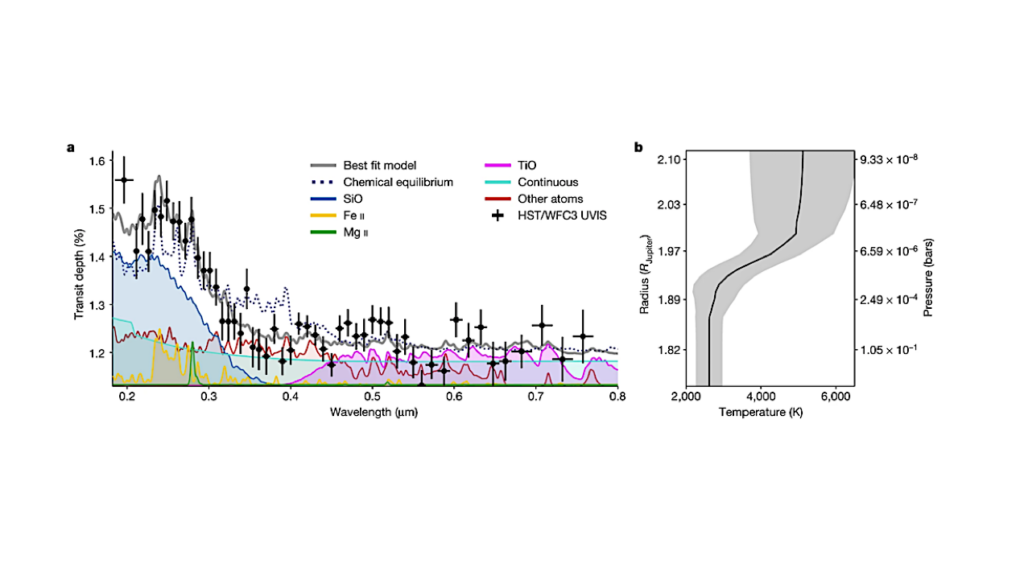
Transmission spectroscopy is an effective technique for probing exoplanetary atmospheres.
While most observations have relied on space facilities such as HST and JWST, ground-based high-resolution transmission spectroscopy (HRTS) has also provided valuable insights by resolving individual atomic features.
In this work, we present an initial performance assessment and feasibility test of the Hanle Echelle Spectrograph (HESP) on the 2 m Himalayan Chandra Telescope (HCT) for HRTS. As a benchmark, we observed the hot Jupiter HD 209458b during a single transit at a resolution of R = 30,000. We developed a Python-based, semi-automated data reduction and analysis pipeline that includes corrections for telluric contamination and stellar radial velocity shifts.
The final achieved signal-to-noise ratio and spectral stability allow us to probe for features at the 0.1% level. This work establishes a methodology and demonstrates the operational capability of the HESP-HCT for obtaining high-resolution transmission spectra.
Manjunath Bestha, Athira Unni, T. Sivarani, Shivangi Menon, Parvathy M, Arun Surya, Pallavi Saraf, Devika Divakar, Lokesh Manickavasaham
Comments: Published in the SPIE Proceedings
Subjects: Earth and Planetary Astrophysics (astro-ph.EP); Instrumentation and Methods for Astrophysics (astro-ph.IM)
Cite as: arXiv:2509.17142 [astro-ph.EP] (or arXiv:2509.17142v1 [astro-ph.EP] for this version)
https://doi.org/10.48550/arXiv.2509.17142
Focus to learn more
Related DOI:
https://doi.org/10.1117/12.3064331
Focus to learn more
Submission history
From: Manjunath Bestha
[v1] Sun, 21 Sep 2025 16:14:02 UTC (483 KB)
https://arxiv.org/abs/2509.17142
Astrobiology,