Microbial Biomining From Asteroidal Material Onboard The International Space Station
Expanding human space exploration necessitates technologies for sustainable local resource acquisition, to overcome unviable resupply missions. Asteroids, some of which rich in metals like platinum group elements, are promising targets.
The BioAsteroid experiment aboard the International Space Station tested the use of microorganisms (bacteria and fungi) to extract 44 elements from L-chondrite asteroidal material under microgravity. Penicillium simplicissimum enhanced the release of palladium, platinum and other elements in microgravity, compared to non-biological leaching.
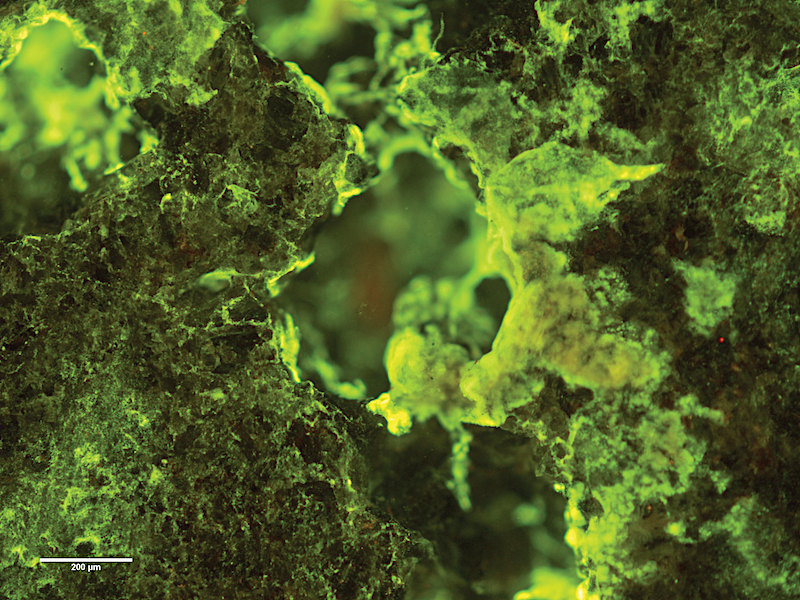
Preflight fluorescence microscopy image of microbial biofilm, Sphingomonas desiccabilis, growing on a slide of basalt rock as part of the Biorock experiment. Organisms are stained with a DNA binding dye. Credits: NASA
For many elements, non-biological leaching was more effective in microgravity than on Earth, while bioleaching remained stable. Metabolomic analysis revealed distinct changes in microbial metabolism in space, particularly for P. simplicissimum, with increased production of carboxylic acids, and molecules of potential biomining or pharmaceutical interest in microgravity.
These results demonstrate the impact of microgravity on bioleaching, highlighting the need for optimal combination of microorganisms, rock substrate, and conditions for successful biomining, in space and Earth.
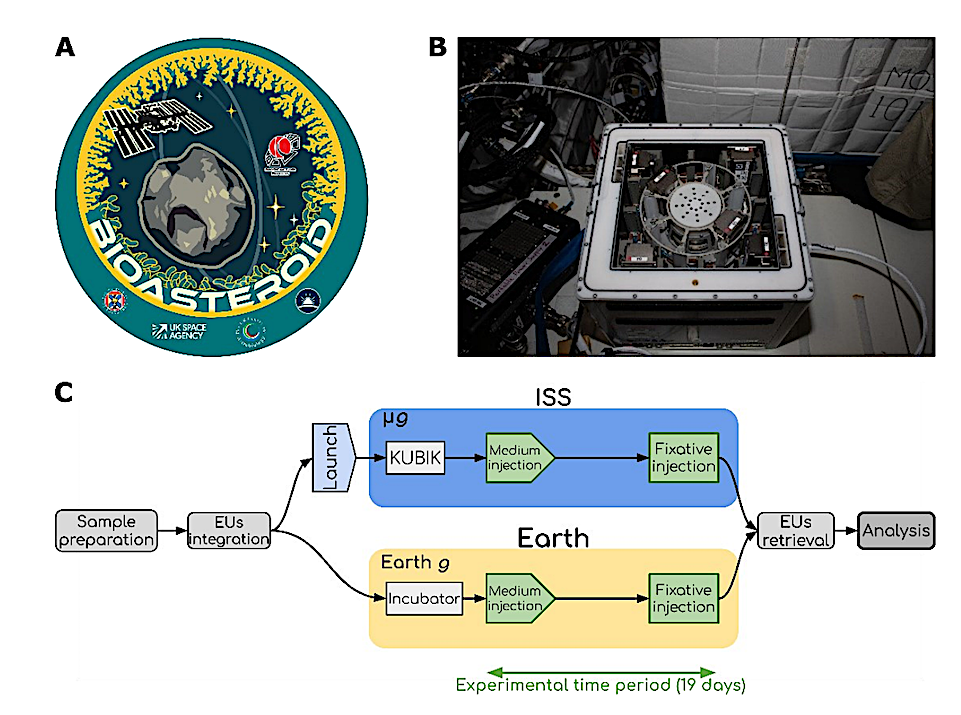
The BioAsteroid experiment. A) BioAsteroid logo, created by Sean McMahon (University of Edinburgh); B) The six hardware units inserted into the KUBIK onboard the ISS (credits ESA/NASA); C) Flow diagram of the experiment. After preparation, samples were integrated into the experimental units (EUs) together with the medium and the fixative. The EUs were either launched to the ISS (blue oval), where they were installed in KUBIK incubators and subjected to microgravity (µg) or kept for incubation on Earth for the terrestrial gravity control (Earth g, yellow oval). Steps in green were part of the experimental time period (19 days). Storage passages were omitted for brevity — biorxiv.org
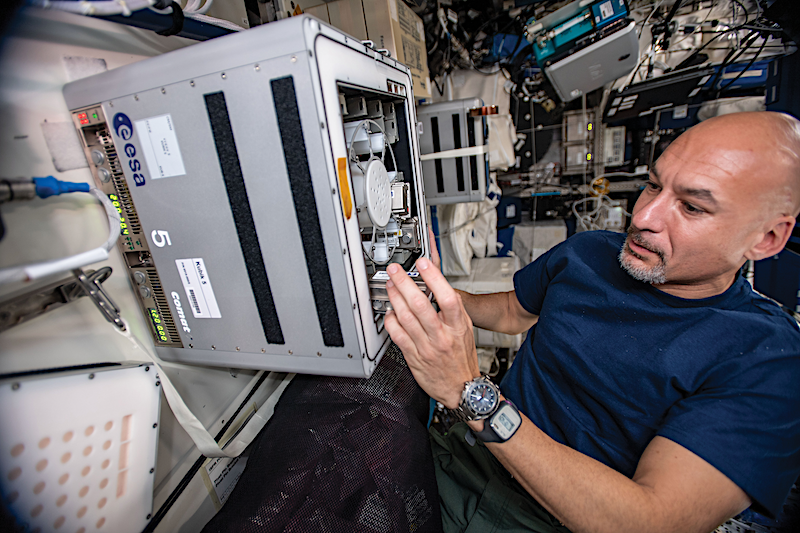
ESA astronaut Luca Parmitano installs the Biorock experiment KUBIK reactor in the space station’s Columbus module. The Biorock investigation is one in a series of experiments to gain insight into the physical interactions of liquid, rocks, and microorganisms under microgravity conditions for novel acquisition of materials in space. Credit: NASA
- Microbial biomining from asteroidal material onboard the international space station, NPJ Microgravity via PubMed
- Microbial biomining from asteroidal material onboard the international space station, NPJ Microgravity (open access)
Related Astrobiology.com links
- BioAsteroid Payload On Orbit
- Testing Microbial Biomining From Asteroidal Material Onboard The International Space Station
- Microbes To Demonstrate Biomining Of Asteroid Material Aboard The Space Station
- Biomining Vanadium Aboard The International Space Station
Astrobiology, microgravity, space commerce, ISRU,