
Halotolerant Bacteria From Mangrove And Restinga Ecosystems In Camocim, Brazil: Astrobiological Relevance And Biotechnological Potential
Halotolerant bacteria possess significant scientific and biotechnological potential due to their ability to thrive in high-salinity environments and withstand other harsh conditions. Their adaptive mechanisms-such as the production of specialized enzymes, and biosurfactants-enable applications in bioremediation, saline wastewater treatment, and industries like food, medicine, and detergents.
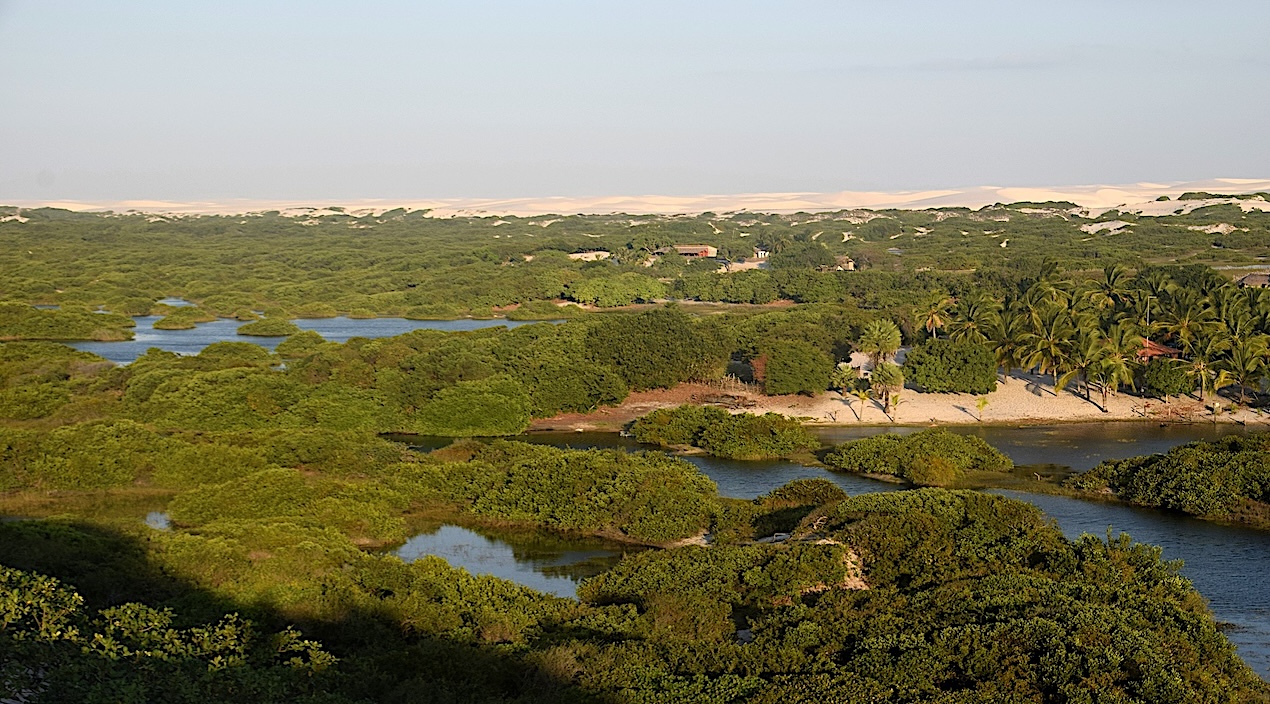
Notably, these bacteria can tolerate not only NaCl but also other salts, including perchlorates, which are highly toxic and abundant on Mars, where they contribute to liquid water stability. In this study, we isolated halotolerant bacteria from underexplored mangrove and restinga sites in Camocim, Ceará, Brazil, and investigated their potential for biotechnological and astrobiological applications.
We assessed their tolerance to NaCl and perchlorate, as well as their ability to produce biosurfactants and enzymes (amylase, lipase, and protease). Additionally, we evaluated their capacity to grow under anoxic conditions using sodium perchlorate as a terminal electron acceptor-a key trait for survival in Mars-like environments.
Among the 20 isolates, predominantly identified as Bacillus sp., all tolerated NaCl concentrations up to 2.57 M, with Bacillus sp. CaSS7 growing at the maximum tested concentration of 3.42 M. Additionally, most strains also withstood sodium perchlorate at 0.783 M.
All isolates produced at least one tested enzyme, and five were biosurfactant producers.
Furthermore, their ability to utilize perchlorate as an electron acceptor under anoxic conditions highlights their potential relevance in astrobiology.
This study underscores the importance of expanding bioprospecting efforts to uncover novel applications of halotolerant bacteria and sets the foundation for future research in biotechnology and planetary science.
- Halotolerant bacteria from mangrove and restinga ecosystems in Camocim, Brazil: astrobiological relevance and biotechnological potential, Brazilian Journal of Microbiology via x-mol.net
- Halotolerant bacteria from mangrove and restinga ecosystems in Camocim, Brazil: astrobiological relevance and biotechnological potential, Brazilian Journal of Microbiology
Astrobiology,


.jpg)