Ecophysiological Study Of Green Microalgae Isolated From The Grit Crust Of The Atacama Desert
Terrestrial algae play a critical, yet often overlooked, role in the functioning of biological soil crusts (biocrusts), which are considered microecosystems, particularly in extreme environments.
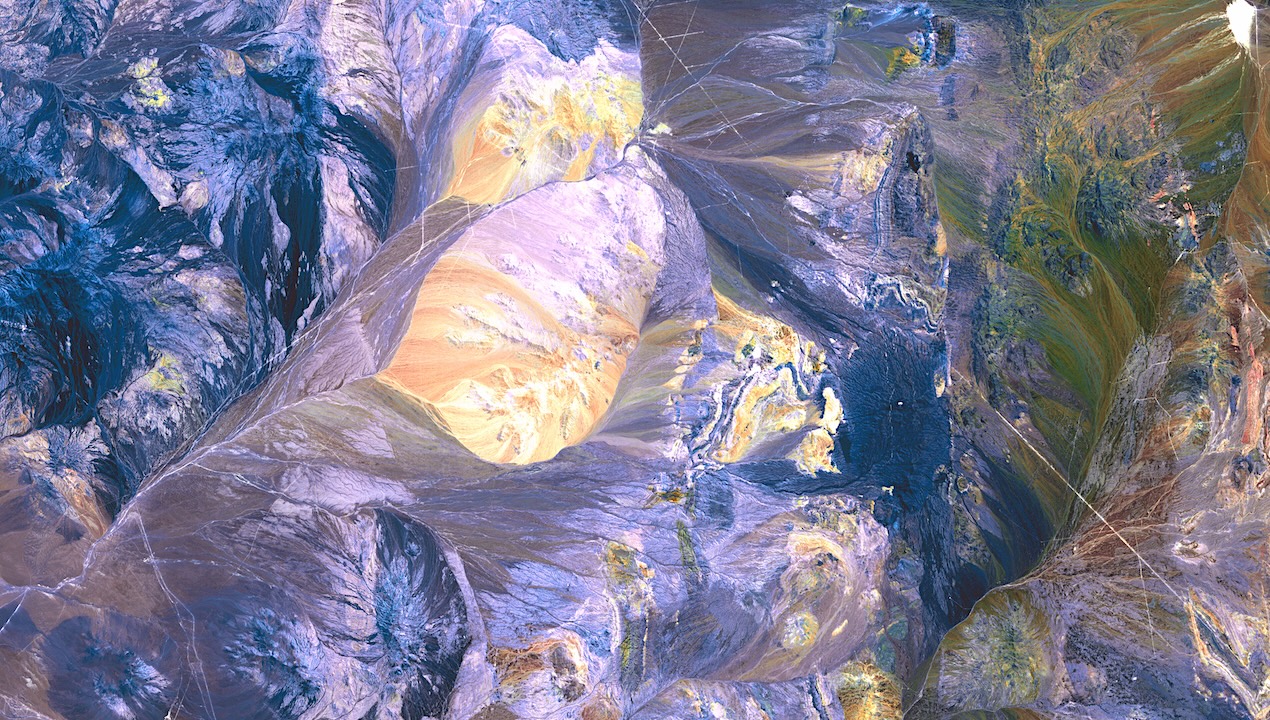
This study investigated the ecophysiological traits of green algae isolated from the grit crust—a unique biocrust type reported a few years ago in the coastal Atacama Desert (National Park Pan de Azúcar), Chile.
We assessed photosynthetic performance, temperature tolerance, and desiccation recovery in four strains: Pseudochlorella signiensis strain C11, Lobosphaera incisa strain LC2, and two strains of Klebsormidium elegans, C12 and C14. The results revealed significant interspecific variation, with P. signiensis exhibiting the highest photosynthetic capacity and both Klebsormidium strains demonstrating efficient light utilization.
Desiccation recovery at very low relative air humidity was limited across all species, potentially reflecting the influence of frequent fog events in the coastal region of the Atacama, which result in a moderate air humidity.
This study fills a critical knowledge gap regarding terrestrial algal ecology in South America and highlights the physiological traits enabling algal survival in one of the world’s most extreme environments, providing insights into the resilience of biocrust communities in the face of environmental change.
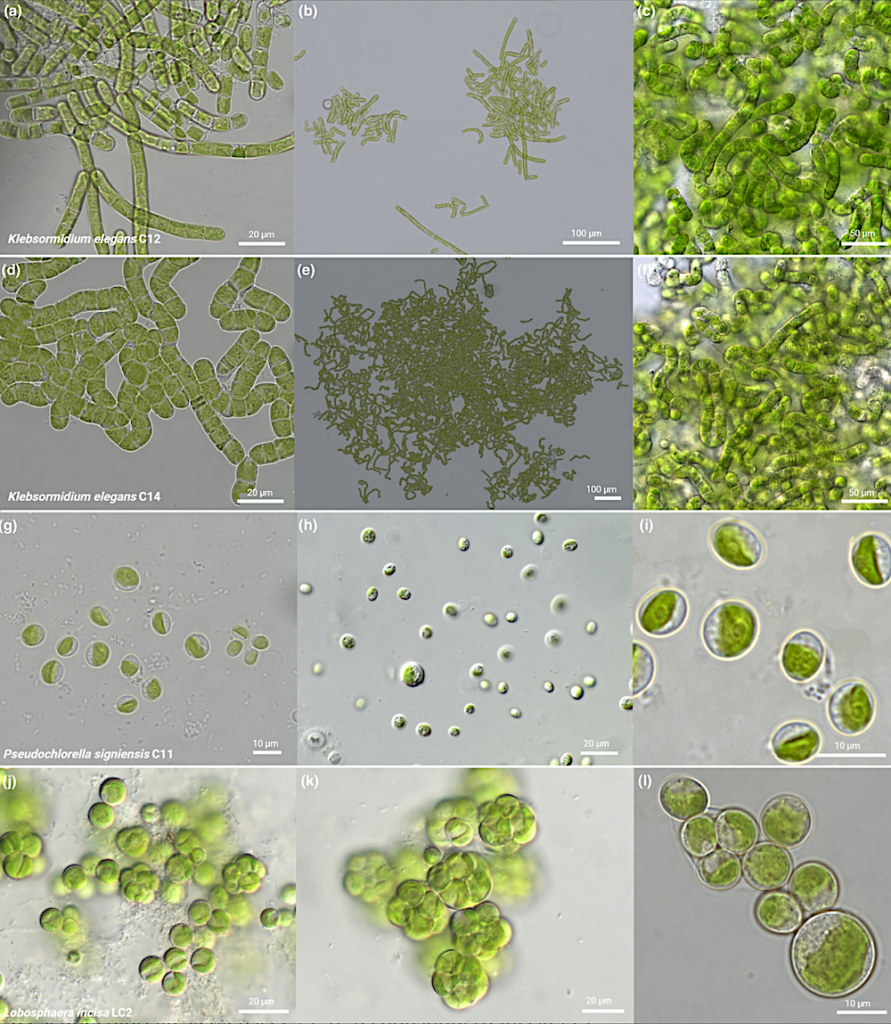
Micrographs of the isolated green algae. (a–c) Klebsormidium elegans C12, (d, e) Klebsormidium elegans C14, (g–i) Pseudochlorella signiensis C11, (j–l) Lobosphaera incisa LC2. — Journal of Phycology
- Ecophysiological study of green microalgae isolated from the grit crust of the Atacama Desert, Journal of Phycology via PubMed
- Ecophysiological study of green microalgae isolated from the grit crust of the Atacama Desert, Journal of Phycology (open access)
Astrobiology, extremophile,