Lipid Biomarkers In Microbialites From A Maar Lake: An Astrobiological Study Of Biomarker Preservation under Mars Analog Conditions
Lipids constitute resistant biomarkers that have been proposed as pacemakers in the search for possible microbial life-forms in Mars’ past.
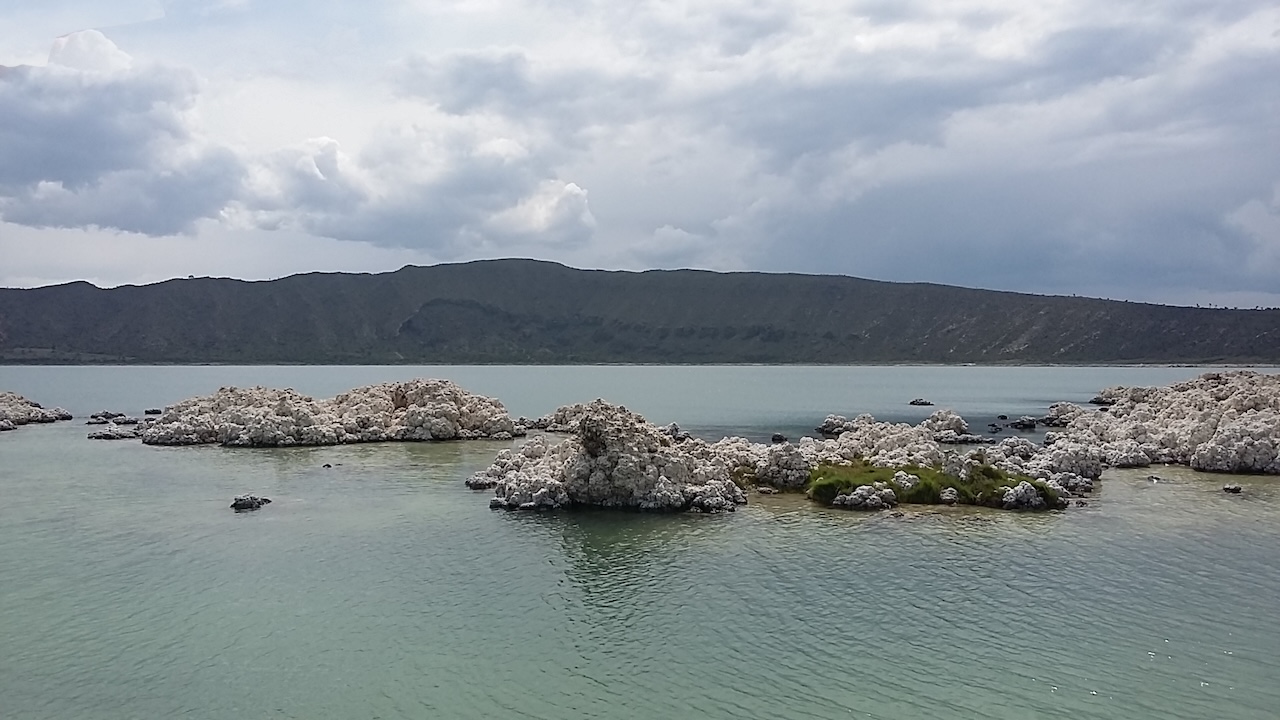
The extreme conditions on the surface of Mars—such as high levels of radiation and the presence of brines and/or perchlorates—must be taken into account when considering the preservation of hypothetical biomarkers. On Earth, alkaline lakes that are rich in microbialites and that have a high saturation index of carbonates have been proposed as analogs of the martian Noachian era.
Here, we describe for the first time the lipid biomarker profile of stromatolites from the Alchichica soda lake in Mexico (n-alkanes, alkenes, fatty acids, and n-alkanols). Additionally, DNA sequencing was conducted to taxonomically characterize the Alchichica microbialites, while mineralogical analyses showed typical morphologies associated with aragonite. Microbialite samples were exposed to high doses of gamma (0.87 and 10.52 MGy) and UV (250 W/m2 for 140 h) radiation.
Another experiment used salt solutions {brine conditions (NaCl + Na2SO4) and perchlorates [Mg(ClO4)2]} to explore the resilience of biomarkers to simulated martian primitive and present-day conditions. Our results suggest that different types and doses of radiation significantly degrade indigenous lipid biomarkers in microbialites (94% for 0.87 MGy, 99.5% for 10.52 MGy, and 93.5% for UV), with n-alkanes and fatty acids the best-preserved compounds even at higher radiation doses.
While the presence of salts such as chloride and sulfate brines did not modify the preservation of fatty acids and alcohols, the presence of perchlorates alone favored their degradation. Our findings support the idea that remnants of past or present life on Mars may be better preserved in ancient chloride or sulfate saline environments.
- Lipid Biomarkers in Microbialites from a Maar Lake: An Astrobiological Study of Biomarker Preservation under Mars Analog Conditions, Astrobiology via PubMed
- Lipid Biomarkers in Microbialites from a Maar Lake: An Astrobiological Study of Biomarker Preservation under Mars Analog Conditions, Astrobiology
Astrobiology, extremophile,