The Power Of Polarimetry For Characterising Exoplanet Atmospheres, Clouds, And Surfaces With NASA’s Habitable Worlds Observatory
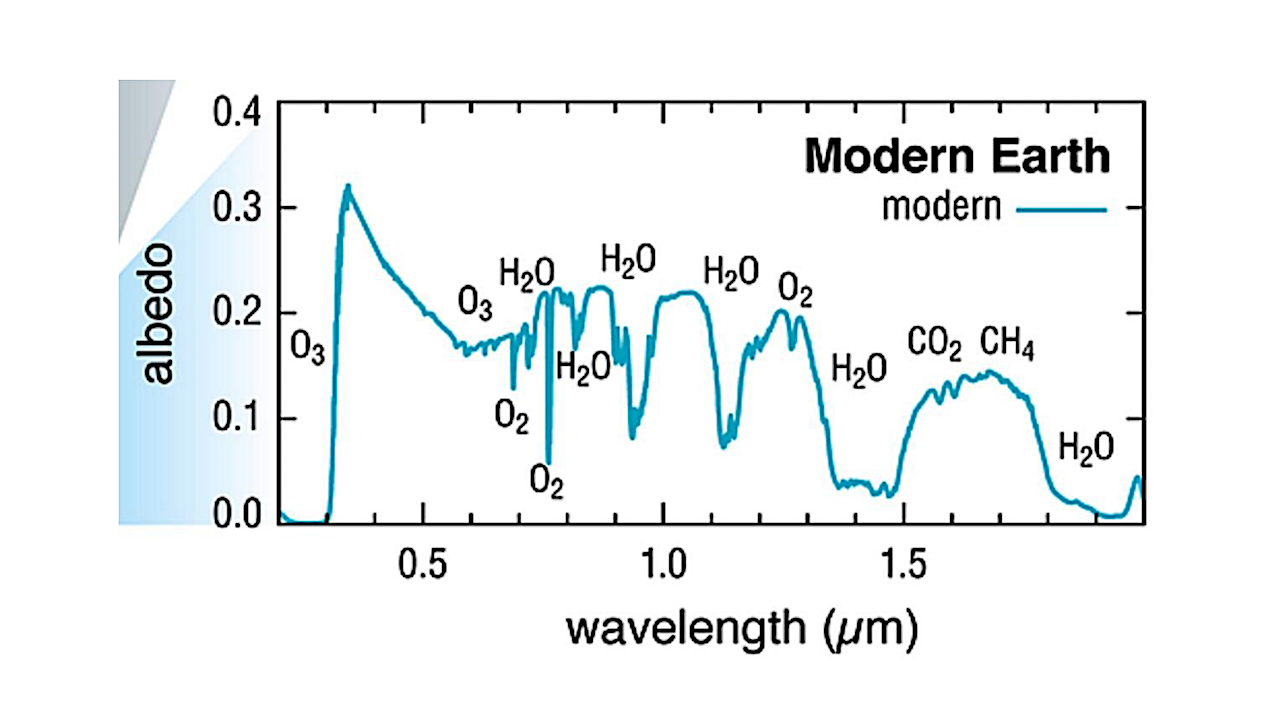
The Habitable Worlds Observatory (HWO), planned for launch in the 2040s, represents the next major step in exoplanet characterisation. HWO will, for the first time, enable detailed studies of the atmospheres and surfaces of Earth-like exoplanets through high-contrast reflection spectroscopy across the UV, optical, and near-infrared.
These wavelength ranges provide access to key molecular absorption features, including O2, O3, H2O, CO2, and CH4, as well as potential surface biosignatures such as the vegetation red edge or ocean glint, making HWO a cornerstone mission for assessing planetary habitability.
Clouds are a dominant factor in determining planetary climate and observability, yet their properties remain highly degenerate when constrained using reflected flux alone. Spectropolarimetry, a measure of the polarisation state of reflected light as a function of wavelength and orbital phase, provides a powerful complementary diagnostic.
Polarisation is highly sensitive to cloud particle size, composition, shape, vertical distribution, and surface type, enabling degeneracies between atmospheric and surface models to be broken. Numerous studies have demonstrated the value of polarimetry for characterising a wide range of exoplanets, from hot Jupiters to cooler potentially habitable worlds.
HWO’s proposed instrument suite includes a coronagraph, a high-resolution imager, and a candidate high-resolution spectropolarimeter, offering multiple pathways to exploit polarimetry across diverse planetary regimes. This white paper argues that incorporating polarimetric capability into HWO instruments would significantly enhance the mission’s scientific return. We highlight the unique opportunity for UK leadership in both instrument development and theoretical modelling, and advocate for a strong UK role in shaping HWO’s polarimetric capabilities to maximise its impact on exoplanet science.
Katy L. Chubb, Mei Ting Mak, Joanna K. Barstow, Beth Biller, Sarah Rugheimer, Daphne M. Stam, Victor Trees
Comments: White paper submitted to the UK Space Agency’s initiative “UK Space Frontiers 2035”
Subjects: Instrumentation and Methods for Astrophysics (astro-ph.IM); Earth and Planetary Astrophysics (astro-ph.EP)
Cite as: arXiv:2601.20902 [astro-ph.IM] (or arXiv:2601.20902v1 [astro-ph.IM] for this version)
https://doi.org/10.48550/arXiv.2601.20902
Focus to learn more
Submission history
From: Katy Chubb Dr
[v1] Wed, 28 Jan 2026 11:03:27 UTC (907 KB)
https://arxiv.org/abs/2601.20902
Astrobiology,