Tricorder Tech: Autonomous Mars Rover Module for Soil Sampling and Life Component Analysis
The search for extraterrestrial life has long been a primary focus of scientific exploration, driven by rapid advancements in technology and our understanding of the universe.
The discovery of water on Mars has sparked significant interest, raising the question of whether life could exist on the planet. This study proposes a novel approach to simulate and illustrate the detection of life using a proof-of-life module integrated into a Mars rover.
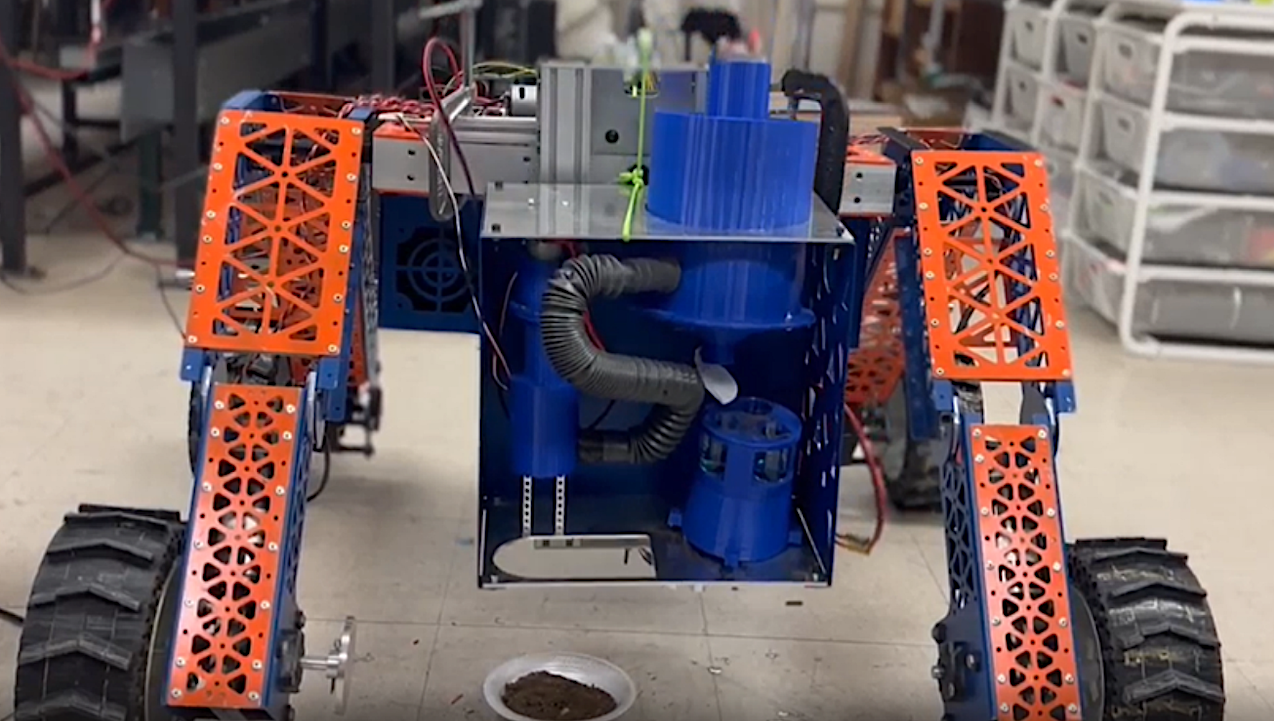
The module is an autonomous system capable of traveling to designated regions, excavating soil, collecting samples, and performing biochemical testing onboard the rover itself. The project is inherently multidisciplinary, integrating mechanical systems such as a drill mechanism and a vacuum system, alongside biochemical analysis for soil testing.
The module is capable of successfully detecting the presence or absence of living components of life from the collected soil particles. This proof-of-life module serves as a proof-of-concept for autonomous life detection in extraterrestrial environments and lays the foundation for future exploration missions.
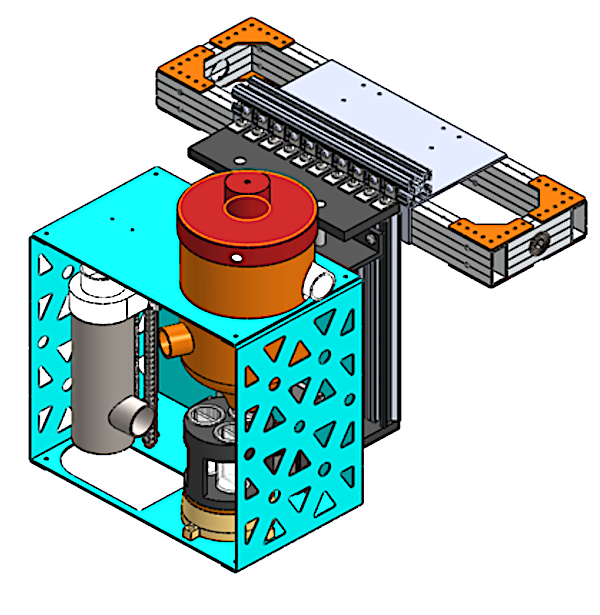
Proof of life CAD model — astro-ph.EP
Bibek Adhikari, Rishab Rijal, Rakesh Yadav, Nikchey Khatri, Sandesh Dhakal
Comments: 9 pages, 12 figures
Subjects: Systems and Control (eess.SY); Earth and Planetary Astrophysics (astro-ph.EP); Instrumentation and Methods for Astrophysics (astro-ph.IM); Robotics (cs.RO)
Cite as: arXiv:2601.17158 [eess.SY] (or arXiv:2601.17158v1 [eess.SY] for this version)
https://doi.org/10.48550/arXiv.2601.17158
Focus to learn more
Submission history
From: Bibek Adhikari
[v1] Fri, 23 Jan 2026 20:32:33 UTC (2,489 KB)
https://arxiv.org/abs/2601.17158
Astrobiology, Tricorder,