Authigenic Biosignatures Of Microbial Biomass Preserved As Carbonate Ooids Formed By Abiotic Chemically Oscillating Reactions Throughout Earth History
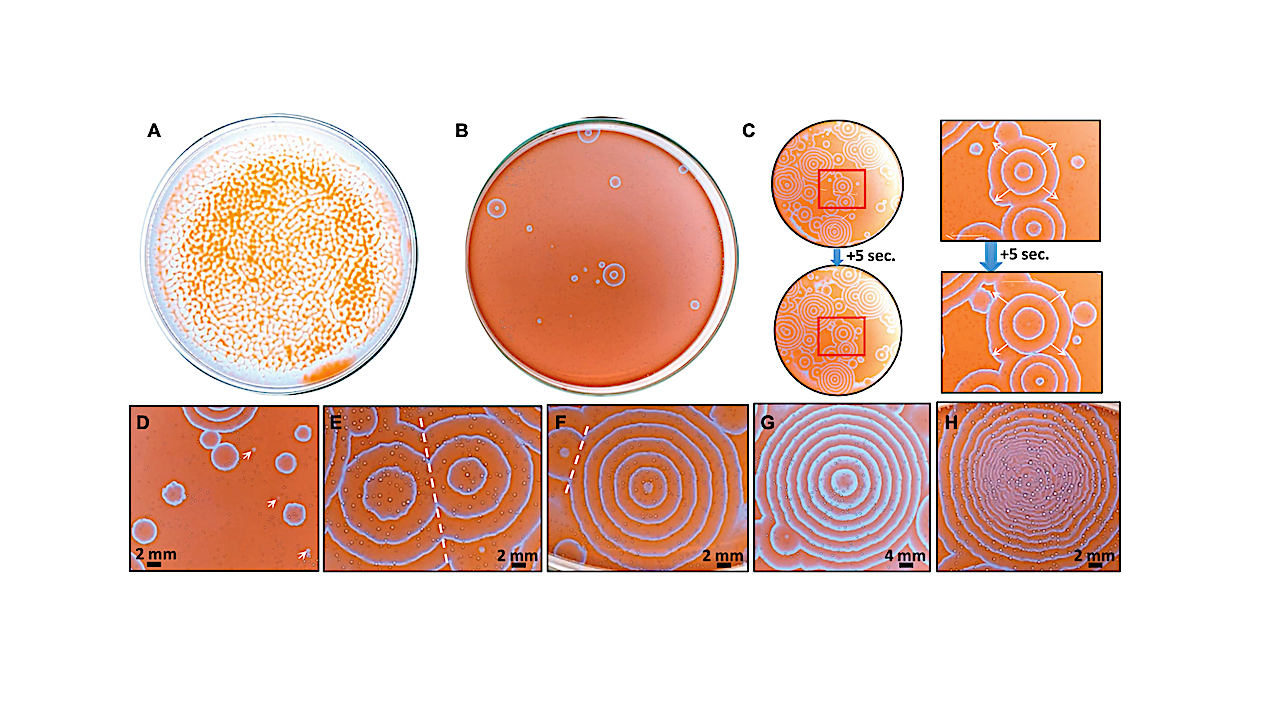
Ooids are small spheroidal carbonate grains that have circularly concentric and radially aligned crystals. Oolitic carbonates are commonly associated with fossils or organic matter, which has led to hypothetical formation models involving both biological and abiotic processes. The most commonly invoked model involves precipitates from supersaturated CaCO3 water under high-energy conditions. However, this model does not fully explain the nearly perfect geometric patterns in ooids.
Here, a four-pronged case is made for a new ooid formation model, based on chemically oscillating reactions (COR). Firstly, ooids spanning more than four billion years of Earth history are shown to have sizes between 10−5 m and 10−2 m, which can be described as fractals, and overlaps the size range of patterns in COR.
Secondly, the studied ooids are also shown to display more than seven different types of self-similar patterns mimicking those produced by COR. Thirdly, COR occur during the abiotic decarboxylation of carboxylic acids, which is also consistent with the ubiquitous association of organic matter and microorganisms in ooids. Lastly, accessory Fe-oxides and pyrite are common in some ooids and point to a role for redox-variable Fe during ooid formation, analogously to the catalytic role of Fe in COR.
Hence, the novelty here is that spontaneous abiotic COR are proposed to play a role in ooid formation by using biomass as a fuel for abiotic decarboxylation reactions. On Earth, occurrences of oolite beds suggest periods of abiotic degradation of microbial biomass, whereas for exobiology, this model helps disentangle abiotic processes from possible biosignatures.
- Authigenic biosignatures of microbial biomass preserved as carbonate ooids formed by abiotic chemically oscillating reactions throughout Earth history, GeoScience World via x-mol.net
- Authigenic biosignatures of microbial biomass preserved as carbonate ooids formed by abiotic chemically oscillating reactions throughout Earth history, GeoScience World
Astrobiology,