Extraordinary Claims Require Extraordinary Evidence: Evaluating Nodule-associated Dark Oxygen Production (opinion)
Editor’s note: this is a response to Oxygen Produced In The Deep Sea Raises Questions About Extraterrestrial Life, Boston University 27 August 2024
Dark oxygen production (DOP) broadly encompasses all light-independent pathways that produce oxygen (Ruff et al., 2024), including microbial and abiotic processes such as radiolysis of water (Gutsalo, 1970; Sauvage et al., 2021), chlorite dismutation (Xu and Logan, 2003), nitric oxide dismutation (Ettwig et al., 2012) and, water lysis via methanobactins (Dershwitz et al., 2021).
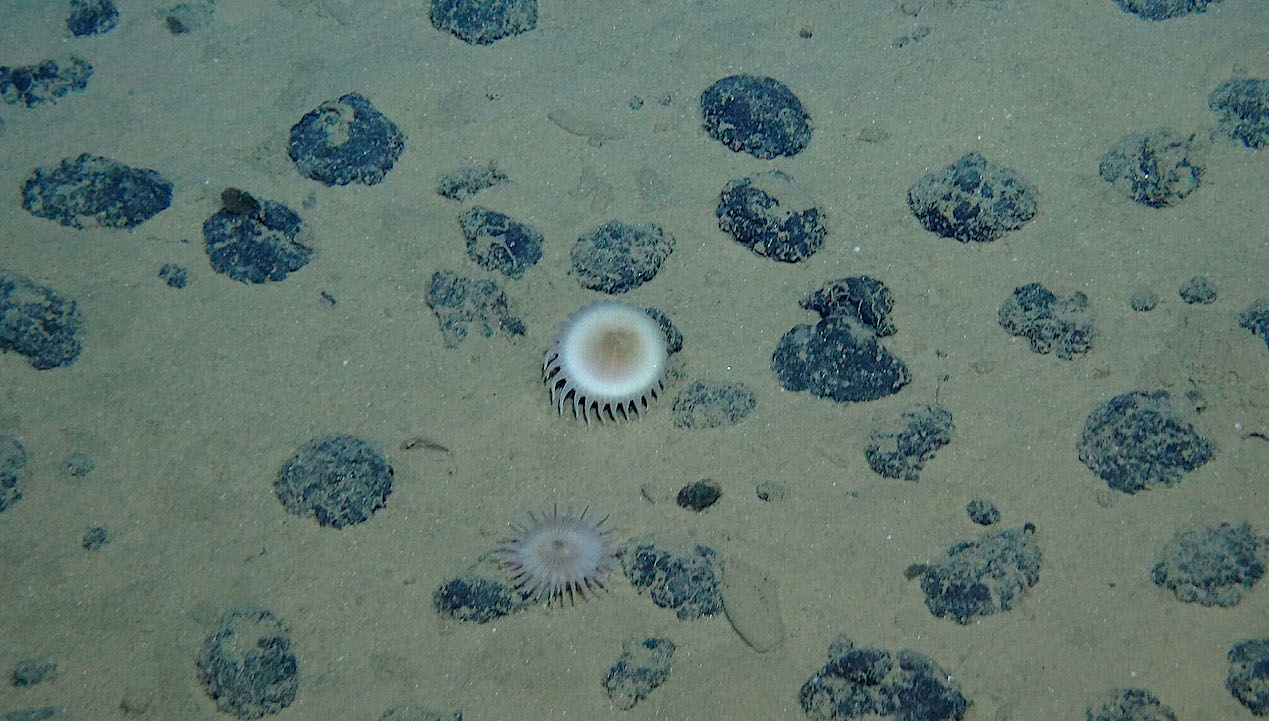
Recently, Sweetman et al. (2024) claim to present evidence for a novel form of DOP occurring at the abyssal seafloor, which they attribute to seawater electrolysis driven by polymetallic nodules. Although transient, the reported rates (1.7–18 mmol O2 m-2 d-1) are substantial—equivalent to 0.5–180% of gross community production measured in the Equatorial Pacific (10–365 mmol O2 m-2 d-1; Stanley et al. (2010)), a region recognized among the most photosynthetically productive in the open-oceans (Rousseaux and Gregg, 2013).
If real, nodule-associated DOP would constitute the discovery of an entirely new source of oxygen, and could challenge the long-standing paradigm that the abyssal seafloor functions exclusively as an oxygen sink (Glud, 2008; Smith et al., 2018; Jørgensen et al., 2022). Henceforth, throughout this paper, we use the term DOP exclusively to refer to the nodule-associated process of oxygen production claimed by Sweetman et al. (2024), rather than the broader suite of established light-independent oxygen-producing pathways.
Extraordinary Claims Require Extraordinary Evidence: Evaluating Nodule-associated Dark Oxygen Production, Frontiers (opinion)
Astrobiology