Four-million-year Marinoan Snowball Shows Multiple Routes To Deglaciation

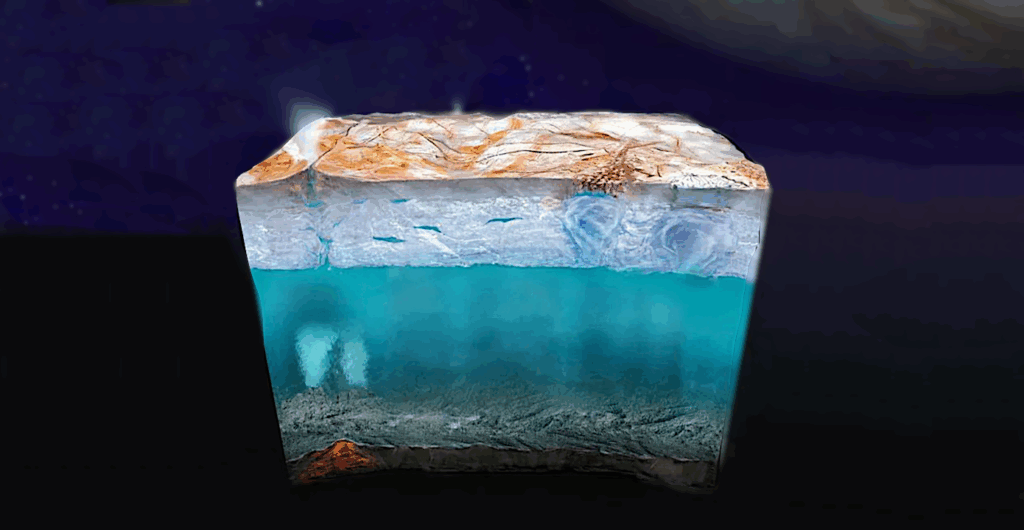
Twice during the Neoproterozoic Era, Earth experienced runaway ice-albedo catastrophes that resulted in multimillion year, low-latitude glaciations: the Sturtian and Marinoan snowball Earths.
In the snowball climate state, CO2 consumption through silicate weathering collapses, and atmospheric CO2 accumulates via volcanic outgassing until a sufficiently strong greenhouse causes deglaciation.
The duration and extent of ice cover are critical for planetary habitability, both on exoplanets and on Earth where animals emerged between the two glaciations. Radioisotopic ages have defined the duration of the Sturtian glaciation to 56 Myr, but the duration of the Marinoan glaciation (4 to 15 Myr) currently has 11 Myr of uncertainty.
Here, we show that the Marinoan glaciation in Namibia lasted ca. 4 Myr with less than 10 m of vertical ice grounding line motion through glacial advance-retreat cycles. The stability of a low-latitude ice grounding line is consistent with the strong hysteresis of a hard snowball state.
The disparity in durations demonstrates different routes to deglaciation, through slower CO2 accumulation for the longer Sturtian and radiative perturbation for the Marinoan. The short duration of the Marinoan glaciation may have been essential for the survival and evolution of animals and illustrates an additional path toward habitability on exoplanets.
Four-million-year Marinoan snowball shows multiple routes to deglaciation, PNAS (open access)
Astrobiology