Decoding Extremophiles: Insights From Bioinformatics, Machine Learning, And Data-driven Approaches
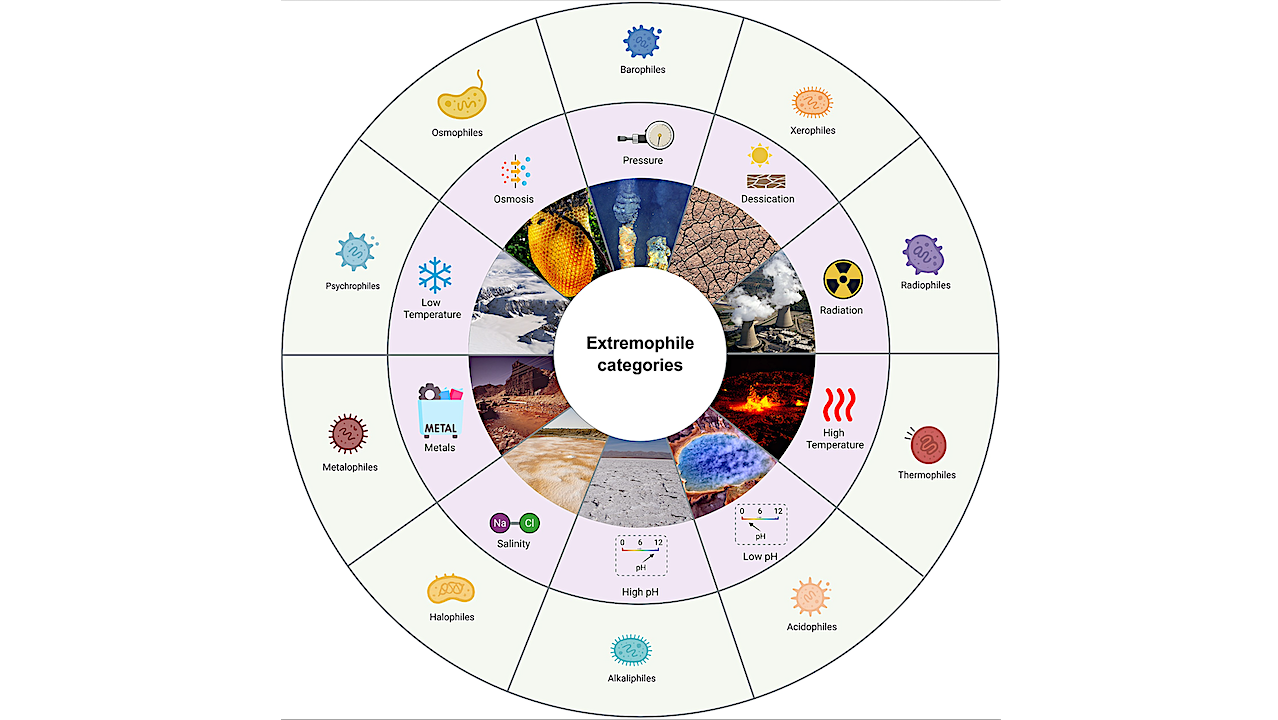
Life thrives in Earth’s most inhospitable environments, from boiling hydrothermal vents to hypersaline lakes and frozen polar deserts, thanks to the remarkable adaptations of extremophilic microorganisms.
The study of these organisms has rapidly evolved from early cultivation-based discoveries to a data-rich discipline powered by advanced omics technologies. This review comprehensively outlines the current landscape and future directions in extremophile research, emphasizing the pivotal role of bioinformatics, machine learning (ML), and data-driven approaches.
We begin by charting the evolution of methodologies, from innovative in situ cultivation techniques and robust biomolecule extraction protocols to modern multi-omics workflows (metagenomics, transcriptomics, proteomics, and metabolomics) that decode the genetic and functional basis of extremophiles.
We then catalogue essential bioinformatics resources and specialized databases critical for annotating extremophile genomes and uncovering their unique adaptive strategies, including protein stabilization and syntrophic metabolic relationships. Finally, we explore the transformative potential of artificial intelligence (AI) and ML in overcoming fundamental challenges in the field.
These include predicting the functions of uncharacterized “hypothetical” proteins, identifying novel extremozymes, modeling complex genotype–phenotype relationships, and guiding the targeted engineering of industrially relevant strains.
By synthesizing insights across these domains, this review highlights how integrating computational biology and AI is poised to unlock the full biotechnological potential of extremophiles and redefine the boundaries of life itself.
Decoding extremophiles: insights from bioinformatics, machine learning, and data-driven approaches, Briefings in Bioinformatics (open access)
Astrobiology,