NASA’s Roman Mission Preps to Unveil New Populations of Faraway Worlds
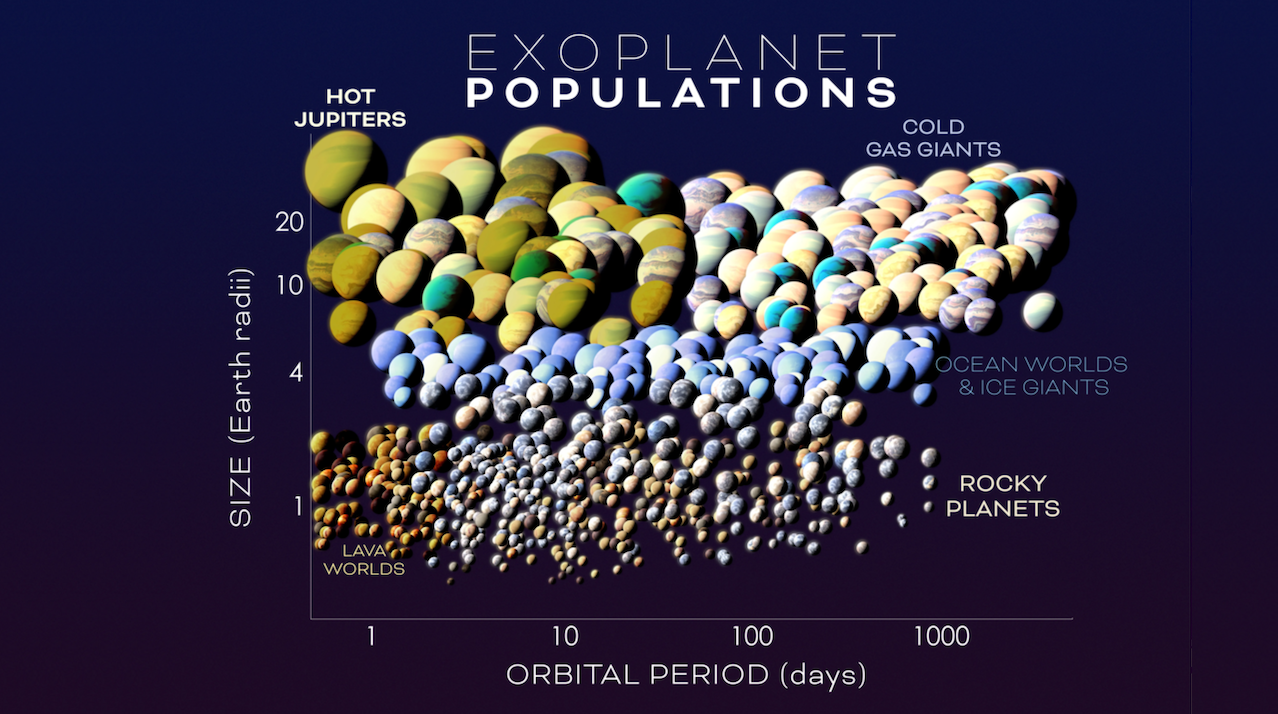
NASA’s Nancy Grace Roman Space Telescope is poised to make a major leap in the hunt for worlds outside our solar system, known as exoplanets. Scientists expect the mission to reveal around 100,000 worlds — a staggering leap compared to the nearly 6,300 found so far thanks to NASA missions working in tandem with other observatories. And Roman will primarily find them in underexplored regions of the Milky Way.
“Our galaxy is home to a variety of different environments, but when it comes to hunting for exoplanets, we’ve really only explored one: our own neighborhood,” said Elisa Quintana, an exoplanet researcher at NASA’s Goddard Space Flight Center in Greenbelt, Maryland. Quintana leads a team focused on building software and simulations to help prepare for Roman’s exoplanet transit observations. “Roman will extend the search far enough to encompass other galactic habitats, which could help us learn how planet formation varies across different regions of the Milky Way.”
Most known exoplanets are located within a couple thousand light-years of Earth. But one of Roman’s core surveys will peer all the way through the Milky Way’s galactic bulge, the central hub where stars are packed more densely than anywhere else, to the fringes of the far side of the galaxy.
Exploring Earth’s birthplace
Roman will monitor stars scattered throughout a deep slice of the galaxy to watch for any that change in brightness. Some stars periodically dim as orbiting planets cross in front of, or transit, them. Others temporarily appear to brighten as the gravity of an intervening star and orbiting planets magnify a farther star’s light, thanks to a phenomenon called microlensing.
These two methods tend to reveal very different types of planets. The transit method, which Roman will use to reveal around 100,000 worlds, is best at finding gigantic, scorching worlds since they block the most starlight and transit more frequently.
Microlensing, which Roman will use to find more than 1,000 worlds, is better suited to finding planets with larger orbits, like those in our solar system, whose gravity can be more easily separated from the gravity of their host stars. Microlensing can find planets as small as Earth and Mars and can find them within their star’s habitable zone and even farther out. Such planets are almost undetectable by other methods and are virtually unknown outside of our own solar system. Pairing the two techniques will help astronomers explore planet formation throughout the galaxy, including Earth’s birthplace and beyond.
Today, our solar system is located about 27,000 light-years from the center of the Milky Way. However, scientists think it formed about 10,000 light-years closer in and then migrated out to its current position.
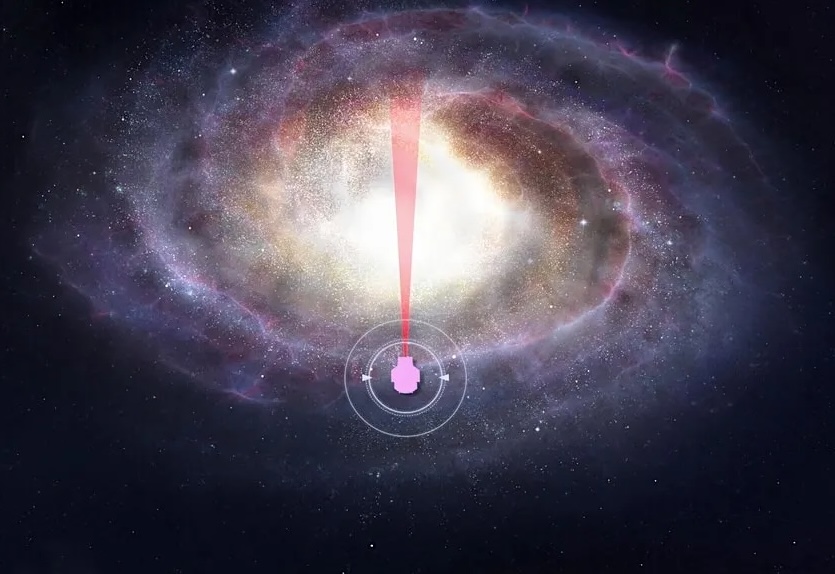
This artist’s concept shows the region of the Milky Way Roman’s Galactic Bulge Time-Domain Survey will cover. The higher density of stars in this direction will yield more than 50,000 microlensing events, which will reveal planets, black holes, neutron stars, trans-Neptunian objects, and enable exciting stellar science. The survey will also cover relatively uncharted territory when it comes to planet-finding. That’s important because the way planets form and evolve may be different depending on where in the galaxy they’re located. Our solar system is situated near the outskirts of the Milky Way, about halfway out on one of the galaxy’s spiral arms. A Kepler Space Telescope study showed that stars on the fringes of the Milky Way possess fewer of the most common planet types that have been detected so far. Roman will search in the opposite direction, toward the center of the galaxy, and could find differences in that galactic neighborhood, too. NASA’s Goddard Space Flight Center/CI Lab
The Sun’s chemical makeup is the primary clue. Most stars that form in the outskirts of the galaxy are low in heavy elements, which is a blanket term for any elements other than hydrogen and helium, which formed with the birth of the universe. Heavy elements are forged by stars, so they’re more common in places that have seen successive generations of stars.
Stars in the galactic bulge are much older than those in the disk of the Milky Way and thus have a slightly different chemical mixture that is richer in elements like silicon, oxygen, and magnesium.
Those differences matter because planets form out of the same material as their host stars. Stars with different compositions may host planets that are different too, perhaps rockier or larger. It could even influence whether planets form at all, or how many coalesce with each star.
Astronomers have already seen hints of such connections nearby.
“Stars with more heavy elements tend to host more planets, especially giant ones,” said Robby Wilson, a postdoctoral fellow at NASA Goddard, who led a study about Roman’s expected transiting planet yield.
By sampling completely different populations of stars and planets, Roman will take these studies to a whole new level. Astronomers may soon uncover how common planetary systems like our own are throughout the Milky Way.
“Roman will be especially powerful because it will observe hundreds of millions of distant stars, letting scientists compare faraway planet populations to those found nearby,” said Wilson. “All of that data will give us a lot to comb through, so we’re prepping by creating synthetic data, detecting simulated planets, and using machine learning to filter out false positives. That way we’ll be ready to go right away when real data comes pouring in.” And since all Roman data will be publicly available, anyone can join the hunt for other worlds.
Otherworldly climates
Scientists also could study the atmospheres of perhaps a few thousand of the transiting planets Roman finds.
“Roman won’t analyze atmospheres in the same in-depth way as missions like NASA’s James Webb Space Telescope, but it will gather different information on a much larger scale,” Wilson said.
While telescopes like Webb search for detailed chemical fingerprints on individual targets, Roman will measure temperature patterns and climate behavior for thousands of planets. The mission will create a big-picture statistical view of exoplanet atmospheres, which Webb could follow-up on for further study.
Roman’s infrared heat vision will detect glowing “hot Jupiters.” About as large as Jupiter, which is around 11 times as wide as Earth, hot Jupiters orbit their stars in only a few days. These worlds are warm enough to radiate a detectable amount of infrared light.
Planetary systems with transiting hot Jupiters can have two dimming episodes: one when they cross in front of the star, and a second smaller one when they pass behind it and the star blocks the planet’s light.
“That secondary dip tells us how bright, and therefore how hot, the planet is,” said Wilson. “By tracking how the planet’s brightness changes over its orbit, Roman can also see differences between the day side and night side, and even detect shifts in where the hottest region is on the planet. That tells us about atmospheric winds and heat circulation.”
“NASA’s now-retired Kepler mission’s survey of 100,000 stars revolutionized the field of exoplanets over a decade ago, and taught us that planets are even more common than stars in our galaxy,” said Jorge Martínez-Palomera, an astronomer at NASA Goddard who is helping prepare for Roman’s exoplanet data. “Roman’s galactic bulge survey will observe around 100 million stars and probe underexplored areas of our galaxy, which will provide a foundational dataset that will likewise revolutionize what we know about other worlds and our place in the universe.”
To learn more about NASA’s Roman mission, visit: https://nasa.gov/roman
Astrobiology, exoplanet,