Updated Rules for Evaluating and Revealing the Detection of Extraterrestrial Intelligence

The IAA SETI Committee announced today updated rules for evaluating and revealing the detection of extraterrestrial intelligence.
A University of Manchester astronomer has led a major international overhaul of the rules that would govern how scientists announce evidence of extraterrestrial intelligence to the world.
Professor Michael Garrett, the Sir Bernard Lovell Chair of Astrophysics, chaired a global effort to update the long-standing “post-detection protocols” used by researchers involved in the Search for Extraterrestrial Intelligence (SETI). The updated guidelines have now been formally ratified by the International Academy of Astronautics (IAA).
The revised Declaration of Principles marks the first major update to the protocols in more than 15 years and reflects a media landscape transformed by social media, artificial intelligence and the 24-hour news cycle.
Acknowledging that any credible detection of extraterrestrial technology would be a transformative event for humanity, the new Declaration establishes a rigorous framework for verification, transparency and global risk communication.
“The information environment we operate in today is vastly more complex than it was in 2010,” said Garrett, Chair of the IAA SETI Committee. “In an era of deepfakes, automated misinformation, and instant global connectivity, a single unverified claim could trigger confusion or panic. These new protocols ensure that scientists maintain the highest standards of evidence before making announcements to the world.”
Adapting to a new era of SETI research
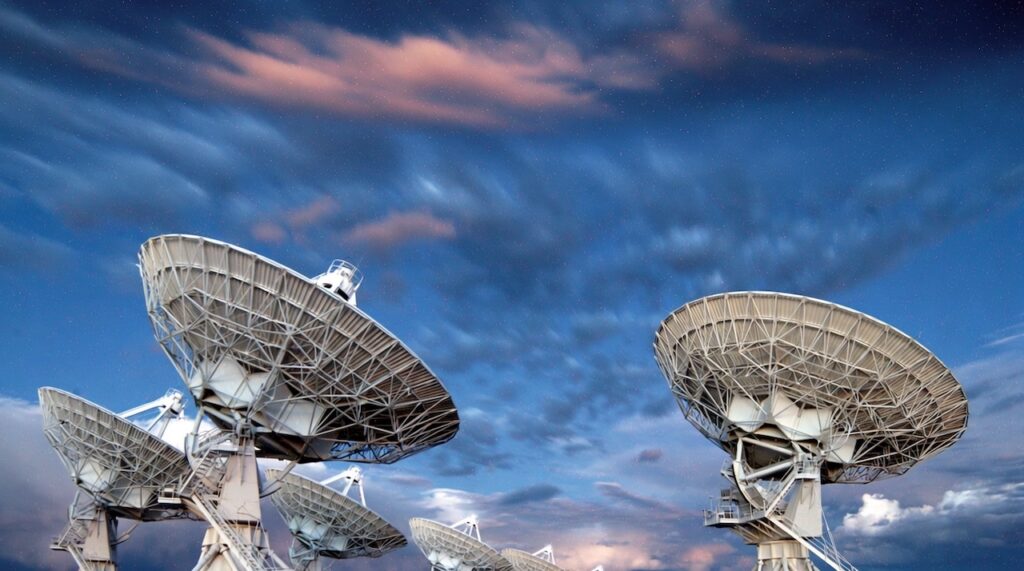
SETI and Technosignature research have expanded significantly since the previous protocols were adopted in 2010. Scientists now investigate the entire electromagnetic spectrum, including excess infrared heat signatures from megastructures, optical laser emission, and even multi-messenger signals. The updated Declaration explicitly recognises this broader approach.
It also addresses other modern challenges, including protections for researchers, acknowledging that scientists involved in potential detection could face harassment, doxxing, or intense media scrutiny. It further acknowledges the risk of viral rumours, ensuring verified data is distinguished from hoaxes or terrestrial interference.
Verification before announcement
At the heart of the new rules is a reaffirmation of a core scientific principle: “extraordinary claims require extraordinary evidence.”
Under the revised protocols, no public announcement should be made until a signal or artifact has been rigorously authenticated by independent organisations using different instrumentation.
“We do not shout “alien” the moment we see a strange blip,” Garrett added. “The scientific method demands we check, check again, and then ask others to check. Only when we have reached a consensus that a signal is credible do we bring it to the world.”
The ‘No Reply’ Consensus
While the protocols outline how to share news of a discovery, they remain firm on one critical restriction: No reply should be sent.
The Declaration reaffirms the enduring principle that transmitting a response to an extraterrestrial intelligence is a decision that belongs to all of humanity and should only take place following international consultations, specifically through the United Nations.
What happens next
With the updated Declaration ratified by the IAA Board, the aim is to see the document lodged with other stakeholders, including the United Nations. A formal technical presentation of the protocols to the wider community, including the scientific press, will take place at the International Astronautical Congress (IAC) later this year in Türkiye.
“The release of these updated rules and protocols marks an important step in acknowledging both the radically different media landscape that science functions within today, and the vastly expanded efforts in terms of technology and resources being deployed in the search for intelligent life beyond Earth” said Bill Diamond, President and CEO of the SETI Institute and IAA SETI Committee member. “We applaud Prof Garrett’s leadership in developing these new protocols and the IAA for their ratification.”
The IAA SETI Committee will also establish a permanent Post-Detection Sub-Committee, bringing together experts in social science, law, and ethics, to advise on the longer-term societal implications of a confirmed discovery.
The full document is available at:
https://iaaspace.org/wp-content/uploads/iaa/Scientific%20Activity/iaasetideclaration.pdf
About the SETI Institute
Founded in 1984, the SETI Institute is a non-profit, multi-disciplinary research and education organization whose mission is to lead humanity’s quest to understand the origins and prevalence of life and intelligence in the Universe and to share that knowledge with the world. Our research encompasses the physical and biological sciences and leverages expertise in data analytics, machine learning and advanced signal detection technologies. The SETI Institute is a distinguished research partner for industry, academia and government agencies, including NASA and NSF.
Contact information
Rebecca McDonald
Director of Communications
SETI Institute
[email protected]
Contact: Prof. Michael Garrett, IAA SETI Committee Chair.
About the IAA SETI Committee
The IAA SETI Committee is the world’s primary international body dedicated to the scientific, technical, and societal aspects of the Search for Extraterrestrial Intelligence.
Astrobiology, SETI, Technosignature,