Extreme Arabian Environments And Their Microbiomes: New Frontiers For Astrobiology And Biosignature Discovery
Astrobiology assesses the habitability of planetary bodies and the potential for extraterrestrial life.
Analog environments on Earth serve as sites for studying extreme environments that resemble extraterrestrial conditions, aiding in validating life-detection methods, mission instrumentation, and biosignature preservation. These environments function as a source of model microorganisms and communities that define the habitability and biochemistry of such extraterrestrial environments.
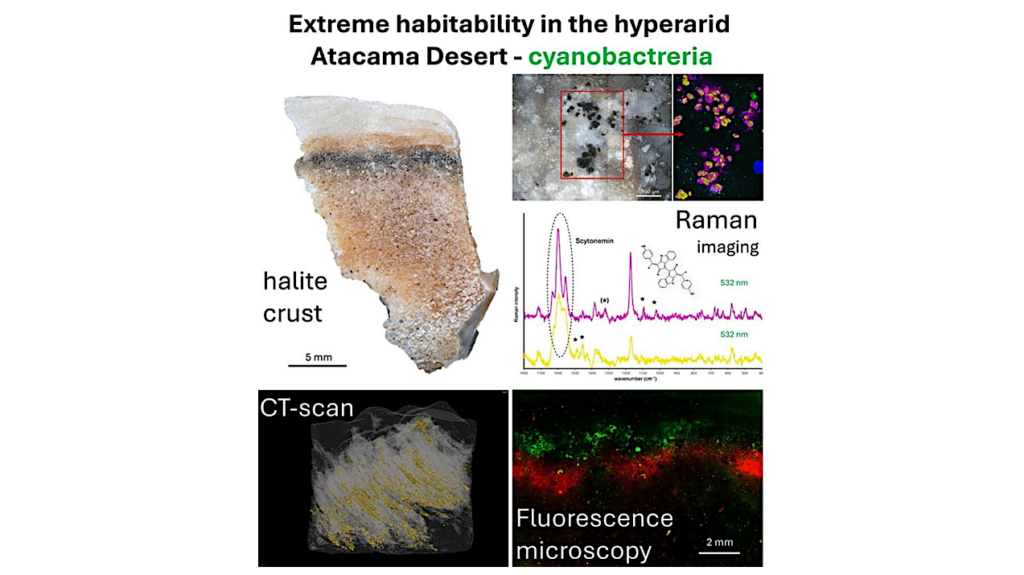
Well-known analog environments include the Atacama Desert (Chile) for space mission validation, the McMurdo Dry Valleys (Antarctica) for Mars analog studies, and Rio Tinto (Spain) for extreme acidic environments. Although significant research has been conducted on these sites, various alternative environments may also offer valuable opportunities for astrobiological studies.
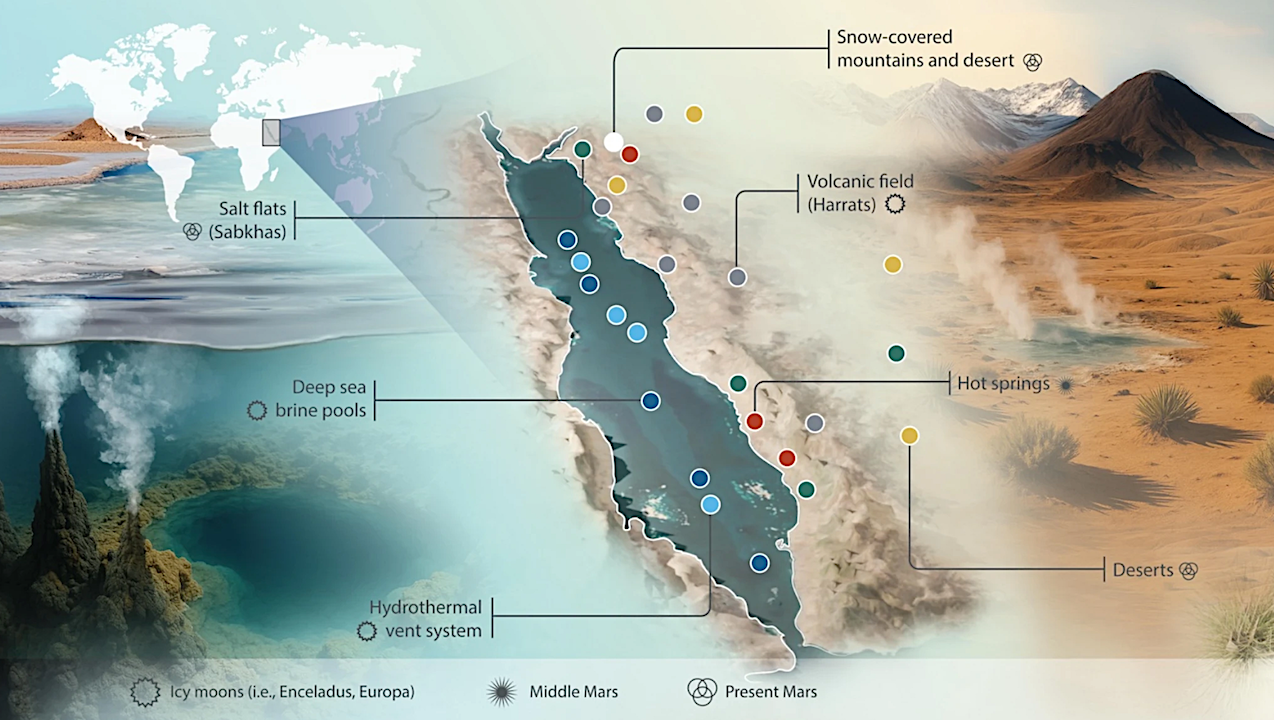
Saudi Arabia encompasses a variety of pristine (or with minimal anthropic influence) extreme environments with conditions analogous to extraterrestrial settings (e.g., deserts and salt flats as analogs to Mars, and terrestrial and marine volcanic fields as analogs to icy moons), yet their potential remains largely unexplored.
Recent studies have identified a volcanic crater with sodium phosphates and chlorates that mimics Enceladus’s ocean chemistry, and researchers have cultured Halalkalibacterium halodurans strains with adaptations to survive these conditions, offering valuable biological models.
Additionally, complex metabolic landscapes with implications for icy moon habitability have been observed in Red Sea systems, which could be employed as valuable natural laboratories in astrobiological research. Furthermore, these findings underscore the potential of the Saudi Arabian extremophilic microbiome for space-related research.
This review explores the microbial diversity of extreme environments in Saudi Arabia, emphasizing their potential as new terrestrial analogs to Mars and icy moons and the role of their microbiomes as terrestrial proxies for extraterrestrial life.
- Extreme Arabian environments and their microbiomes: new frontiers for astrobiology and biosignature discovery, Extremophiles via PubMed (open access)
- Extreme Arabian environments and their microbiomes: new frontiers for astrobiology and biosignature discovery, Extremophiles (open access)
Astrobiology,