The Origin Of Life And Cellular Systems: A Continuum From Prebiotic Chemistry To Biodiversity
The origin of life remains one of the most profound and enduring enigmas in the biological sciences. Despite substantial advances in prebiotic chemistry, fundamental uncertainties persist regarding the precise mechanisms that enabled the emergence of the first cellular entity and, subsequently, the foundational branches of the tree of life.
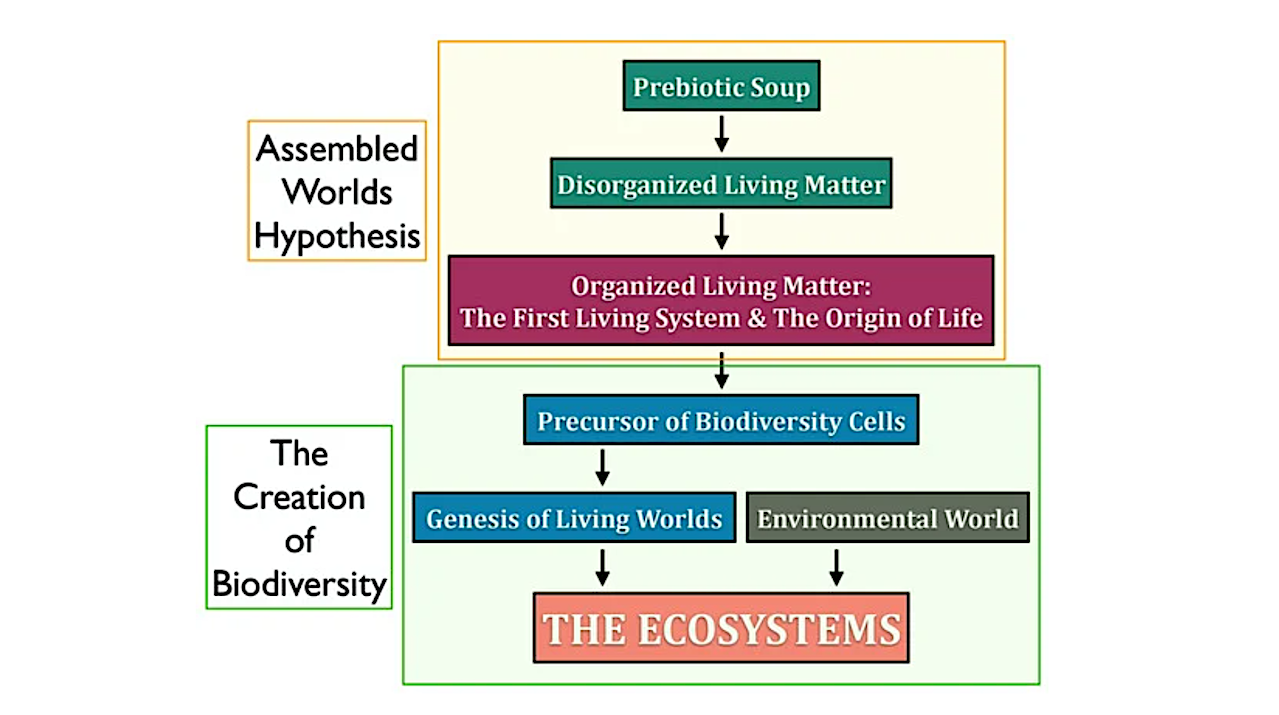
After examining the core principles that define living systems, we propose that life emerged as a novel property of a prebiotically assembled system—formed through the integration of distinct molecular worlds, defined as sets of structurally and functionally related molecular entities that interact via catalytic, autocatalytic, and/or self-assembly processes.
This emergence established a permanent system–process duality, wherein the system’s organization and its dynamic processes became inseparable. Upon acquiring the capacity to replicate and mutate its genetic program, this primordial organism initiated the evolutionary process, ultimately driving the diversification of life under the influence of evolutionary forces and leading to the formation of ecosystems.
The challenge of uncovering the origin of life and the emergence of biodiversity is not solely scientific, it requires the integration of empirical evidence, theoretical insight, and critical reflection. This work does not claim certainty but proposes a perspective on how life and biodiversity may have arisen on Earth. Ultimately, time and scientific inquiry will determine the validity of this view.
- The Origin of Life and Cellular Systems: A Continuum from Prebiotic Chemistry to Biodiversity, Life via PubMed (open access)
- The Origin of Life and Cellular Systems: A Continuum from Prebiotic Chemistry to Biodiversity, Life (open access)
Astrobiology,