Ocean Planet Recon: MBARI and Monterey Bay Aquarium Complete Expedition to Guide Seamount
Editor’s note: When we start to mount Astrobiology missions to explore ocean worlds we’ll need ways for our robotic submersibles to observe and interact with whatever life forms they may encounter. We’re going to our droids to be as smart and self-reliant as possible. How we study our own living water world is the perfect place to plan for future, offworld missions when it comes to detecting and characterizing life on the planet below. Of special importance to astrobiology expeditions are the plans being formulated for the exploration of icy ocean worlds in our own star system such as Enceladus, Europa, Ganymede and beyond – and the necessary role that autonomous submersibles will play. The folks at MBARI lead the way in developing new ways to reach remote regions of our water world.
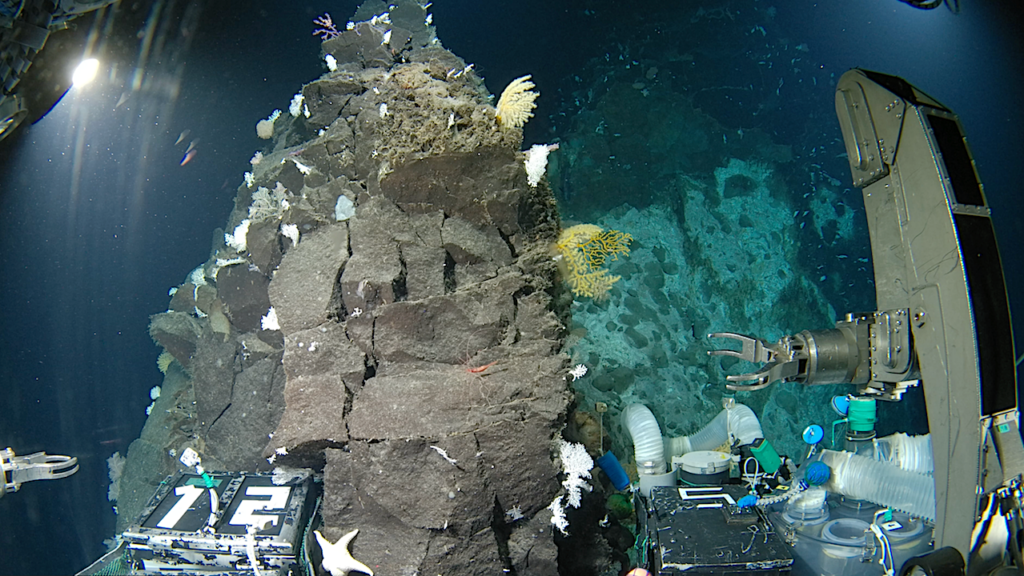
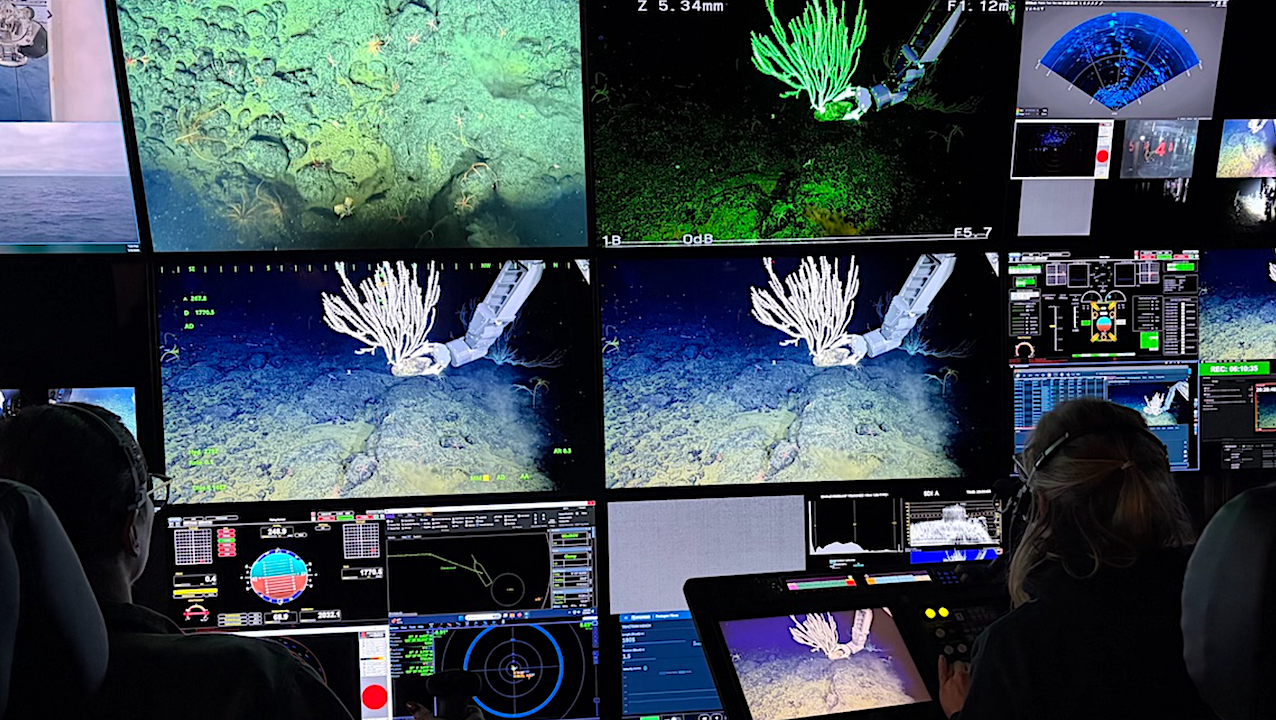
Earlier this month, a team of Monterey Bay Aquarium biologists completed an expedition to Guide Seamount aboard MBARI’s flagship research vessel David Packard. Led by Monterey Bay Aquarium Curator of Fishes and Invertebrates Megan Olhasso in partnership with MBARI Senior Education and Research Specialist George Matsumoto, the team deployed MBARI’s remotely operated vehicle (ROV) Doc Ricketts to explore the seamount’s rocky ridges and collect animals for the Aquarium’s Into the Deep/En lo Profundo exhibition.
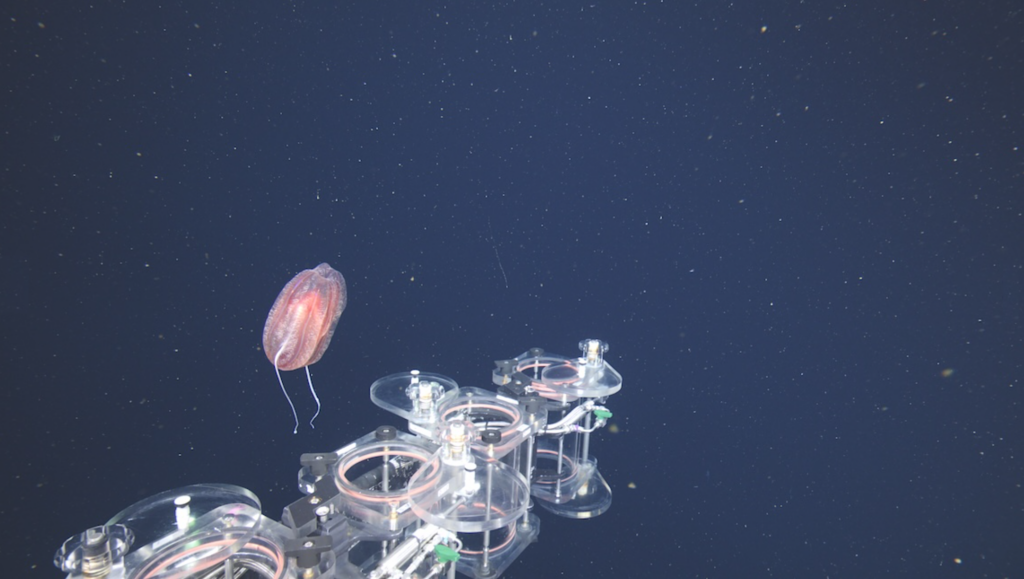
MBARI’s ROV Doc Ricketts is equipped with samplers that allow aquarium biologists to gently collect delicate midwater animals, like comb jellies. Image: © 2026 MBARI
Located approximately 100 kilometers (62 miles) offshore of Davenport, California, Guide Seamount is an underwater mountain made up of four parallel volcanic ridges separated by sediment-filled troughs. Previous MBARI surveys in 2009 and 2018 documented the community of marine life that lives on the seamount and in the waters above its summit, including large bamboo corals (family Keratoisididae), sponges, and fish.
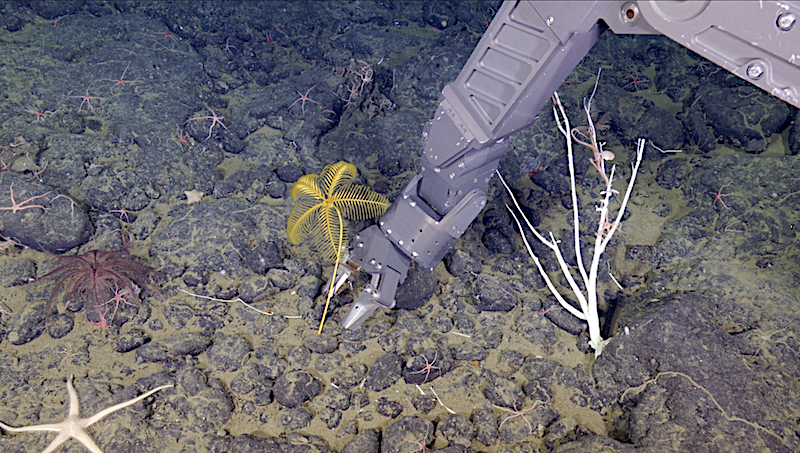
The expedition to Guide Seamount provided aquarium biologists the opportunity to collect new species to possibly exhibit at the Monterey Bay Aquarium in the future, like the sea lily Parahyocrinus claguei. Image: © 2026 MBARI
Following their dives at Guide Seamount, the team conducted midwater surveys in Monterey Bay and Ascension Canyon, an underwater canyon located 16 kilometers (10 miles) offshore of Point Año Nuevo that plunges 2,300 meters (approximately 1.5 miles) deep.
With the support of MBARI’s marine operations team, including R/V David Packard crew and ROV Doc Ricketts pilots, the expedition team successfully collected several animals for exhibit at the Aquarium, some species on public display for the first time anywhere in the world.
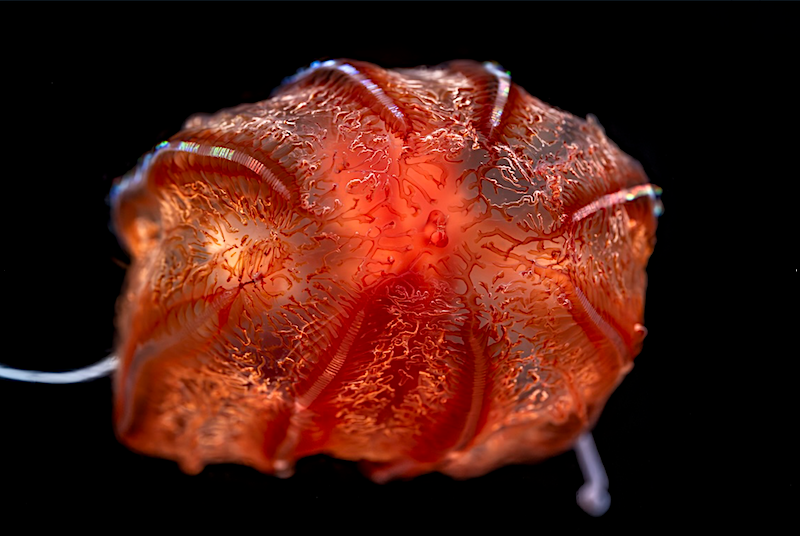
MBARI’s partnership with the Monterey Bay Aquarium gives researchers an opportunity for extended observations of midwater animals, like this large, undescribed deep-sea comb jelly in the genus Aulacoctena. Image: © Monterey Bay Aquarium
MBARI and the Monterey Bay Aquarium have a rich history of collaboration. Together, we are working to raise awareness about life in the deep sea. Into the Deep/En lo Profundo represents the most extensive collaboration between our two organizations. This month’s expedition to Guide Seamount marks the Aquarium’s second expedition aboard MBARI’s new research vessel David Packard, following an expedition to Sur Ridge last December.
Astrobiology, Oceanography,