Strong Nickel Enrichment Co-located With Redox-organic Interactions In Neretva Vallis, Mars
In 2024, NASA’s Perseverance rover explored Neretva Vallis, an ancient river channel that once transported water into Jezero crater.
There, the rover encountered Mg-poor mudstones with diverse alteration features. In 32 rock targets in Neretva Vallis, nickel (Ni) was detected by the SuperCam instrument with concentrations in individual rocks as high as ~1.1 weight percent – the highest abundance ever seen in bedrock on Mars.
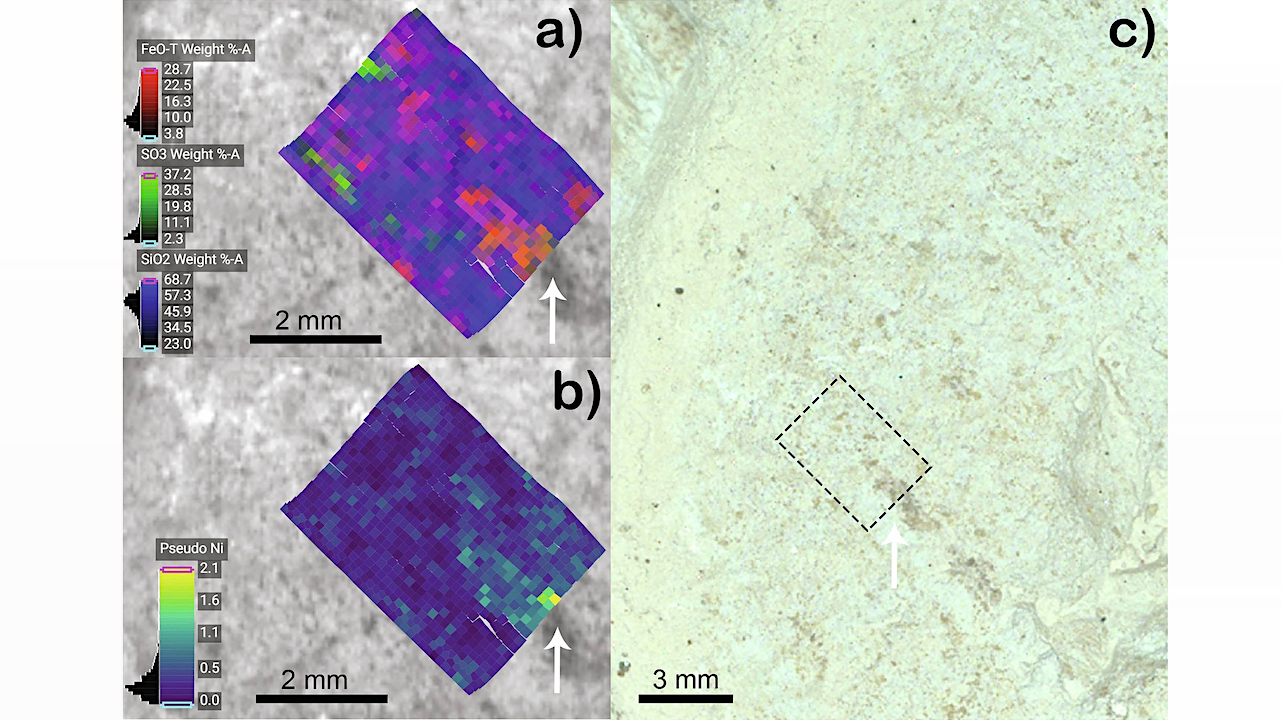
In this work, we describe and contextualize these Ni enrichments using outcrop-scale imagery and petrographic-scale elemental maps provided by the PIXL instrument. We find Ni enrichment in Fe-sulfides and their weathering products. The geochemistry and morphology of Neretva Vallis Fe-sulfides are similar to pyrite present in terrestrial Archean and Paleoproterozoic sedimentary rocks.
As an essential element for terrestrial microbial life, the proximity of Ni enrichments to reduced sulfur and organic matter adds to the interest in bringing back to Earth the rock sample collected by Perseverance at this location, which could provide key insights into complex redox chemistry on early Mars.
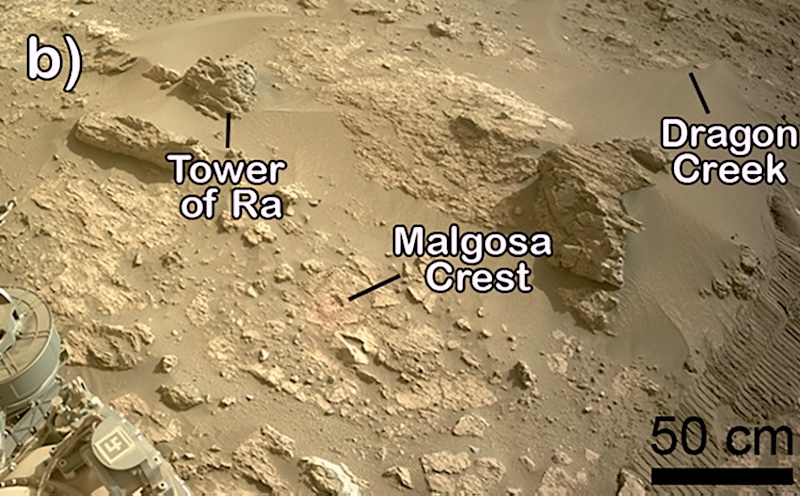
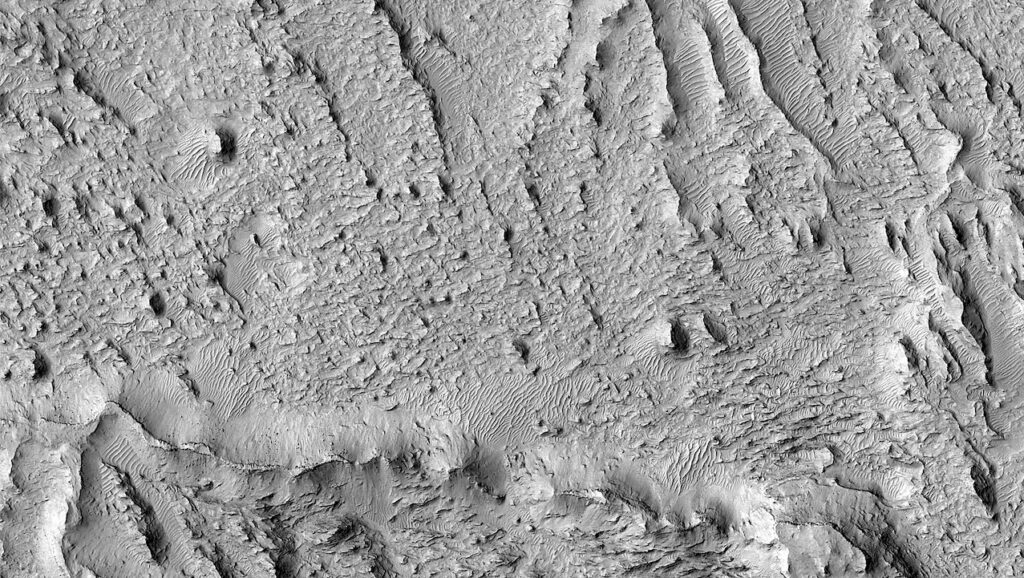
Perseverance rover Navcam images of the Beaver Falls (a) and Wallace Butte (b) workspaces. The sample borehole (Sapphire Canyon), PIXL scans (Apollo Temple and Malgosa Crest), and rocks with major Ni-enrichments detected by SuperCam (Apollo Temple, Fern Glen Rapids, Dragon Creek, and Tower of Ra) are labelled. c Nickel detections with SuperCam in Neretva Vallis, showing the locations of the Bright Angel and Masonic Temple outcrops (points offset for clarity). Half arrows indicate the direction of travel of Perseverance. d Context HiRISE composite image of Jezero crater with red box to indicate the extent of panel (c). Image Credit: NASA/JPL-Caltech.
- Strong nickel enrichment co-located with redox-organic interactions in Neretva Vallis, Mars, Nature Communications via PubMed (open access)
- Strong nickel enrichment co-located with redox-organic interactions in Neretva Vallis, Mars, Nature Communications (open access)
Astrobiology,