Experimental and Numerical Modeling of Liposome Congregation in Meteorite Craters of Early Earth
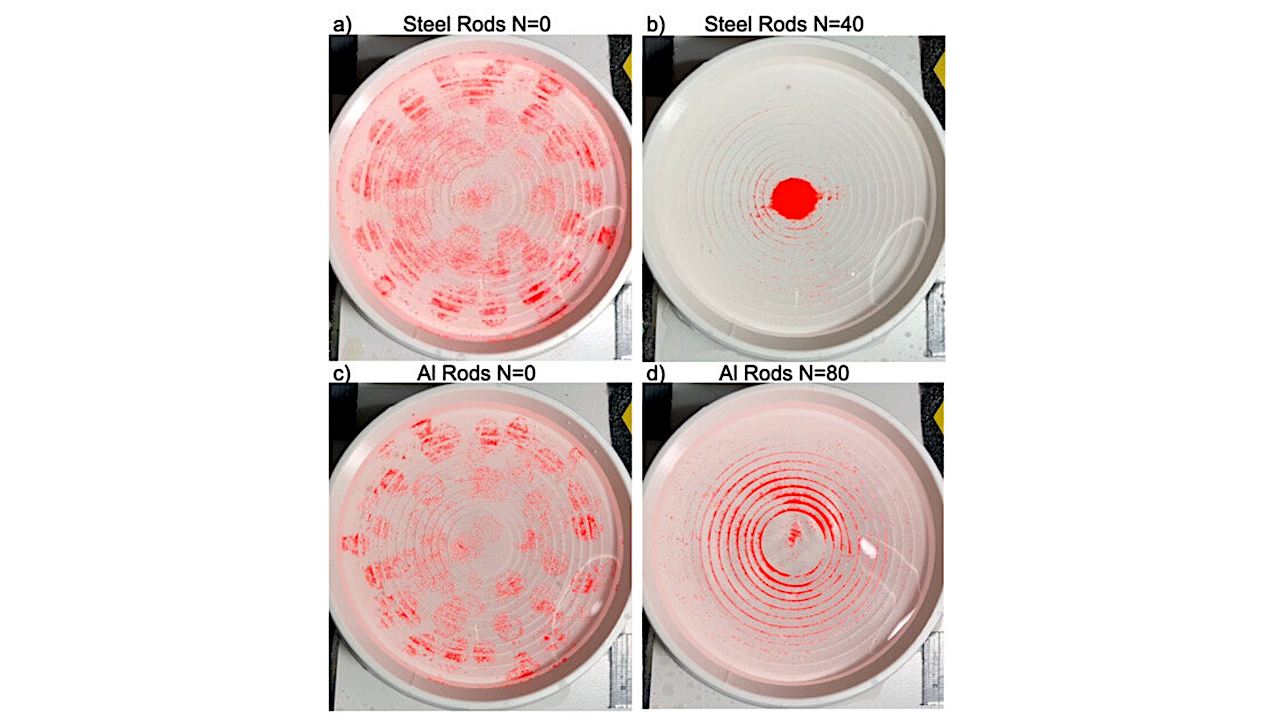
This paper provides experimental and numerical evidence supporting the occurrence of liposome congregation at the floors of meteor craters on Early Earth.
This work builds on our earlier research, which demonstrated that liposomes submerged in a shallow Archean pond are protected from harmful UV radiation.
This protection enables them to survive sufficiently long for autocatalytic amphiphile replication and for the mutation and selection of assemblies that enhance membrane stability.
For liposomes to fuse, grow, exchange contents and membrane components, and divide, they must establish a population, i.e., form a dense conglomerate that enables close physical contact.
The study demonstrates that such a congregation is feasible in bowl-shaped meteor craters on Early Earth, especially under periodic seismic disturbances.
Experimental and Numerical Modeling of Liposome Congregation in Meteorite Craters of Early Earth, Life (open access)
Astrobiology