Mars, A Post-Habitable Planet?
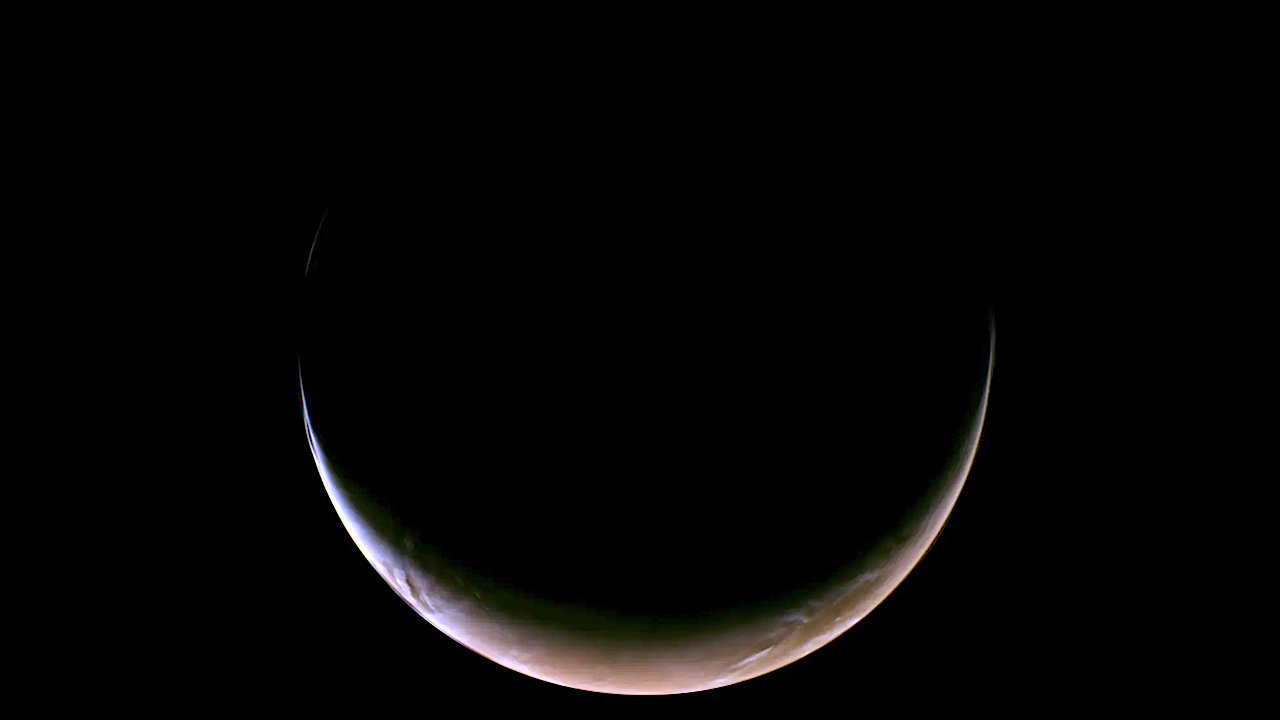
Mars provides a critical analog to once habitable exoplanets that have since lost their surface liquid water.
The current atmospheric state of Mars retains the chemical fingerprints of that transition, including isotopic signatures of atmospheric escape and climate evolution.
As the closest accessible example of a terrestrial world with definitive evidence for once supporting liquid water on its surface, Mars presents a unique opportunity to test hypotheses about planetary habitability and atmospheric evolution in a spatially and temporally resolved way.
Matteo Crismani, Richard Cartwright, Michael Chaffin, Sara Faggi, Stephanie Milam, Geronimo Villanueva
Comments: Prepared for the Habitable Worlds Observatory 25 Proceedings, but not submitted in time. Posted here for posterity
Subjects: Instrumentation and Methods for Astrophysics (astro-ph.IM); Earth and Planetary Astrophysics (astro-ph.EP)
Cite as: arXiv:2605.26138 [astro-ph.IM] (or arXiv:2605.26138v1 [astro-ph.IM] for this version)
https://doi.org/10.48550/arXiv.2605.26138
Focus to learn more
Submission history
From: Matteo Crismani
[v1] Fri, 22 May 2026 05:52:00 UTC (560 KB)
https://arxiv.org/abs/2605.26138
Astrobiology,