Active Moons In Our Solar System And Beyond — Io, Europa, Enceladus, Triton, and Exomoons
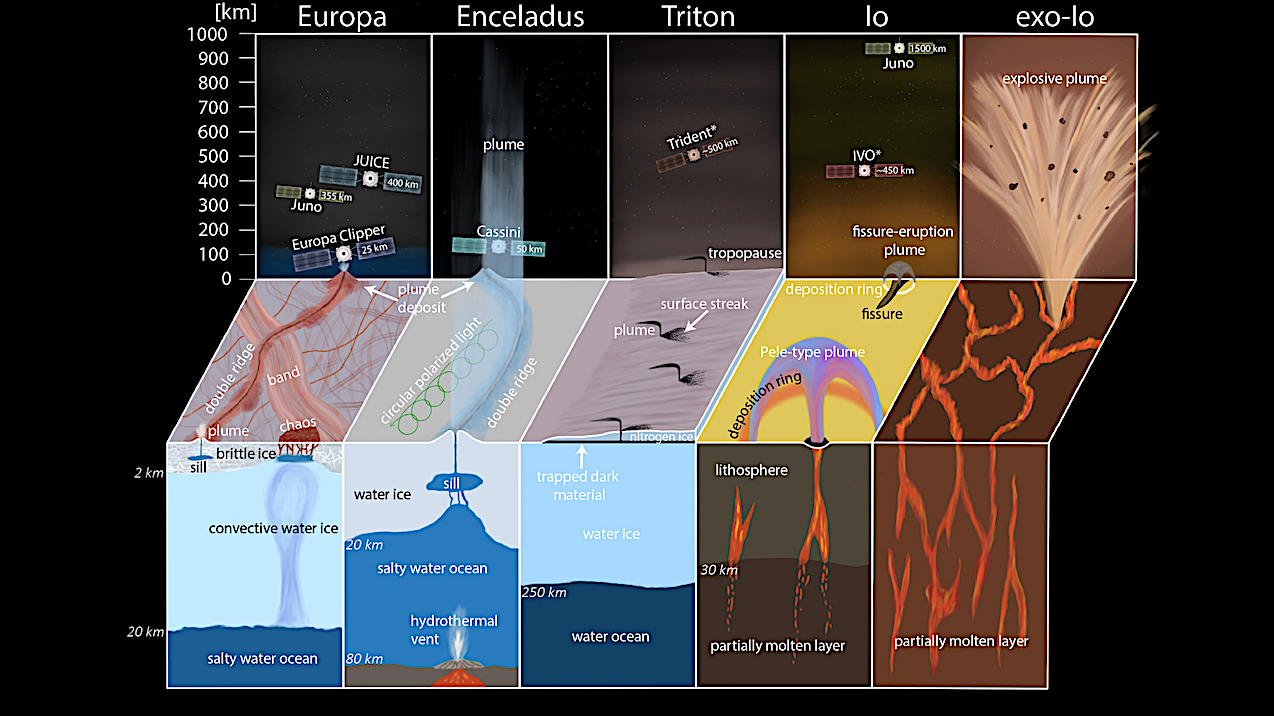
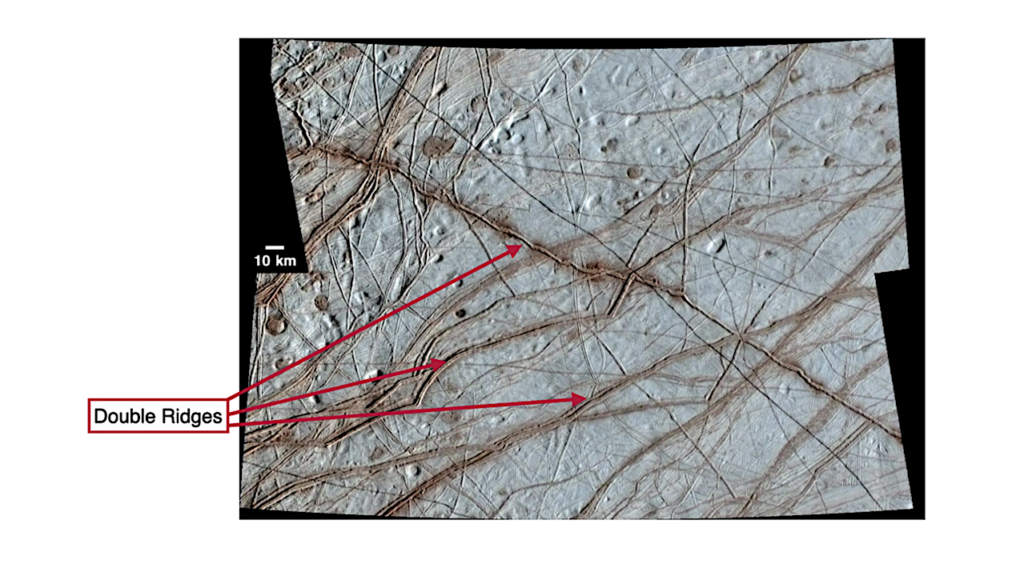
The outgassing signatures of Io, Europa, Enceladus, Triton, and Io-like exomoons are the focus of this review chapter. The rocky volcanic world of Io is unique in our Solar System, with plumes reaching to hundreds of kilometres in altitude.
Io-like exomoons could leave signatures strong enough to be detected with ground-based telescopes. The icy moons Europa and Enceladus, with their subsurface oceans, are currently the best candidates for life. Triton is different in many ways and raises unexplored questions.
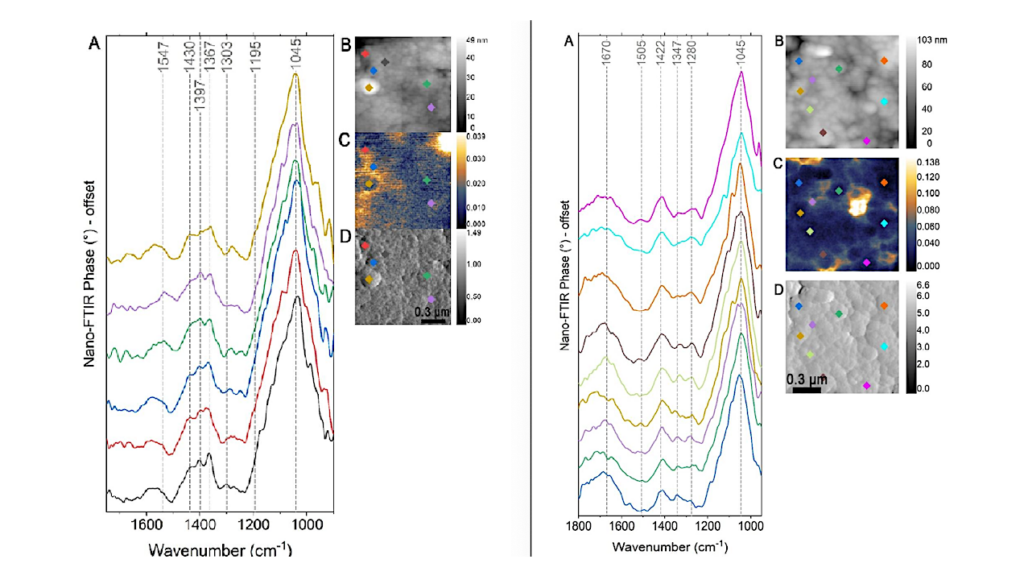
Our knowledge of these active moons is derived from space- and ground-based observations. To understand their origin, we discuss moon formation in general, before examining evidence and signatures of plumes on these moons. Given the accessibility of subsurface oceanic material through the occurrence of plumes, we expand on possibilities to investigate biosignatures.
Caroline Haslebacher, Emeline Bolmont, Marco Cilibrasi, Jonathan Grone, Nico Haslebacher, Ravit Helled, Mathilde Kervazo, Niels F.W. Ligterink, Christophe Lovis, Lucio Mayer, Lorenzo Obersnel, Rafael Ottersberg, Apurva V. Oza, C.H. Lucas Patty, Antoine Pommerol, Ganna Portyankina, Alyssa R. Rhoden, Leander Schlarmann, Yuhito Shibaike, Vishaal Singh, Audrey H. Vorburger, Peter Wurz
Comments: Chapter accepted for publication in the NCCR PlanetS Legacy Book: Benz, W. et al. (Eds), The National Center for Competence in Research, PlanetS: A Swiss-wide network expanding planetary sciences. Springer (2026). Authors are listed alphabetically after the lead author
Subjects: Earth and Planetary Astrophysics (astro-ph.EP)
Cite as: arXiv:2604.12104 [astro-ph.EP] (or arXiv:2604.12104v1 [astro-ph.EP] for this version)
https://doi.org/10.48550/arXiv.2604.12104
Focus to learn more
Submission history
From: Caroline Haslebacher
[v1] Mon, 13 Apr 2026 22:25:39 UTC (18,594 KB)
https://arxiv.org/abs/2604.12104
Astrobiology, exoplanet,