Hot life in Antarctica: A Novel Metabolically Versatile Pyrodictiaceae Genus Thriving At A Volcanic–cryosphere–marine Interface
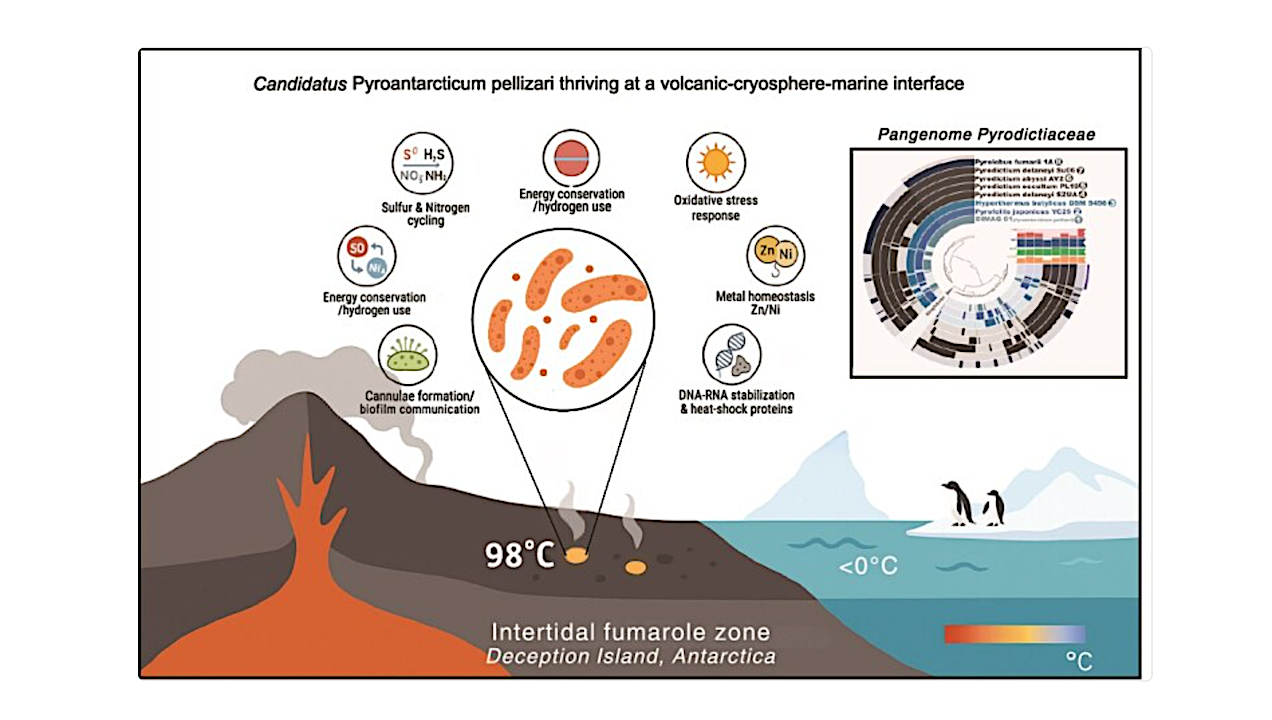
Deception Island fumaroles in Antarctica represent rare environments where extreme heat intersects with cryospheric and marine conditions, creating remarkable environmental gradients.
From the near-boiling sediments, we reconstructed a high-quality metagenome-assembled genome affiliated with the Pyrodictiaceae. Phylogenomic analyses revealed that this genome, proposed to represent Ca. Pyroantarcticum pellizari, forms a distinct lineage separated from known genera in the family.
Functional annotation uncovered a versatile metabolic repertoire, including pathways for sulfur and nitrogen cycling, peptide and amino acid transport, and mixotrophic energy conservation.
Stress-response systems such as reverse gyrase, thermosome, and small heat-shock proteins were complemented by lineage-specific genes related to membrane stability, metal detoxification, and Pyrodictiaceae-specific cannulae.
These adaptations likely support survival under sharp temperature gradients, hydrogen sulfide emissions, and high metal concentrations at the volcanic–cryosphere–marine interface.
Our findings expand the phylogenetic and ecological scope of Pyrodictiaceae, highlighting Antarctic marine volcanoes as unique refuges for hyperthermophiles and as valuable models for investigating life’s habitability under extreme temperatures.
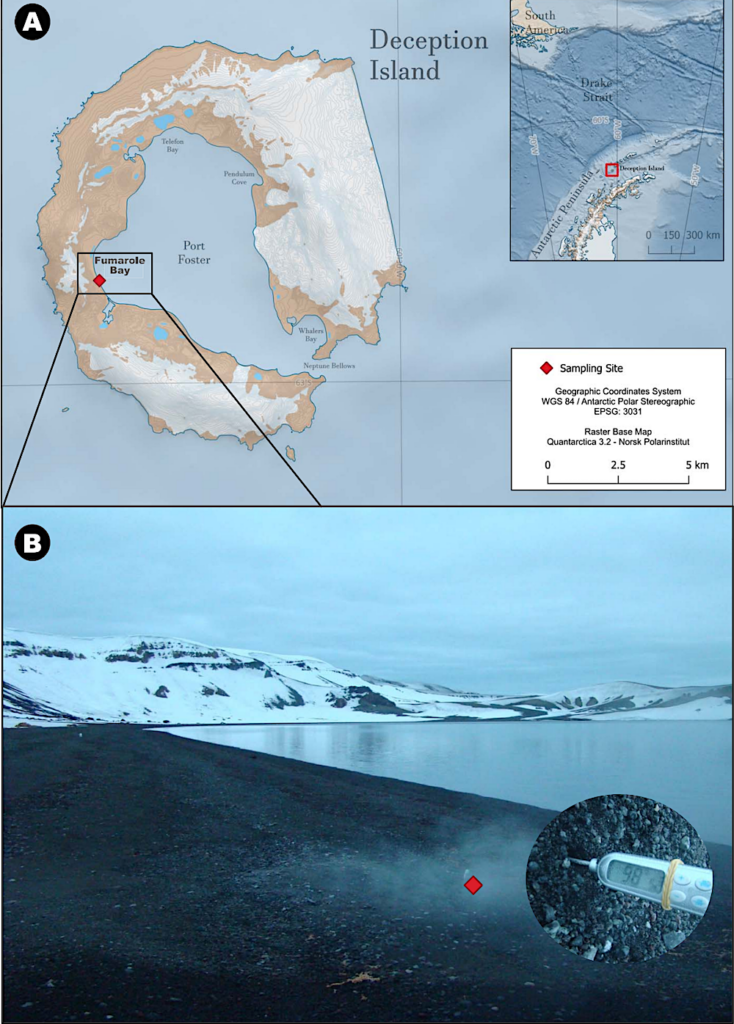
Geographic location and environmental setting of the fumarolic sampling site at Deception Island (Antarctica). (A) Geographic location of the sampling site at Deception Island, south Shetland Islands, Antarctica. The red diamond indicates the fumarolic vent at Fumarole Bay, situated on the inner coast of Port Foster. The map shows the position of Deception Island in relation to the Antarctic Peninsula (inset) and highlights the coastal fumarolic area. (B) Field view of the sampling site, where steaming fumarolic activity occurs directly at the shoreline. Three surface sediment samples at the vent were collected (samples FBA1, FBA2, and FBA3), with an in situ temperature of 98°C. The fumarolic deposits are characterized by dark volcanic sand with visible gas emissions, reflecting the strong hydrothermal influence on this coastal environment. — ISME Communications
- Hot life in Antarctica: a novel metabolically versatile Pyrodictiaceae genus thriving at a volcanic–cryosphere–marine interface, ISME Communications via PubMed, (open access)
- Hot life in Antarctica: a novel metabolically versatile Pyrodictiaceae genus thriving at a volcanic–cryosphere–marine interface, ISME Communications, (open access)
Astrobiology,