Extreme Environmental Tolerance And Space Survivability Of The Moss, Physcomitrium patens
Climate change highlights the importance of understanding life’s survival limits for addressing global challenges and supporting future human habitation beyond Earth. Plants, as photosynthetic organisms, play a vital role in sustaining life.
Bryophytes, such as mosses, show notable extremotolerance, but despite studies on environmental responses in the model moss Physcomitrium patens, its survival under extreme conditions in space remains unclear.
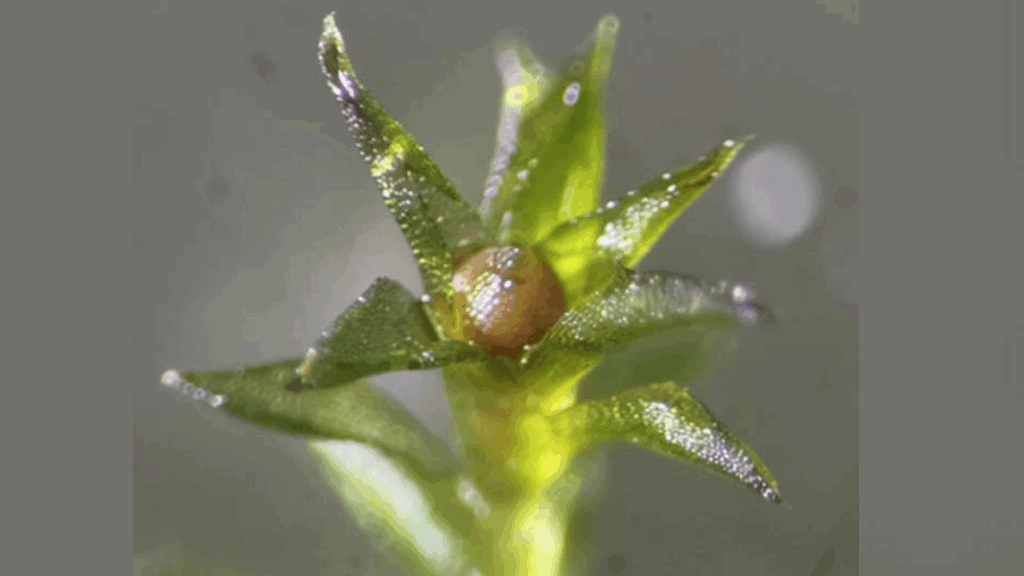
A reddish-brown sporophyte can be seen at the top center of a leafy gametophore. This capsule contains numerous spores inside. Mature sporophytes like these were individually collected and used as samples for the space exposure experiment conducted on the exposure facility of the International Space Station (ISS). CREDIT Tomomichi Fujita
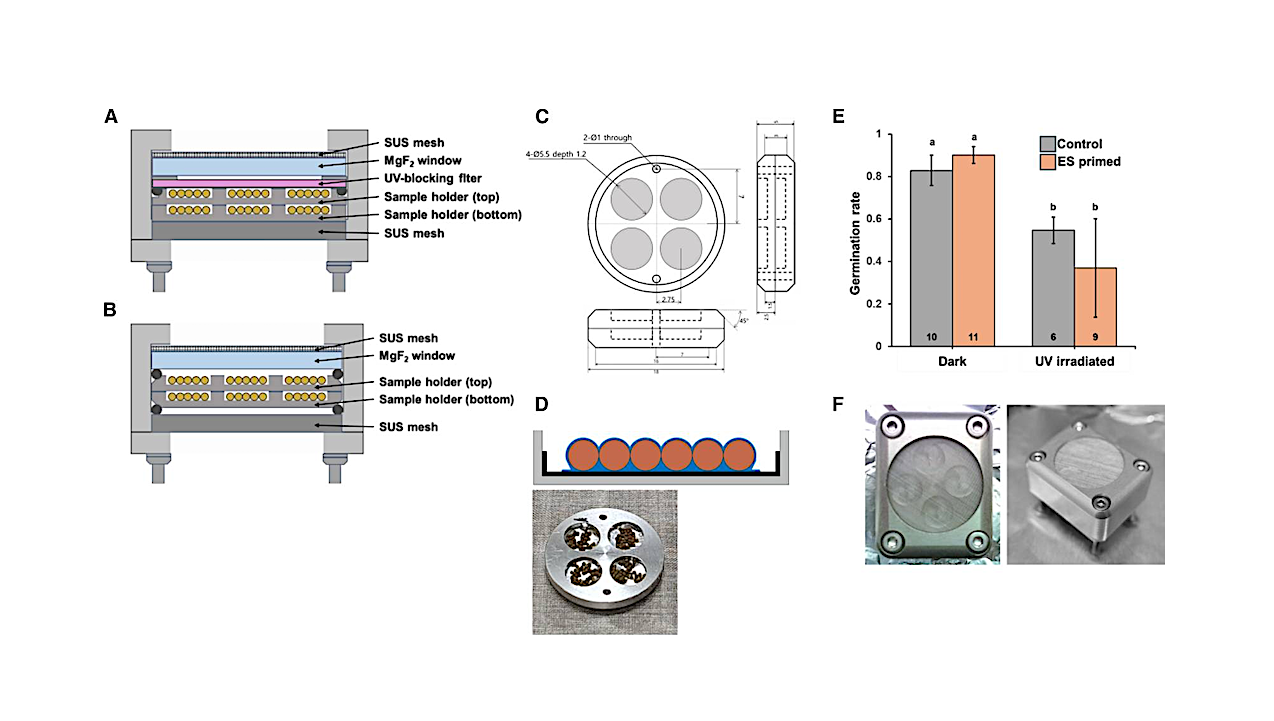
We tested protonemata, brood cells, and spores encased in sporangium under simulated space environments, identifying spores as the most resilient, and subsequently exposed them to the space environment outside the International Space Station. After 9 months in space, over 80% of the spores survived, retaining their ability to germinate.
These results demonstrate the remarkable resilience of P. patens spores in space and reveal the potential of terrestrial plants to endure extreme environments, providing insight into bryophyte adaptation and offering a foundation for future applications in space exploration and extraterrestrial habitats.
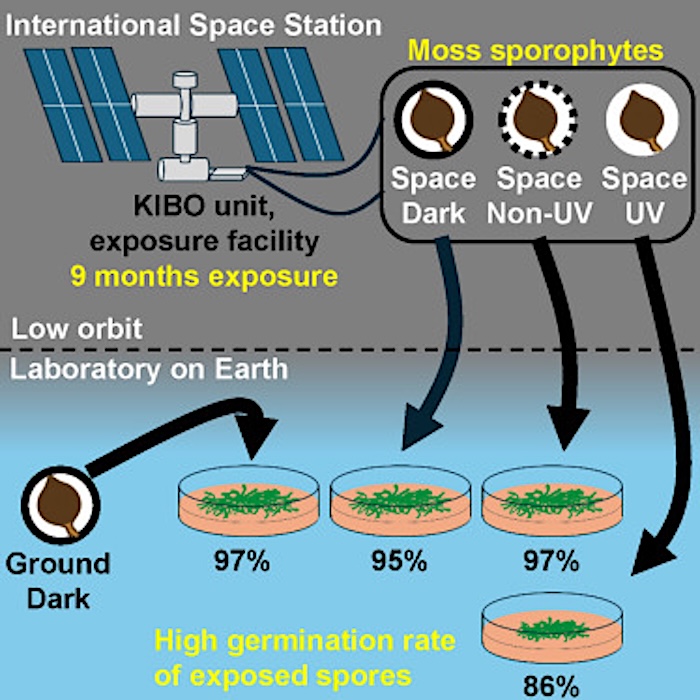
Graphical abstract
Extreme environmental tolerance and space survivability of the moss, Physcomitrium patens,
iScience via PubMed (open access)
Astrobiology,